Monday morning starts with seven Contracts Finder alerts, one Find a Tender notice closing on Thursday, and a clarification from a council buyer that arrived late on Friday. Your first draft is still sitting in a shared drive, surrounded by old Word files with names like “Final response v6” and “Use this one maybe”.
That's the point at which tender software either earns its place or exposes itself as another dashboard. A useful system should help at 8am when opportunities arrive, 11am when a clarification needs an answer, and 4pm when a draft needs sign-off. Anything less is an expensive search tool.
What Tender Software Actually Solves
A bid manager at a 40-person consultancy can lose the morning before writing a single useful sentence. They log into several portals, copy notices into a spreadsheet, check duplicate opportunities, chase subject-matter experts, and search old responses for evidence that may no longer be accurate.
The work looks administrative, but it affects decisions. Missed deadlines reduce the number of credible bids you can submit. Poorly maintained boilerplate creates compliance risk. Late reviews leave no time to improve a weak answer. A document that looks polished can still fail because it answers the question indirectly or relies on evidence nobody has checked.
Tender software solves this by joining three jobs in one workflow:
- Tender monitoring finds and filters opportunities across relevant UK portals.
- A knowledge base stores approved answers, credentials, case studies, policies, CVs and other evidence.
- AI response generation uses that material to create a structured first draft for human review.
That combination matters. A scraper can find a notice, but it can't tell you whether your organisation is qualified or connect the notice to a useful response library. A generic AI writing tool can produce fluent paragraphs, but it doesn't know which claims your team can prove. A document repository can hold content, but it won't identify a suitable opportunity at the start of the day.
Treat the category as workflow infrastructure
The right question isn't, “Does this platform have AI?” Ask whether it carries work from notice discovery to go or no-go, from question to evidence, and from first draft to accountable sign-off.
At 8am, monitoring should produce a ranked shortlist rather than an inbox full of noise. At 11am, the knowledge base should help an expert answer a buyer's clarification without hunting through folders. At 4pm, AI should give the bid lead something grounded to edit, not an impressive paragraph with unsupported claims.
Your response still needs a clear structure and a reason for the buyer to keep reading. Guidance on creating a concise proposal that gets read is useful when you're deciding how to present value without burying it in detail.
The Three Core Capabilities
Tender software works when its capabilities form a chain. Monitoring identifies the work, the knowledge base supplies reliable material, and AI response generation turns that material into a reviewable answer.
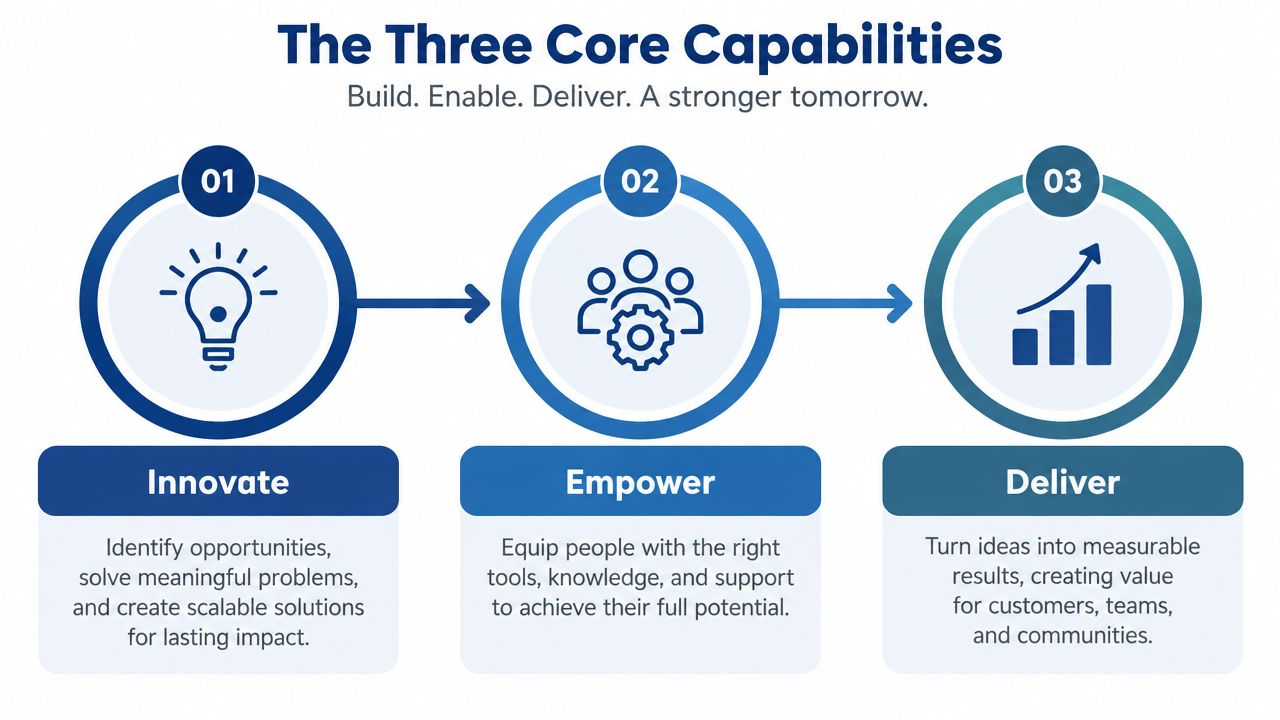
1. Monitoring replaces manual portal checks
A good monitoring layer watches agreed sources, filters by keywords and classification fields, and applies your go or no-go criteria. It should surface the buyer, deadline, estimated value where available, sector, location, procedure and relevant requirements in a form your team can act on.
The output isn't “more alerts”. It's a shortlist by Friday, with clear reasons for inclusion and an owner for the next decision. Deadline reminders matter because they turn a notice into a managed task. Qualification scoring matters because your team shouldn't spend an hour discussing an opportunity that fails a basic requirement.
2. The knowledge base replaces the shared-drive hunt
Store content as usable evidence, not just files. That includes tagged question-and-answer pairs, CVs, case studies, policy statements, accreditations and pricing history.
Search should work by question type, buyer, framework lot or capability. A bid lead preparing a PQQ should be able to find the approved security statement and the relevant consultant CV without opening a chain of folders.
3. AI drafting replaces the blank page
AI should read the specification, identify the questions, retrieve relevant approved material and produce a structured draft. It should also suggest evidence and flag gaps, especially where a response needs a named policy, measurable proof or client-specific detail.
The practical output is a populated compliance matrix on Monday and a draft ready for review by Wednesday. That only happens when monitoring, knowledge and generation share context. Buying them as disconnected tools leaves your team responsible for copying information between systems.
The UK Portal Landscape Behind the Tool
Tender software sits on top of procurement portals. It doesn't replace them, and its quality depends on what those portals publish.
Find a Tender became the central digital platform for UK public procurement notices on 24 February 2025. It publishes above-threshold and below-threshold notices for new UK procurements, except below-threshold notices in Scotland, so UK-wide monitoring still needs other national systems. The service is intended to make opportunities searchable and available with alerts, as shown by Find a Tender's official service.
Contracts Finder is the English government portal, while GOV.UK directs users to Public Contracts Scotland for Scottish bodies and Sell2Wales for Welsh bodies, as set out in the official Contracts Finder guidance. Northern Ireland sources, framework portals and sector-specific systems may also matter to your pipeline.
| Portal | Coverage | Typical opportunities |
|---|---|---|
| Contracts Finder | English public sector opportunities | Goods, services and works notices |
| Find a Tender | UK central platform for higher-value and newer UK notices | National and cross-border public procurement |
| Public Contracts Scotland | Scottish public bodies | Scottish goods, services and works |
| Sell2Wales | Welsh public bodies | Welsh public sector opportunities |
| eTendersNI | Northern Ireland public procurement | Northern Ireland goods, services and works |
| Crown Commercial Service portal | Central government frameworks | Framework call-offs and related competitions |
The data layer decides whether alerts help
The government says central-platform notices are structured and searchable in Open Contracting Data Standard format, and reusable under the Open Government Licence 3.0. Contracts Finder also provides XML and CSV downloads with filters for location, contract value, procurement stage and industry code, according to the government's Contracts Finder data collection.
That creates an opportunity for automated ingestion, classification and alerting. It also creates a problem: fields aren't equally complete across systems. In 2025, award method coverage ranged from 55% in Public Contracts Scotland to 99% in Find a Tender, while recorded end dates ranged from 0% in Contracts Finder to 38% in Find a Tender. Those figures are reported in the UK procurement overview for 2025.
Ask every vendor how it handles duplicate notices, missing dates, changing reference numbers and source conflicts. Its portal coverage list is the most revealing line on the datasheet. If the supplier can't name the feed behind an alert, don't trust the alert.
Digital submissions also sit alongside approval and signing tasks. If your process needs formal electronic signatures, guidance on eSign for government agencies can help you separate signing requirements from the tender-monitoring problem.
Who Uses Tender Software and Why
The same platform looks different depending on who opens it first.
An SME owner often manages tenders between sales calls and delivery issues. They need a short list of relevant notices, reminders that don't depend on memory, and a knowledge base that stays useful without appointing a full-time administrator.
A dedicated bid manager has a different problem. They need visibility across active bids, clear ownership, controlled review stages and reusable answers that can be adapted without losing the approved source. They'll open the pipeline first, then the knowledge base, then the drafting workspace.
Buyer-side procurement teams use overlapping technology for a different purpose. They may manage a publishing pipeline, coordinate evaluation, record decisions and monitor supplier participation. Their priority is controlled process and traceability, not producing a supplier response.
| Persona | Primary need | Features they use first | Success metric |
|---|---|---|---|
| SME owner | Fast qualification | Alerts, fit scoring, reminders and approved content | Fewer unsuitable bids entering the workload |
| Bid manager | Control across concurrent bids | Pipeline, collaboration, knowledge base and AI drafting | Reviewable responses with clear ownership |
| Procurement team | Consistent buyer-side process | Notice management, evaluation records and supplier data | Complete, auditable procurement activity |
Match the tool to the first ten minutes
If you're an owner, don't buy a system that requires weeks of taxonomy work before it shows a relevant notice. If you're a bid manager, don't accept a tool that creates drafts but leaves review, evidence and version control in email.
Sales and operations teams also need visibility after award. A practical ops teams guide to vendor management is useful when you're deciding how tender information should connect with supplier and contract workflows.
Use Bidwell's tender use cases to compare the workflow against your own role. The right fit is the platform your team will open before a spreadsheet, not the one with the longest feature list.
How to Evaluate Vendors Without the Sales Spin
Sales demonstrations are designed to make a clean tender look effortless. Your evaluation should do the opposite. Give each vendor a real notice, a real question set and a small sample of approved company content.
Start with coverage. Ask whether Contracts Finder, Find a Tender, Public Contracts Scotland and Sell2Wales are included in the quoted plan. If you bid in regulated or specialist markets, ask about NHS and local authority feeds, framework call-offs and the successor systems around higher-value procurement. Clarify whether the platform aggregates the source or links you back to it.
Then test AI with prompts that expose weak systems:
- “Draft a response using only the supplied evidence.”
- “List every requirement not supported by the knowledge base.”
- “Show which source supports each material claim.”
- “Rewrite this answer for the stated evaluation criterion without adding facts.”
A useful system should refuse to fill evidence gaps with invention. It should make review easier, not hide uncertainty behind confident prose.
Inspect the knowledge base
Ask whether the library stores structured Q&A pairs as well as documents. Check whether you can tag content by buyer, framework lot, service line, expiry date and approval status.
Security needs the same scrutiny. Ask where submissions are processed, whether your content is used to train a shared model, how access is permissioned, and what happens to your data if you cancel. Request a full export of the Q&A library before signing.
Integrations should fit your existing work. Ask about SharePoint, Salesforce, Pipedrive and your internal bid library. Pricing also needs a plain answer. Is it per user, per tender, by workspace or by volume?
Practical rule: Make the vendor prove the workflow with your documents. A polished demo using generic content tells you almost nothing.
For a focused comparison of response-generation workflows, review Bidwell's bid writing software. Treat it as one option to test against the same evidence and governance questions you ask of every supplier.
Where Humans Still Own the Response
AI won't replace a bid lead who understands the buyer, the commercial risk and the evidence that will persuade an evaluator. It can remove repetitive work, but it can't decide whether a tender fits your strategy or whether a proposed commitment is safe to make.
Software should own the mechanical handovers:
- Monitoring: find notices and trigger alerts.
- Deduplication: combine repeated records from different sources.
- Deadline tracking: keep dates visible and assign responsibility.
- First drafting: use approved content to produce a structured starting point.
- Compliance checks: identify mandatory questions, formats and missing fields.
People own the decisions that carry risk. The bid lead sets the win strategy. Commercial colleagues choose pricing. Subject experts select the strongest evidence. Account teams manage relationships and clarification conversations. A senior reviewer decides whether the final response sounds credible, specific and appropriate for the buyer.
Follow one response from source to sign-off
Take a standard SQ. The system can map questions, retrieve relevant policies, suggest CVs and draft answers from approved material. The bid lead then checks whether the evidence answers the question, removes irrelevant claims and adds the organisation's position.
For a complex ITT, the handover happens later because evaluators often need more nuance. The software can prepare the structure and expose gaps, but a human must shape the delivery model, explain dependencies, test risk statements and position the offer against the evaluation criteria.
The right purchase amplifies an existing bid function. It doesn't remove accountability.
That division also changes team behaviour. Writers spend less time locating boilerplate and more time improving relevance. Reviewers see the source behind a claim. Directors can challenge the bid strategy instead of discovering it during final sign-off.
A Realistic 30-Day Rollout Plan
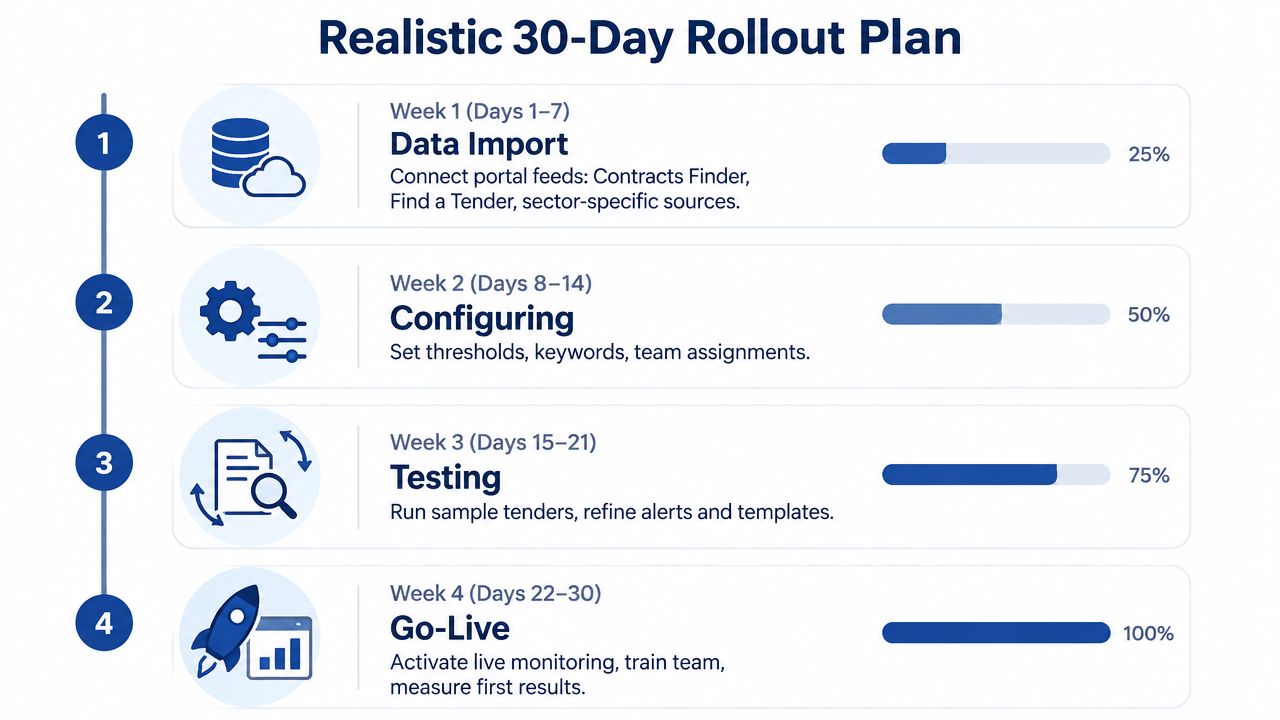
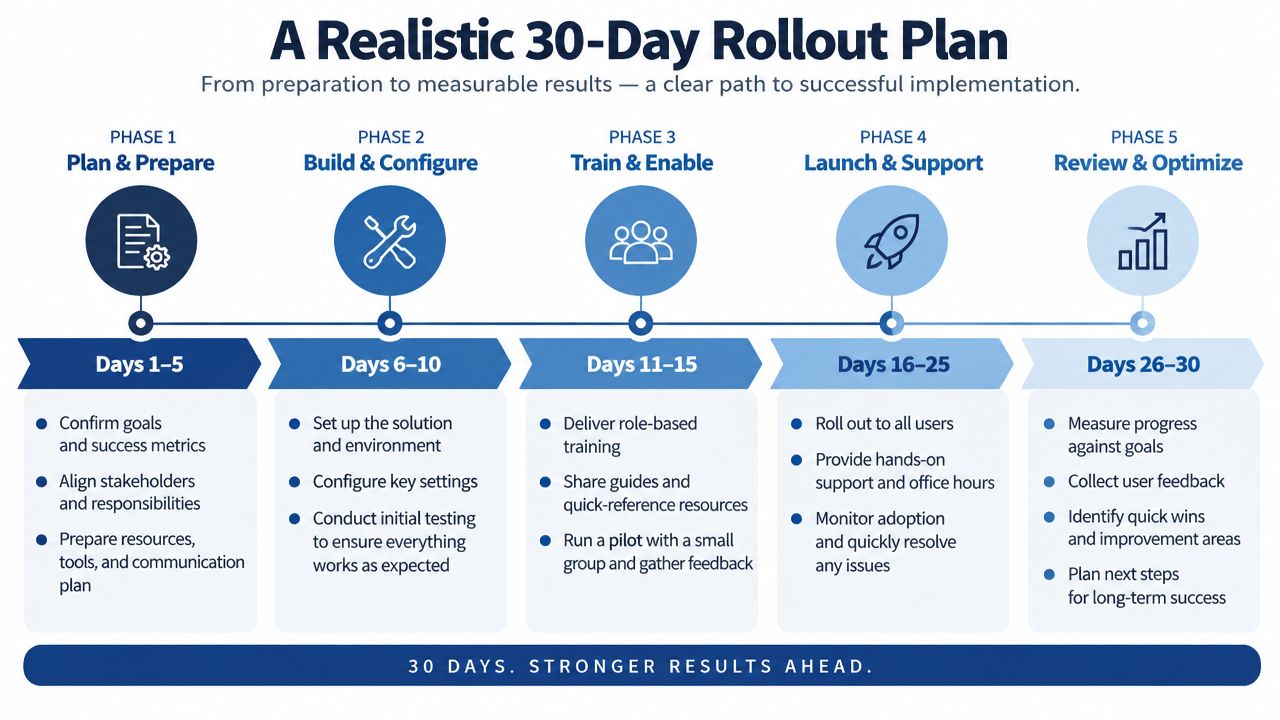
Don't call implementation “onboarding” and hope for the best. Give the team four clear weeks, with a deliverable at the end of each one.
Week one focuses on data import
Connect Contracts Finder, Find a Tender and the sector sources your chosen vendor covers. Pull in the last 12 months of opportunities to seed monitoring, then compare the imported records with the team's manual tracker.
Look for duplicate notices, missing fields and irrelevant classifications. Fix those rules before the team trusts the alerts.
Week two seeds the knowledge base
Upload winning and submitted responses, CVs, case studies, policy statements, security certifications and pricing templates. Aim for 40 to 60 source documents, because thin source material produces thin drafts.
Don't upload everything without review. Mark content as approved, expired, restricted or requiring subject-matter review. Assign an owner for each content group.
Week three runs a parallel pilot
Choose one tender and run it end to end inside the platform while keeping the existing process active. Test notice interpretation, question mapping, evidence retrieval, drafting, review comments and export formatting.
Treat this as a controlled rehearsal, not a live replacement. Record every point where a user leaves the tool, then decide whether the problem is configuration, missing content or a genuine product gap.
Week four sets the operating rules
Train the team, set permissions and agree on a single source of truth. Decide what people will stop doing manually, such as copying notices into spreadsheets or saving new boilerplate without approval.
Common failures are predictable:
- Skipping content preparation: AI can't retrieve evidence that nobody has curated.
- Using a live bid as the first test: deadline pressure hides configuration problems.
- Expecting automatic learning: the knowledge base needs owners and review rules.
- Ignoring permissions: sensitive pricing and client information need controlled access.
If you're comparing implementation approaches or replacement options, use Bidwell's alternatives page as part of a wider vendor shortlist rather than treating any single comparison as a buying decision.
What to Do This Week and What's Coming Next
You can improve the decision before buying anything.
- Audit recent bids: record where the team spent time, from searching to review.
- List monitored sources: include every portal, inbox and spreadsheet currently used.
- Inventory response content: separate Q&A, CVs, case studies, policies and pricing material.
- Run a real demo: give one salesperson a genuine notice and a genuine question.
- Write the target state: describe what good monitoring, knowledge and sign-off should look like in 12 months.
The UK market is already moving from manual search towards structured discovery and response workflows. Open Contracting data shows direct procedures fell from 53% in March 2025 to 34% in February 2026, while open tenders rose from 27% to 41% over the same period, as reported by Open Contracting's review of the Procurement Act.
That shift makes monitoring useful, but it also raises the standard for evidence. The government's SME action plan says it will explore simplifying and shortening tender and contract documents through AI from Q1 2026/27 onwards, while supplier barriers still include unclear requirements, short timescales and complex contract structures, according to the Cabinet Office and HM Treasury SME action plan. Choose a tool that helps people decide what to say, not one that merely produces more text.
Bidwell brings tender monitoring, a searchable knowledge base and AI response generation into one workflow for UK bid teams. Visit Bidwell to see how your team can turn relevant opportunities and approved evidence into drafts ready for human review.