
It's Monday morning. Your team needs three new opportunities in the pipeline by Friday, and nobody has searched yet.
Find a Tender is first. Contracts Finder follows, because some notices still sit there. Then Scotland's portal. Then Wales. Northern Ireland has another route, and that council buyer you like may publish direct.
A morning can disappear before anyone writes a word. The fix is knowing which source covers which part of the market, then checking a second or third only where geography or buyer behaviour creates a gap.
The Commons Library procurement statistics briefing reports public bodies spent approximately £395 billion on procurement in 2024 to 2025. That total includes spending between public bodies, so it is not all advertised work.
Even a small share can support a real pipeline. For a wider growth plan beyond bid work, digital growth strategies for UK SMEs can sit alongside tender monitoring.
The ten sources below are judged by where they fit in a weekly routine: what each covers, which regional gap remains, and whether it stops at alerts or helps you respond.
1. Bidwell
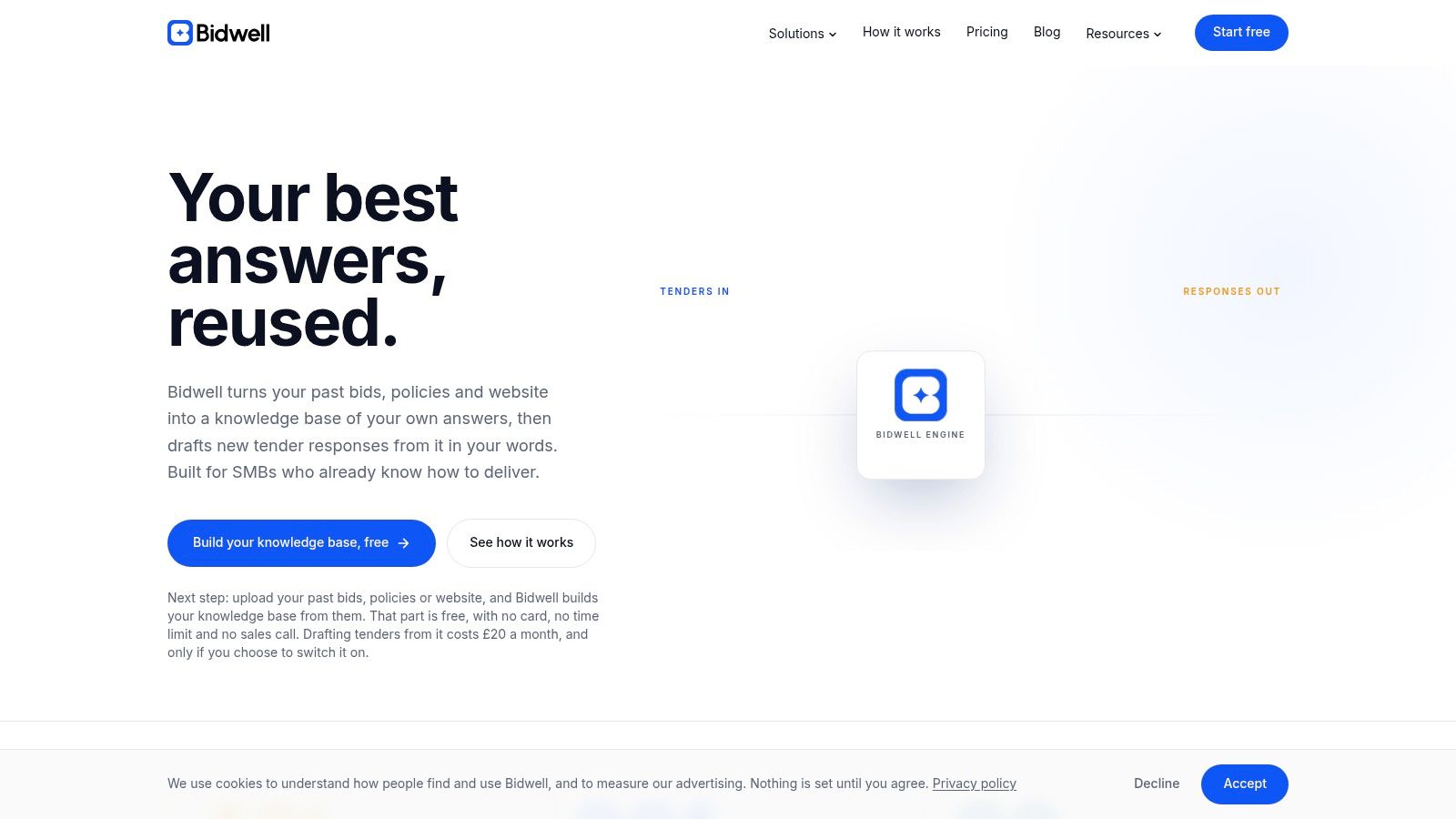
Start here if searching is only half your problem. Bidwell combines tender monitoring, a reusable knowledge base and AI response generation, so an alert can turn into a draft without you switching tools.
You upload past bids, policies, accreditations, case studies and team CVs, or add your website. Bidwell learns the business once from that material, then drafts each new response against the actual tender notice and pulls in the case studies and CVs that fit it.
What it does with a live notice
Monitoring covers Find a Tender, Contracts Finder, Public Contracts Scotland, Sell2Wales and eTendersNI. Matches run by sector, CPV code, region and contract value, and the daily alert only sends tenders that fit your criteria. That coverage matters for this list: Scotland, Wales and Northern Ireland each run their own portal, and Bidwell watches all of them, so nothing forces a second regional check.
When you bid, it drafts complete responses for tenders, PQQs, DDQs and supplier questionnaires, ready for you to review, polish and submit yourself.
Early sight matters because the Government Commercial Agency guidance on SME barriers identifies incumbency bias, process complexity and lack of timely information as barriers for SMEs. Finding a notice late hands the incumbent a head start you can't claw back.
- Price: Monitoring is a £10 per month add-on that watches every UK portal.
- Saving claimed: A 20 to 40 hour writing task becomes 2 to 4 hours of review and refinement.
- Regional gap: None. It covers the devolved portals that force manual checks elsewhere.
Honest limit: AI drafts still need careful human review before submission. Buyers score what you send, not what the tool meant.
It's UK public sector only, and monitoring is a paid add-on. If your bottleneck is writing, not just searching, that's a fair trade.
2. Find a Tender
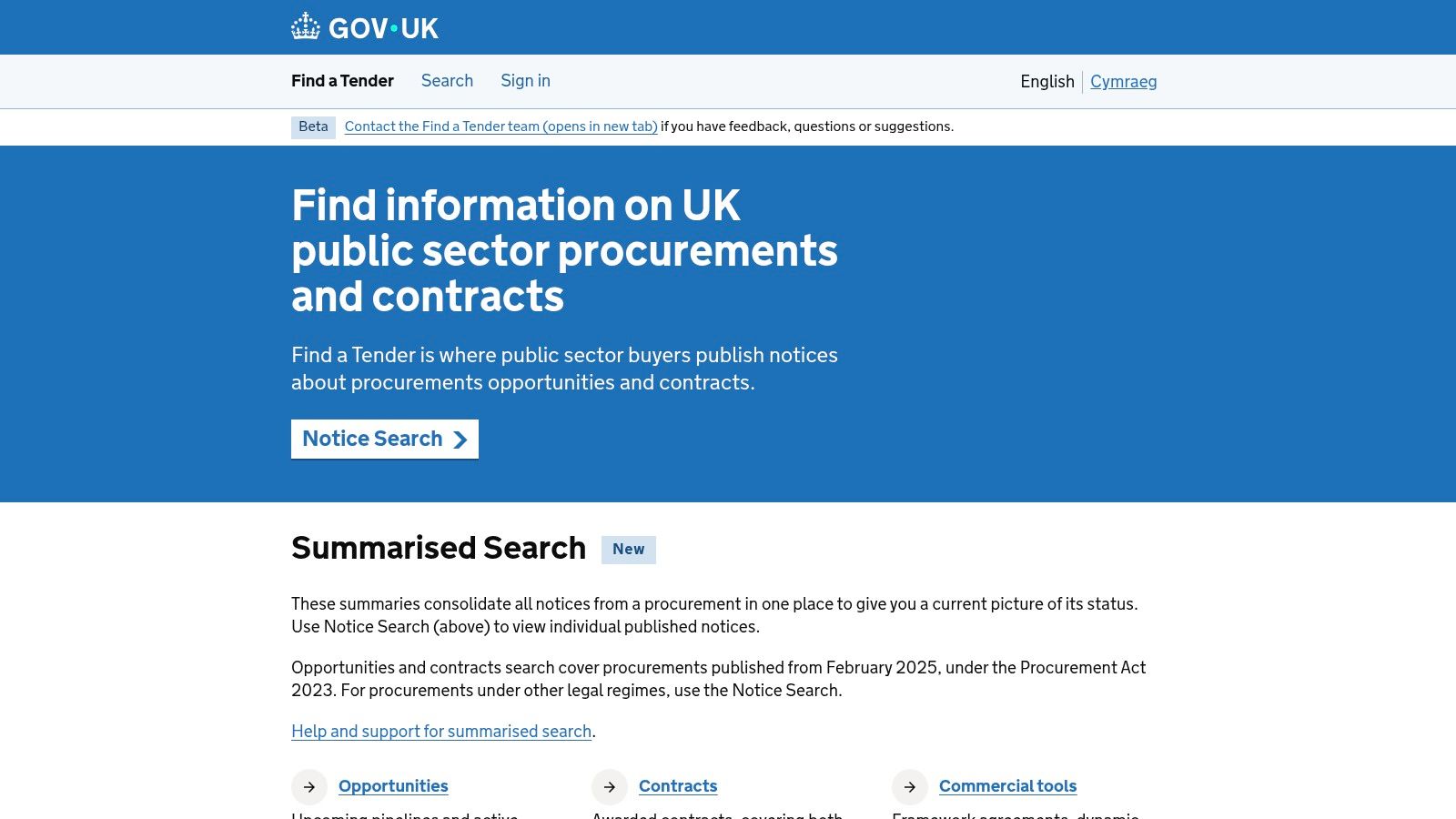
This is the central government service and your default first check. Find a Tender is free, official and where most higher-value UK notices now live.
The split changed recently. The Find a Tender search service notes that since 24 February 2025 it carries above and below-threshold notices for new procurements, with below-threshold Scottish notices as an exception. Older procurements generally sit there only above £139,688 including VAT.
That date matters in practice. A tender started before it may follow old rules and old routes. One saved search here won't catch everything.
How to use it in a routine
Register as a supplier, save your searches and turn on email notifications. Check saved results twice a week rather than relying on email alone, because a badly chosen keyword hides good fits.
- Strong point: Lifecycle notices in one place, from pipeline through to award.
- Weak point: No qualification help, no drafting, no view across devolved portals.
- Regional gap: Scotland below threshold needs a separate check.
Pair it with bid writing software or your own answer library. On its own it tells you an opportunity exists and then leaves you with the blank page.
Don't treat registration as a one-off admin job. Wrong CPV codes mean wrong alerts, and you'll blame the portal for your own settings.
If you only check one free portal, check this one. Just don't pretend it's the whole UK.
3. Contracts Finder
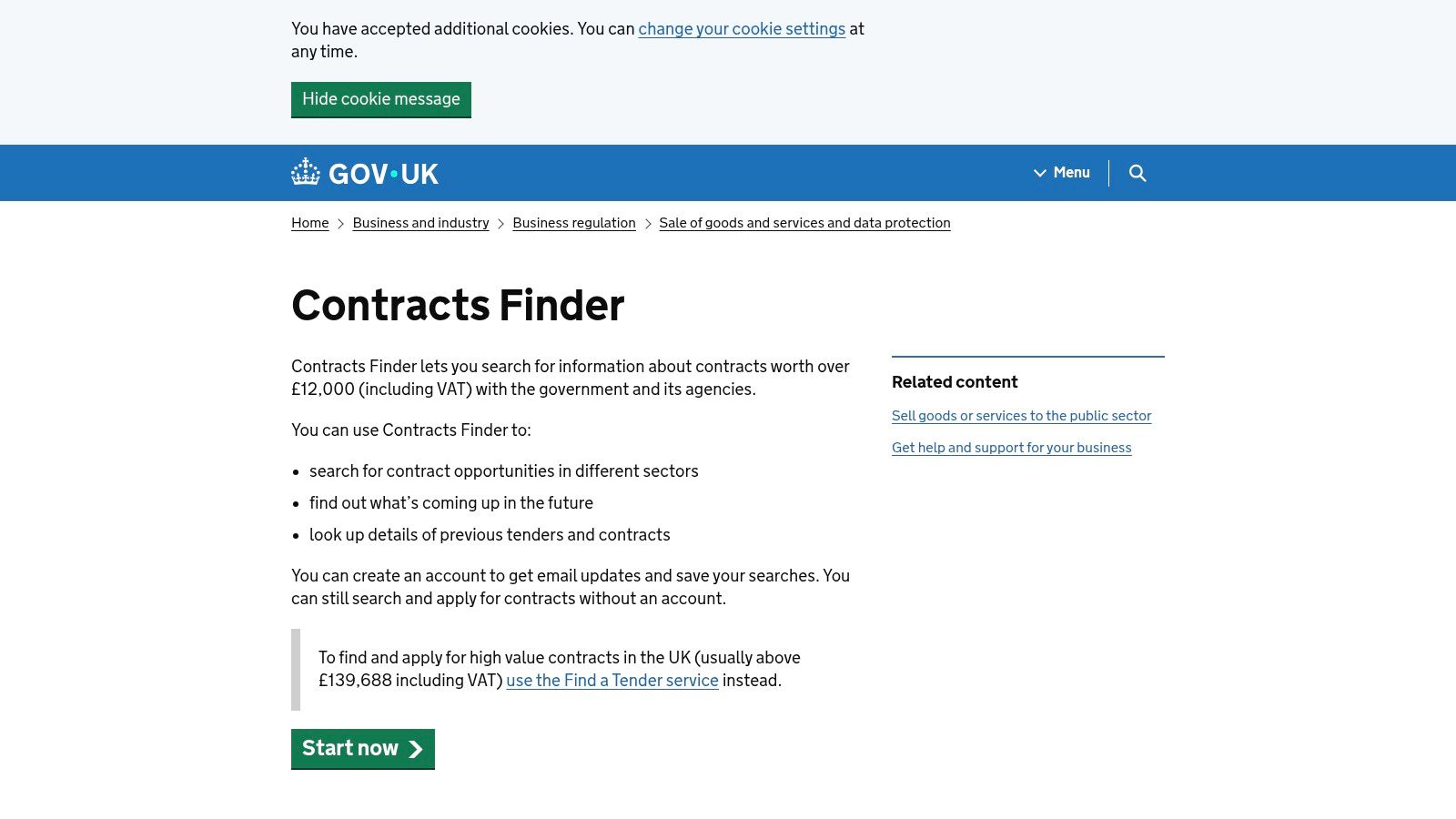
Contracts Finder is the other free government service, mainly for England and non-devolved bodies. You can browse without an account, which makes it handy for a quick sense check.
Its real value is history. You can search future work and previously awarded contracts, so it's useful for checking who won last time, what a buyer usually pays and whether a contract is due back out.
Where it earns its place
Use it for award research before you commit bid time. A notice marked suitable for SMEs still needs a hard look at value, footprint, and who wins.
The Crown Commercial Service SME action plan reports 34,968 Contracts Finder awards in 2025/26, with 12,533 involving SMEs. That's 41.7% by count, but count tells you nothing about value or profit.
- Strong point: Free award history supports sensible bid or no-bid calls.
- Weak point: Coverage varies by date and rules, so routes feel untidy.
- Regional gap: Scotland, Wales and Northern Ireland run their own portals.
Set up saved searches and email updates with an account. Then use a tool for tender responses to act on what you find, because Contracts Finder won't help you answer.
It's less tidy than a paid aggregator. For England-focused SMEs, it's still worth a weekly ten minutes.
4. Public Contracts Scotland
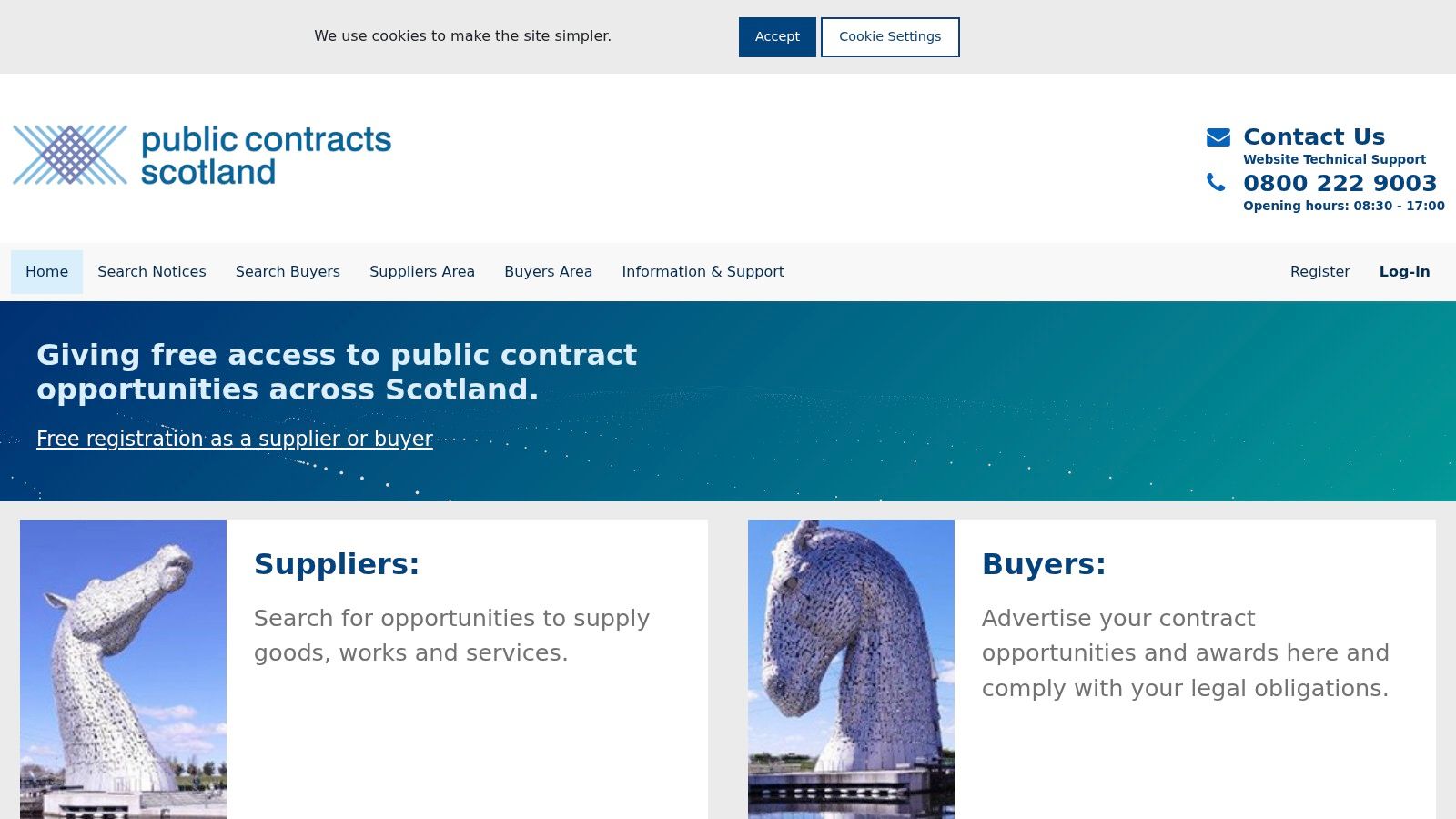
If you want Scottish work, you can't skip this one. Public Contracts Scotland is the main portal for Scottish public bodies and it's free to register.
It's especially important below threshold, where Scottish notices don't follow the same Find a Tender route as England, Wales and Northern Ireland. Miss this portal and you miss smaller local work that often suits SMEs best.
Say you're a facilities firm in Newcastle chasing work over the border. Find a Tender alone gives you a false sense of coverage. This portal fills that hole.
Practical points before you register
Registration gets you relevant notices, but the buyer may still send you elsewhere to submit. Read the notice early so you're not learning a new e-tendering system on deadline day.
- Strong point: Official, region-specific coverage for Scottish buyers.
- Weak point: No cross-portal intelligence and no AI response generation.
- Watch out: Keep your knowledge base of policies and case studies elsewhere, ready to reuse.
Check it alongside Find a Tender if you bid UK-wide. If you never deliver in Scotland, skip it without guilt. Regional focus is a feature, not a flaw.
5. Sell2Wales
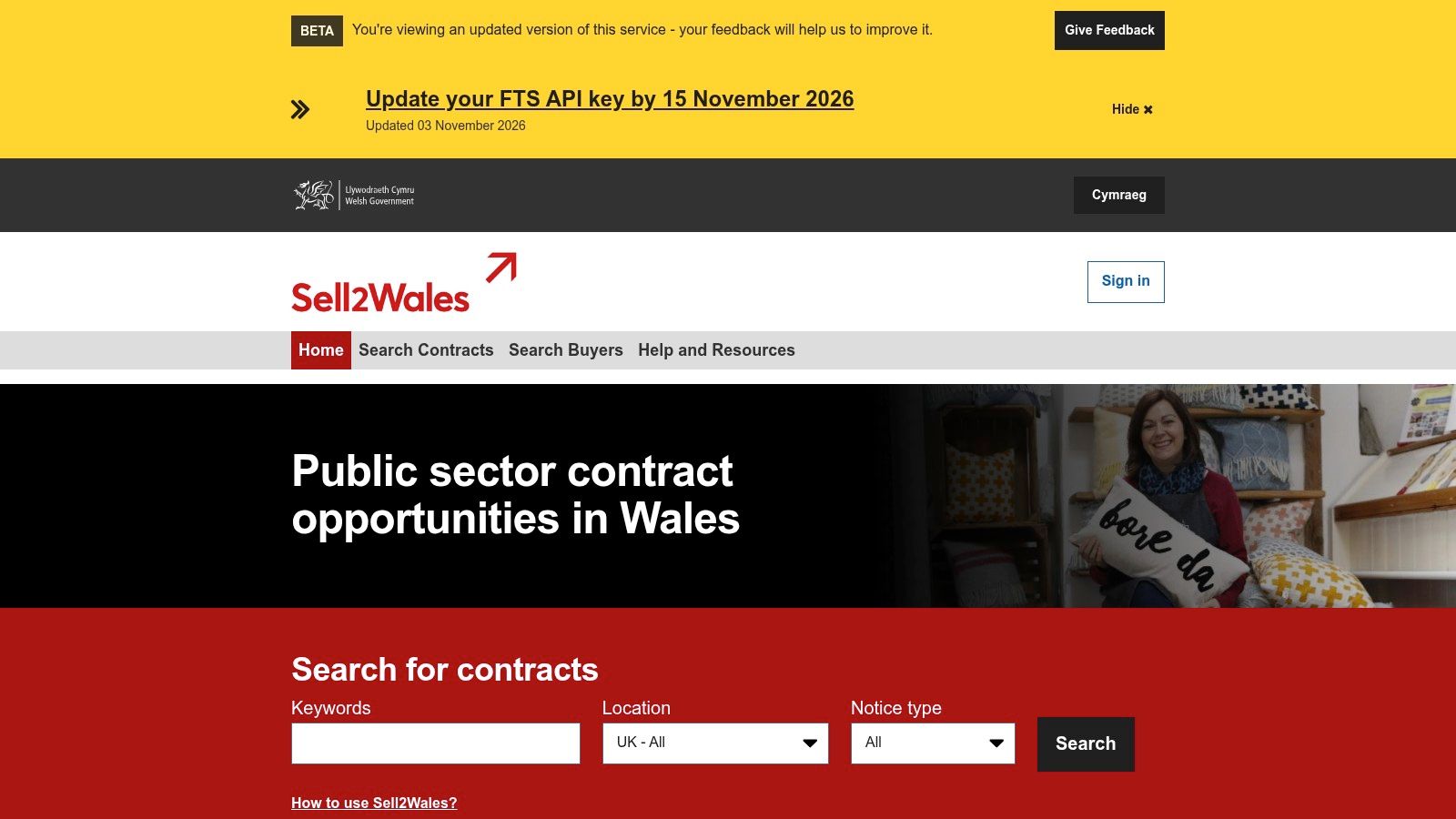
Sell2Wales is the Welsh Government's national portal. It's free, and for Wales-focused SMEs it's more useful than a big UK aggregator with weak Welsh coverage.
Two features stand out for smaller firms. Quick Quotes covers invitation-only smaller work, and subcontract notices let you win supply-chain work without holding the main contract.
You can also build a Supplier Finder profile so buyers can find you. That's rare among the free portals, most of which only let you search one way.
Set your profile up properly
Alerts run by business category and location. Pick categories too broadly and you'll drown. Pick them too narrowly and you'll miss work described in buyer language, not yours.
- Test your settings: Search manually for a month and compare results with your alerts.
- Check the submission route: Some notices link out to another e-tendering platform.
- Keep evidence ready: Small quotes move fast, so your accreditations need to be to hand.
It won't cover England or Scotland, and it won't draft anything. For a Welsh SME, though, this plus Find a Tender covers most of what you'll realistically bid for.
6. eTendersNI
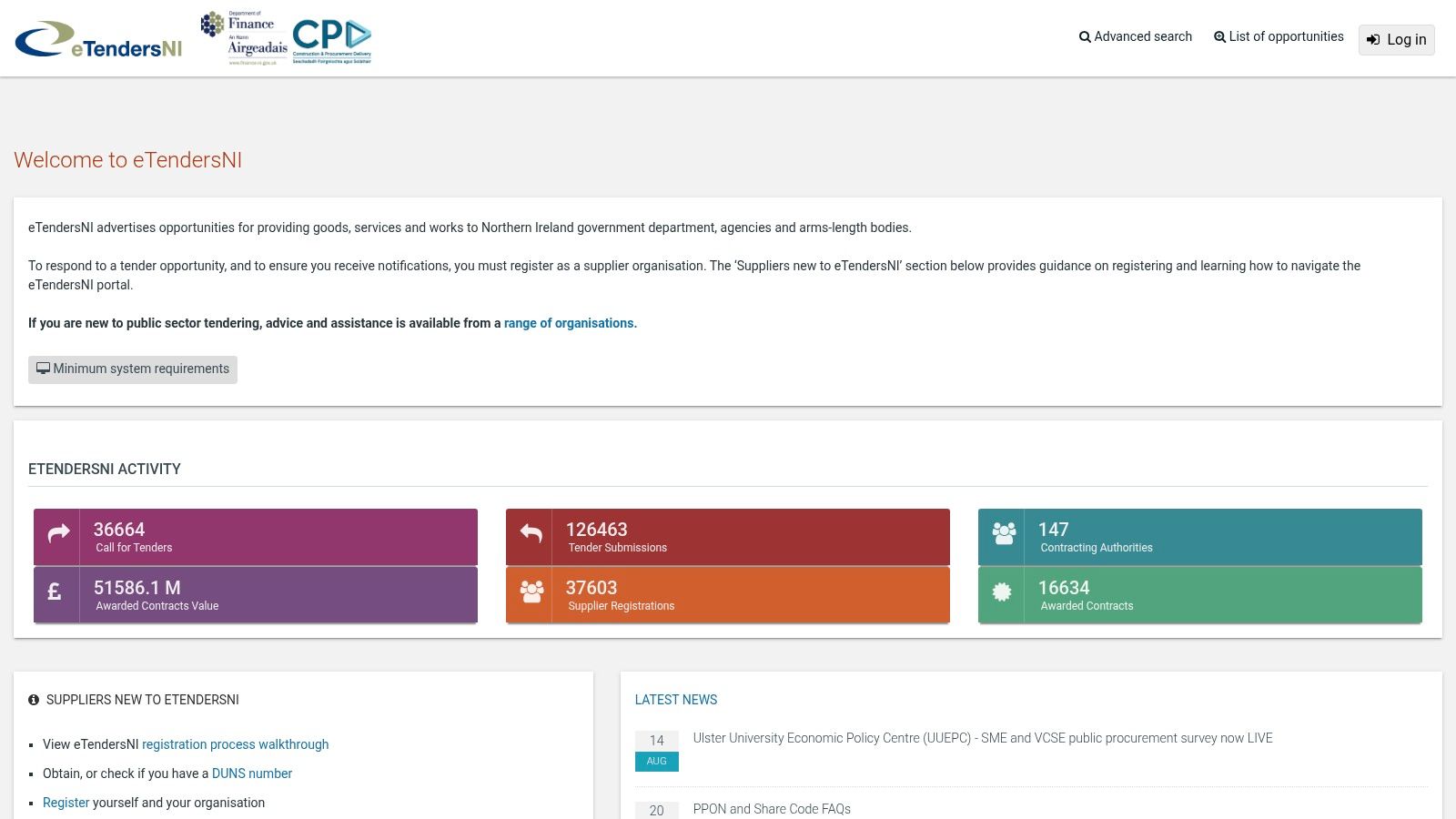
Northern Ireland has its own e-procurement portal, and it's not optional if you want that work. eTendersNI carries goods, services and works from departments, agencies and arm's-length bodies.
Unlike several portals here, registration isn't just for alerts. You need it to receive notifications and to respond online, so discovery and submission happen in the same system.
That sounds tidy. In practice it means learning one more set of screens, password rules and upload habits, ideally before a deadline forces the issue.
What helps smaller suppliers
The portal carries supplier guidance and walkthrough material, plus pipeline and subcontracting information. Pipeline sight is useful because it lets you plan capacity rather than react.
- Register early: Don't wait for a live tender to test your login.
- Use the guidance: Official walkthroughs beat guesswork on submission day.
- Plan outside the portal: Keep case studies and CVs in your own library for reuse.
Coverage stops at Northern Ireland, and work elsewhere needs other systems. If you bid across the UK, treat this as your fourth free login, not a replacement for the other three.
7. Stotles
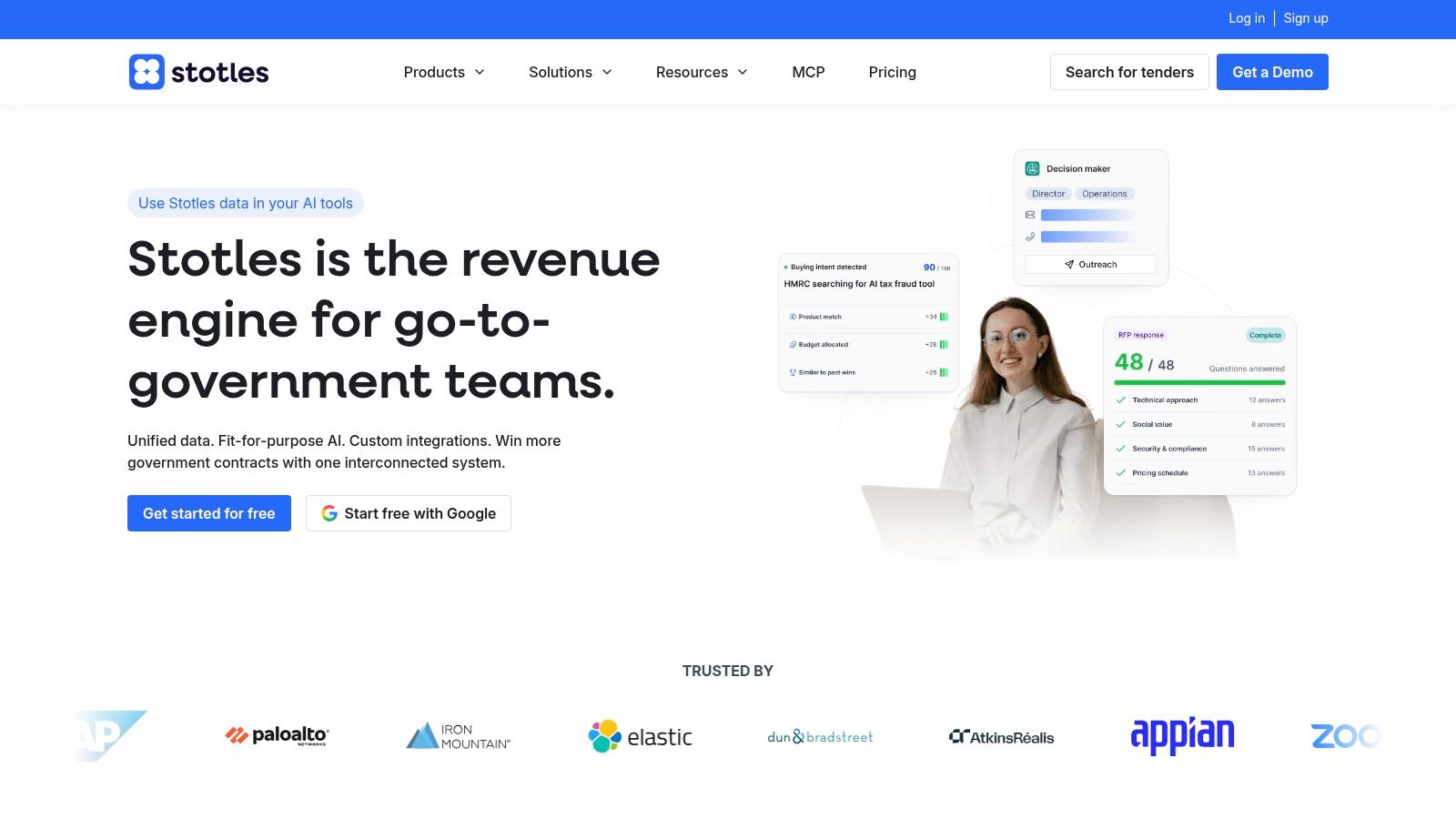
Stotles aims earlier than live notices. It's a discovery and bid-intelligence service, with a free tier for tender tracking and paid plans for buyer research.
The interesting part is forward signals. Expiring contracts, framework intelligence and pre-tender activity help you spot work before the notice drops, which is where incumbents usually win.
The Cabinet Office and HM Treasury SME action plan 2025 to 2028 states authorities must publish pipeline notices for intended requirements above £2 million, with commercial pipelines extending up to 18 months. Tools that surface those signals give you planning time, not just deadlines.
Who should pay for it
Bid-focused plans add AI bid or no-bid reports. Higher tiers add response drafting, collaboration, framework rankings and decision-maker contacts.
- Strong point: Buyer and expiry intelligence supports account planning.
- Weak point: Paid plans can be a big expense for a small team.
- Check first: Source coverage for your exact sector and regions.
My take: Pay for intelligence only if someone will act on it weekly. Unread expiry reports are just expensive guilt.
Start on the free tier. Upgrade when you can name the decisions the extra data will change.
8. BidStats
BidStats is a searchable database of current and historical tenders. It suits teams that like digging through award data before deciding where to spend time.
The free tier lets you try search, but it limits daily tender views and portal coverage. Paid plans raise limits and add daily email alerts, award details and historical data.
Award information includes awardees and contract values. That's gold for pricing sense checks and spotting buyers who repeatedly appoint the same supplier.
Use the history, don't just chase alerts
Higher tiers add expiring-contract pipeline data and exports. Those help if you monitor many buyers and want a forward list rather than a daily scramble.
- Strong point: Competitor and buyer research from past awards.
- Team fit: Pro includes three seats, which suits a small bid team.
- Weak point: It's discovery and intelligence, not a full response platform.
One discipline matters once you find a fit. The official Procurement Act 2023 e-learning on assessment and award says award criteria must be clear, measurable and specific, with scoring and minimum thresholds explained. Map your evidence to those criteria instead of writing general claims.
BidStats helps you choose battles. You'll still need your own drafting process to fight them.
9. Supply2Gov
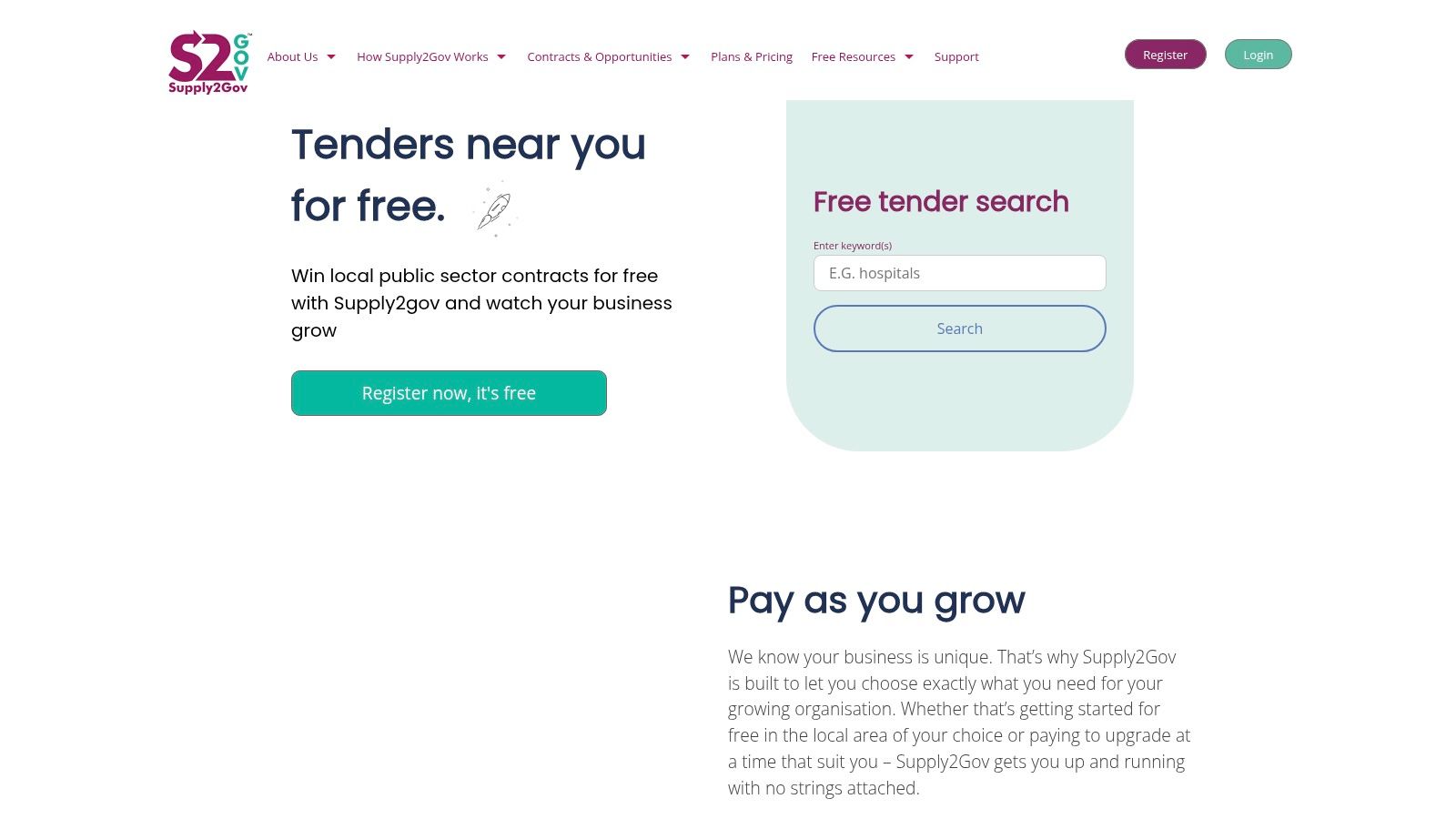
Supply2Gov is aimed squarely at SMEs that want alerts without portal-hopping. You set a profile for contract types and areas, and it emails matches.
The provider says it monitors more than 3,000 sources. Treat that as a vendor claim and test it against your own manual searches for a few weeks.
A free local service is the sensible entry point. Paid upgrades widen geographic coverage and add resources and events alongside the alerts.
Where it fits and where it doesn't
For a local trades or services firm, local alerts may be all you need. The moment you chase regional or national work, you'll hit the paywall.
- Strong point: Simple SME-friendly start, free at local level.
- Weak point: Relevance depends entirely on how well you set up your profile.
- Gap: No complete bid-writing workflow, so drafting stays on you.
Framework access also needs a reality check. The Government Commercial Agency news item on CCS suppliers reports 72% of suppliers on Crown Commercial Service agreements were SMEs in 2023 to 2024. Being listed is not the same as winning spend, so check actual call-off routes before celebrating.
Good for simple alerting. Less good if writing time is your real cost.
10. Tender Notify
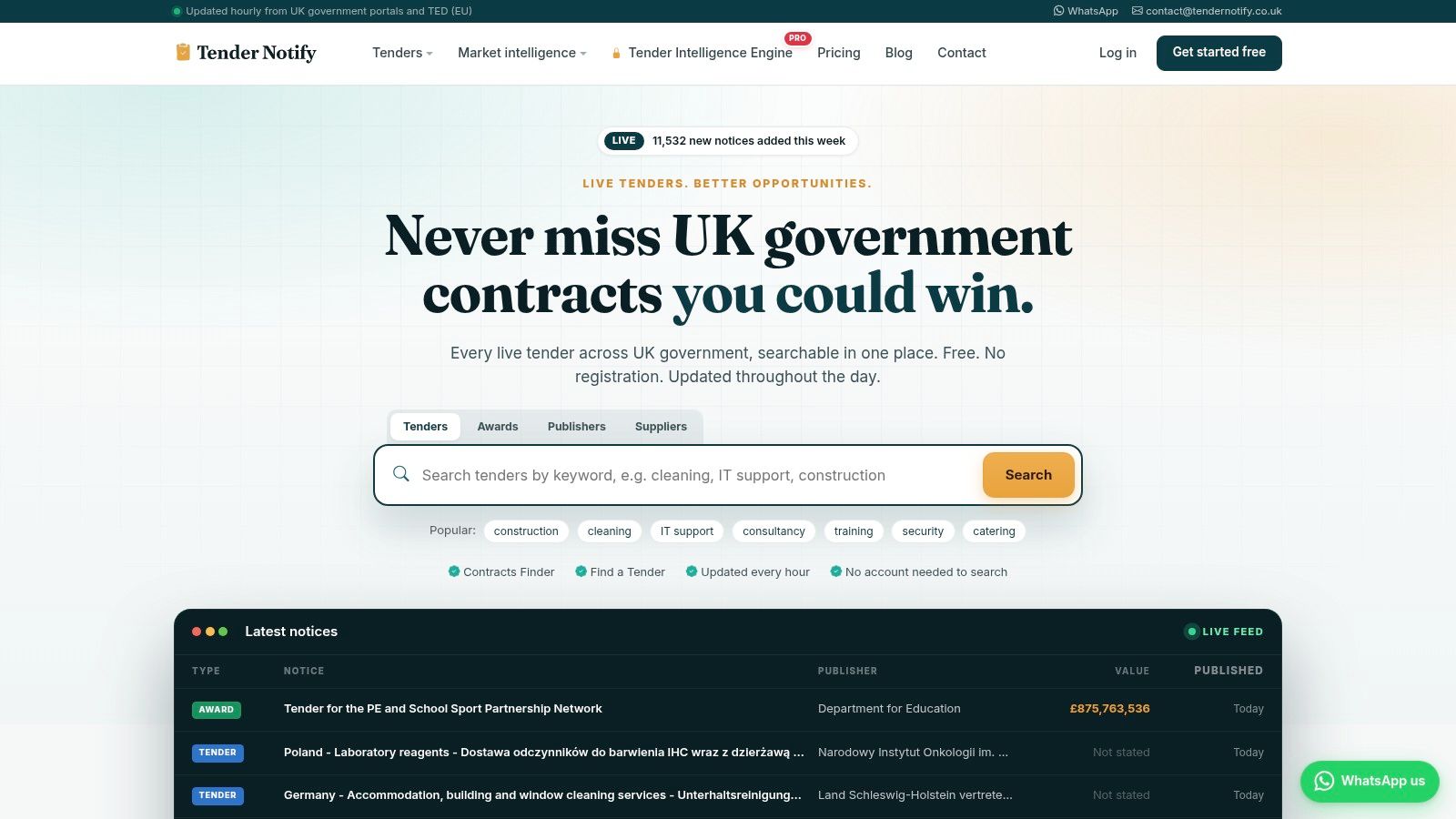
Tender Notify casts the widest geographic net here. It brings together UK, Irish and EU tenders, awards and frameworks in one search.
Free search covers live, future and awarded work, filtered by sector, region and CPV code. That's enough to judge whether its coverage matches your buyers before you pay.
Paid plans add saved-search alerts and a tender feed. Higher tiers add pipeline tracking, competitor analytics and decision-maker details.
Sensible way to trial it
Run your three most common searches for free and compare results with Find a Tender. If results match, you're paying for convenience and tracking, not unique coverage. That may still be worth it.
- Strong point: Several geographies and notice types in one place.
- Weak point: Email alerts aren't in the free plan.
- Always verify: Check deadlines against the original buyer notice before acting.
If you're an owner doing bids between other jobs, the guidance for SME owners is worth pairing with any aggregator. Alerts only help if someone triages them quickly.
Choose this for breadth. Choose a response tool for the writing. Don't expect one subscription to do both jobs well.
How the main UK tender portals and alert tools compare
The useful split is source of record versus monitoring layer. Official portals tell you what was published and what the buyer said. Alert tools save checking time, but they earn their keep only where they close a gap you would otherwise miss.
| Item | Price | UK Coverage | Best For |
|---|---|---|---|
| Bidwell | Tender discovery add-on £10 per month; paid plans vary | Every UK tender portal; matches by CPV code, keyword, region and value | Small teams that want matched tender emails plus drafted responses |
| Find a Tender | Free | England, Wales and Northern Ireland; separate route needed for Scottish below-threshold notices | Searching official UK-wide and higher-value opportunities |
| Contracts Finder | Free | Mainly England and non-devolved bodies | Finding English opportunities and researching contract awards |
| Public Contracts Scotland | Free | Scotland | Finding Scottish public-sector opportunities |
| Sell2Wales | Free | Wales | Welsh SMEs seeking public-sector and subcontract opportunities |
| eTendersNI | Free | Northern Ireland | Finding and responding to Northern Ireland public-sector tenders |
| Stotles | Free tier; paid plans available | UK public-sector opportunities; check sector and geographic fit | Tender discovery, buyer intelligence and bid workflows |
| BidStats | Free tier; paid plans available | UK tender and contract data; coverage varies by plan | Tender search, award research and pipeline planning |
| Supply2Gov | Free local service; paid upgrades available | Local coverage free; broader coverage on paid plans | SMEs wanting tailored tender alerts and procurement resources |
| Tender Notify | Free search; paid plans available | UK, Ireland and EU | Multi-geography tender monitoring and pipeline tracking |
In practice, the regional portals are the gaps. A firm working only in England can often run Find a Tender plus Contracts Finder. Add Scotland and the routine changes, because PCS is its own check. Wales and Northern Ireland have the same issue through Sell2Wales and eTendersNI.
That is where aggregators fit. They are strongest when they spare you separate logins, weaker when they duplicate searches you already get free. Keep the official portal in the loop for wording, deadlines and award detail; use the paid layer for triage, history and catching notices outside your usual patch.
Set Up Your Alerts Once and Let the Portals Do the Searching
Pick portals by buyer, not by habit. If your buyers are English councils and NHS trusts, Find a Tender plus Contracts Finder covers most of your week. Add Scotland, Wales or Northern Ireland only if you'll deliver there.
That choice matters because SME success isn't evenly spread. The British Chambers of Commerce update on SME procurement reports £227.7 billion in third-party public-sector procurement expenditure for 2024, of which £45.4 billion went directly to SMEs. Local government awarded £28.1 billion directly to smaller suppliers, 35% of its spend.
Central government was far lower at 11%, with the NHS at 19%. So a small firm chasing only big central departments is fishing in the hardest pool. Local and health buyers deserve more of your monitoring time.
Contract size also argues for a system, not heroics. That same update puts median direct public-sector spend per SME at £31,000, which shows how fragmented the work is. You win by spotting lots of modest fits early, not by betting a month on one giant tender.
A weekly routine that holds together
Build saved searches with buyer language, not your sales language. Test them against manual searches for a month and fix the misses.
- Monday: Triage alerts, kill obvious no-bids in ten minutes.
- Wednesday: Check pipeline and award notices for upcoming renewals.
- Friday: Review what you missed and adjust CPV codes and keywords.
Pipeline notices deserve their own habit. The Home Office SME action plan 2026 to 2028 confirms buyers must publish pipeline notices on Find a Tender for intended requirements above £2 million. Treat each one as a planning signal, then log buyer, likely date, value band and fit.
When a live notice lands, the clock is formal. The Procurement Act 2023 Part 3 requires a tender notice for open and competitive flexible procedures, starting the competition under statutory minimum time limits. Work backwards from that deadline and protect review time.
Then audit winnability before writing. Check lotting, insurance and financial thresholds, delivery footprint, mobilisation dates and minimum scores. A label saying suitable for SMEs doesn't make a contract profitable.
If you can't name your evidence for each scored criterion, you don't have a bid yet. You have a hope with a deadline.
Run the free portals properly for a month before paying anyone. If you're still missing work or spending hours searching, a paid aggregator earns its place. If searching is fine but writing eats your week, your problem sits elsewhere.
Bidwell's tender discovery add-on costs £10 a month and emails only tenders matching your sectors, frameworks and CPV codes. We watch every UK portal, and you still review, polish and submit every response yourself. That's the right division of labour for most small teams.
Stop spending Monday mornings hopping between four portals and Thursday nights rewriting the same policies from scratch. Bidwell combines UK-wide tender monitoring, a free knowledge base built from your own bids and credentials, and AI response generation that cites its sources, so you can spend your time choosing and improving bids instead.


