
SMEs received £45.4 billion in direct UK public-sector procurement spend in 2024, yet their share was only 20%, according to the British Chambers of Commerce. There's plenty of work available. Winning it takes more than a polished proposal.
Most proposal software is built for sales decks, not public tenders. It helps you present a price, track a prospect's interest and collect a signature. A bid manager needs to interpret requirements, find approved evidence and submit answers in the buyer's prescribed format.
The best proposal management software therefore depends on the job. These seven options cover sales proposal builders, enterprise RFP response platforms, document production and a UK public-sector tender tool.
Each gets a practical verdict, pricing and trade-offs, including whether it covers tender monitoring, knowledge base reuse and AI response generation. If you need to send a proposal as a link, a sales tool may be enough. If you're answering a formal tender, presentation is only part of the work.
1. Bidwell
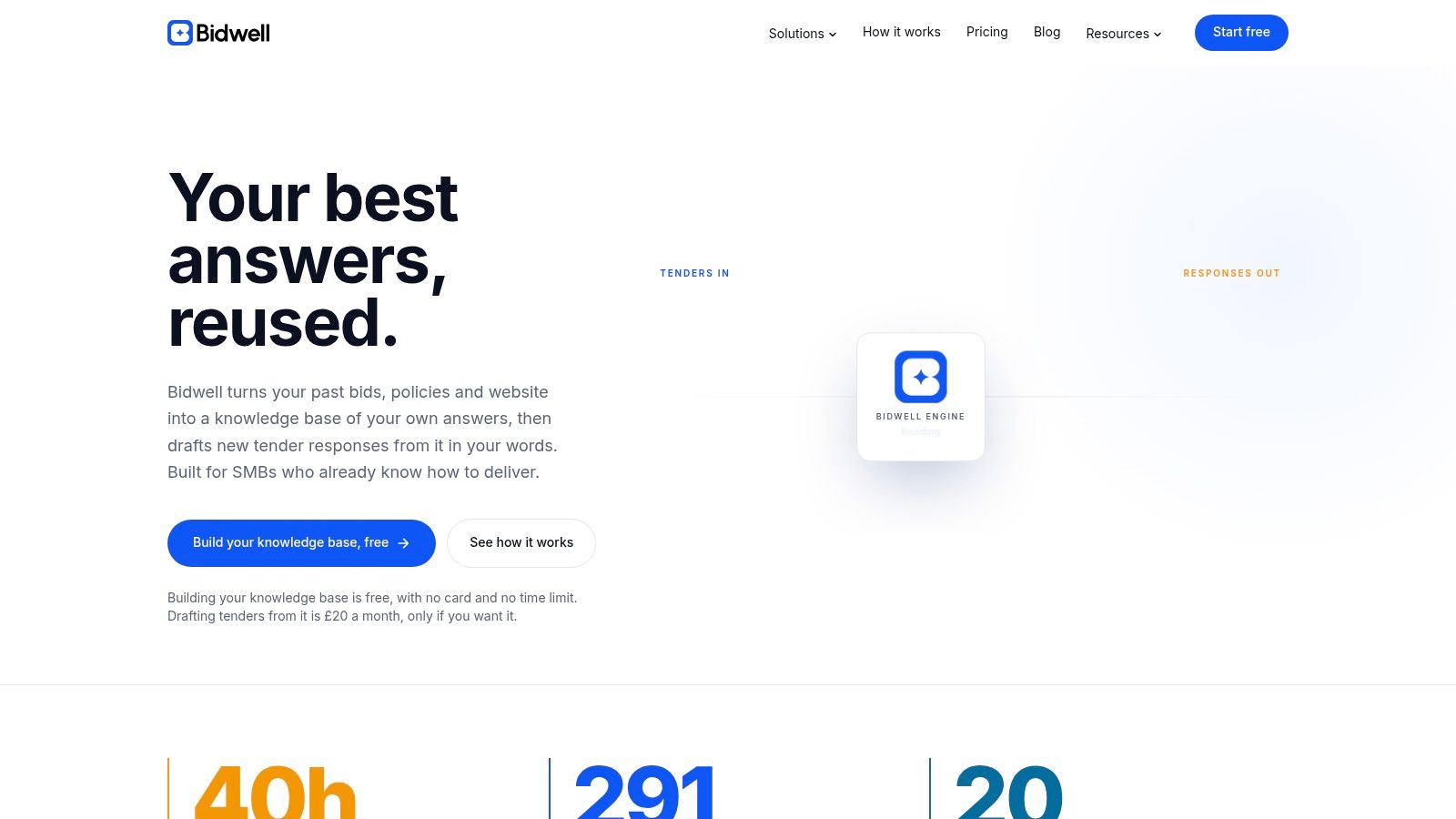
Job it does: UK public-sector tender discovery and response drafting for SMEs. Bidwell watches every UK tender portal, sends daily alerts, then drafts a first-pass response from your past bids, case studies, methodologies and team biographies.
Set-up takes 15 minutes and is built around learning the business once: upload credentials, past responses and supporting evidence, and the first draft can come back in minutes. The draft is written against the actual tender notice, so the review job is checking accuracy, evidence, commitments, word limits and scoring criteria rather than assembling boilerplate.
From opportunity alert to reviewed response
The practical value is the handoff. Bidwell produces the first complete draft, the customer reviews and approves every word, and a human signs the bid before it goes out. Its bid-writing software also gives role-based access through the Know module, so commercial material stays visible only to those who need it, and drafted responses can be exported to Word and Excel.
- Pros: Portal monitoring, knowledge-base reuse and AI drafting sit in one workflow. There are no per-bid or per-seat fees, and free tools cover tender readiness, framework eligibility and cost-to-respond estimates.
- Cons: It is focused on UK public tenders rather than sales proposals or global RFP libraries. AI output still needs bid-owner judgement on win themes, pricing risk and buyer nuance.
Practical rule: Speed only helps if review stays strict. Check every claim, CV match and commercial commitment before submission.
Best for: UK SME bid managers and owners who want tender alerts plus evidence-based first drafts without adopting an enterprise response platform.
2. Loopio
An IT supplier answering recurring security questionnaires has a different problem from an SME searching for its next council contract. Loopio suits the recurring-response problem.
Its searchable answer library, AI-assisted drafting and review workflows help teams reuse approved material across RFPs, RFIs, due-diligence questionnaires and security questionnaires. Contributors can work within defined roles instead of passing documents around by email.
Pricing: Loopio uses quote-based pricing, with its Foundations plan starting at 10 seats. That makes team size and recurring workload important buying considerations, not details to settle after the demo.
Buy the response process, not just the library
The strongest reason to choose Loopio is coordination. A bid manager can bring technical, legal and commercial contributors into a repeatable response process, with a translation add-on available for multilingual work.
- Pros: Searchable approved answers, collaboration and review controls suit cross-functional bidding. Vendor materials and G2 review themes highlight its library and workflow capabilities.
- Cons: Someone must maintain the library. Old service descriptions and expired credentials remain wrong even when AI retrieves them quickly.
- Core-feature fit: Knowledge base reuse and AI response generation are central. UK tender monitoring isn't its main job, so opportunity discovery needs a separate process.
The useful Loopio comparison is therefore about workload. Do you need a governed response operation across departments, or a smaller workspace connecting UK opportunity alerts to drafting?
Best for: Established bid teams handling recurring questionnaires and formal RFPs, with enough response volume and contributors to justify a dedicated platform.
3. Responsive
Responsive, formerly RFPIO, covers a broader response-management workflow. It supports document import, requirements analysis, content search, drafting, contributor assignments and final packaging.
That breadth matters when the bid manager's problem isn't just writing. It's understanding the request, deciding who owns each requirement and getting approved answers back before the deadline.
Pricing: Responsive uses quote-based packaging, with its Emerging Edition starting at US$10,000. Establish what the quoted package includes before comparing it with monthly SME subscriptions.
A convincing AI demonstration isn't enough. Put an awkward requirement and an incomplete source document into the trial.
Where the breadth pays off
AI can analyse documents, suggest answers from approved content and summarise information for bid decisions. Source references help reviewers investigate the basis for generated text, while task assignments keep cross-departmental contributions visible.
Pros: It covers several stages of response work rather than operating as a standalone writing assistant. G2 users identify its AI response tool and centralised content as useful strengths.
Cons: Implementation and process setup may outweigh the benefit for occasional bidders. Reviewers still need to check accuracy, compliance and whether an answer addresses this buyer rather than a similar past requirement.
Core-feature fit: Knowledge base reuse and AI response generation are strong reasons to shortlist it. Don't assume they include UK portal monitoring; compare those capabilities separately when assessing public-sector tender workflows.
Best for: Organisations with regular, high-volume RFP work involving several departments and a need for coordinated analysis, drafting and approval.
4. XaitPorter
Say your technical specialists are writing different sections of a lengthy submission. The commercial team changes a schedule, numbering shifts and someone pastes an outdated diagram into the final document.
XaitPorter addresses document production rather than opportunity discovery. Its real-time co-authoring, database-managed content and automated formatting help teams produce structured bids while contributors work in parallel.
When document assembly is the real bottleneck
XaitPorter doesn't clearly publish pricing, so you'll need a quote covering the platform and implementation. Treat ongoing administration as part of the decision, alongside the subscription.
- Pros: Co-authoring, task tracking and document status visibility help organise large submissions. G2 review summaries praise simultaneous collaboration, reduced version-control friction and consistent tender presentation.
- Cons: Review summaries flag limitations around customisation and image handling, plus a stronger fit with Microsoft tools than Google Workspace. Test your actual diagrams and templates.
- Core-feature fit: Reusable content supports knowledge reuse, but this is primarily a document-production choice. UK tender monitoring and source-grounded AI response generation should be assessed separately.
When evaluating software for managing documents, test the final output rather than stopping at the editor. Check headings, cross-references, tables, images and the export format the buyer requires.
I'd also make contributors edit the same submission during the trial. A demonstration with a tidy template won't tell you whether the system handles your technical appendices and late-stage revisions.
Best for: Bid managers coordinating large, document-heavy tenders where parallel authoring, layout and controlled assembly cause more trouble than first-draft writing.
5. PandaDoc
PandaDoc belongs in the generic sales proposal group: it handles commercial documents such as proposals, quotes, contracts, tracking and e-signatures.
That job is clear when the customer can review your proposal and sign it directly. It is weaker when a public buyer requires answers in a spreadsheet and submission through its procurement portal.
Pricing: PandaDoc lists annual-billing prices of US$0 for Free eSign, US$19 per user per month for Starter and US$49 per user per month for Business, with Enterprise priced by quotation.
Stronger for the proposal-to-signature job
The drag-and-drop editor and templates standardise routine sales documents. Content reuse, collaboration and CRM integrations reduce copying between the sales record and the proposal, which helps when quotes and contracts follow the same commercial path.
- Pros: Creation, signing and tracking sit together, and G2 reviewers commonly praise PandaDoc's ease of use.
- Cons: Advanced approvals and document controls depend on the plan. Some user reviews flag friction with editing sent documents and expiry handling, so include both tasks in your trial.
- Core-feature fit: A content library supports reuse, but reuse alone does not make an evidence-governed tender knowledge base. Treat AI writing as drafting help unless it can cite the source material, and keep UK tender monitoring separate.
For a mixed sales and bidding team, PandaDoc can sit beside a tender platform rather than replace one. Match the workspace to the buyer's required submission method.
Best for: SMEs that mainly need branded commercial proposals, quotes, tracking and signatures, with public-sector tendering handled through a separate process.
6. Better Proposals
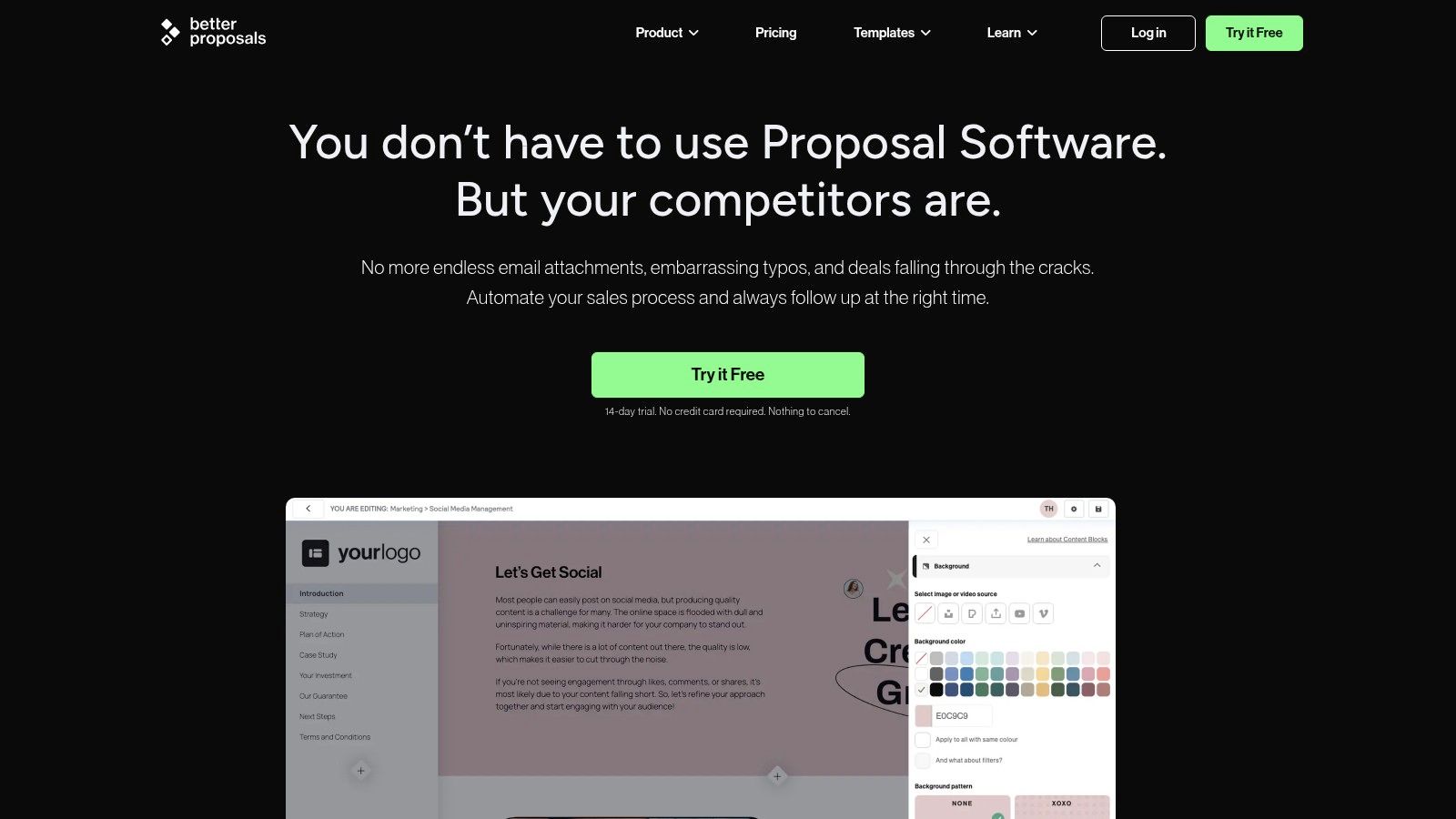
A small consultancy sending scoped service proposals may not need an enterprise RFP platform. Better Proposals offers a lighter approach: online templates, reusable content, e-signatures, payment collection and engagement analytics.
The buyer can read a web proposal, accept it and pay. That's a sensible commercial workflow, provided the buyer hasn't prescribed a formal response template.
Pricing: Better Proposals lists UK annual-billing prices of £10 per user per month for Starter, £18 for Premium and £33 for Enterprise. Public sterling pricing makes the initial comparison straightforward, although plan limits still matter.
Don't buy engagement analytics to solve a compliance problem. Knowing someone opened your proposal doesn't establish that you answered the specification.
The useful features are practical rather than procurement-specific. Templates and reusable sections support consistency, CRM integrations connect sales work, and optional template-design services can help convert existing material.
Pros: Core proposal functions sit in a relatively focused product. Signatures, payment collection and opening analytics suit smaller commercial sales teams.
Cons: Some plans limit proposal volume, while advanced permissions, approvals and unlimited documents require higher tiers. Lengthy, multi-author, compliance-led RFP responses aren't its natural fit.
Core-feature fit: Reusable sales content is covered, but UK tender monitoring and source-grounded AI response generation aren't the main proposition. Keep a separate evidence and compliance process for formal bids.
Best for: Small businesses sending repeatable online sales proposals, particularly where client acceptance and payment matter more than procurement questionnaire management.
7. Proposify
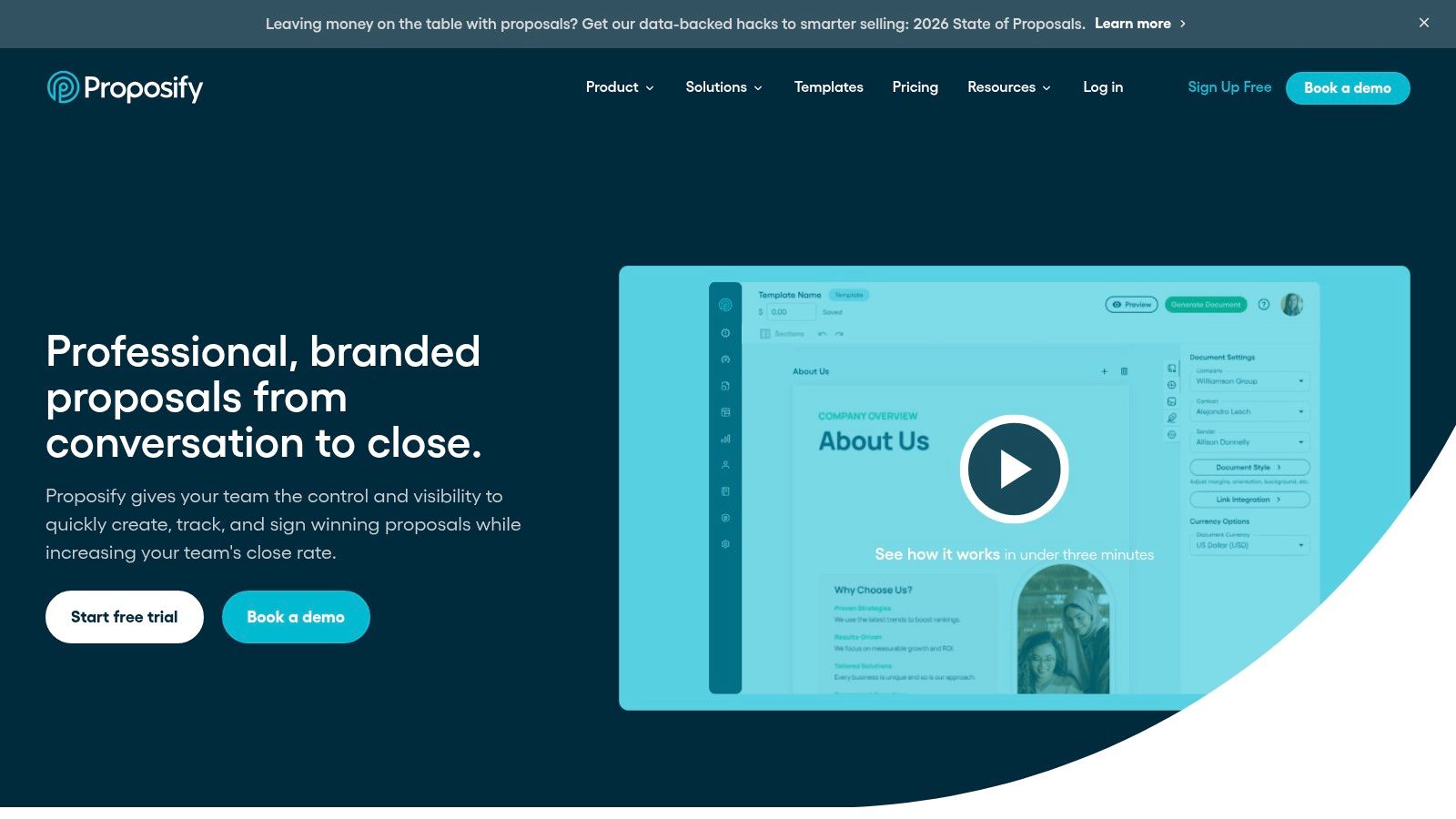
Choose Proposify when commercial presentation and pricing control are the job. Its templates, content library, product catalogue and interactive pricing help sales teams build repeatable customer-facing proposals.
E-signatures and engagement analytics support the send-and-follow-up process. Higher tiers add approvals, reporting, roles and permissions for teams that need tighter administrative control.
Compare the package, not the headline price
Proposify lists Build at US$35 per user per month billed annually, Grow from US$325 per month annually with five seats, and Scale from US$1,066 per month annually with ten seats, plus a 14-day Build trial. UK buyers should account for currency conversion and VAT when budgeting.
- Pros: Templates and reusable content support consistent branding. Reviewers commonly praise proposal presentation, and interactive pricing is useful when customers need to compare service options.
- Cons: Approvals and some administrative features sit on higher tiers. A low-volume team may not need the broader package required to obtain a particular control.
- Core-feature fit: Content reuse supports sales production, not necessarily approved tender evidence management. UK tender monitoring and source-cited AI response generation aren't its primary purpose.
Use the trial to build a real proposal with optional services, internal approval, and a customer signature. Then check whether the buyer accepts that delivery format.
For public tenders, the required response structure takes priority over brand layout. A polished web proposal won't replace a completed pricing schedule or mandatory questionnaire.
Best for: Sales directors and service businesses that need branded proposals, interactive commercial options and controlled customer-facing documents.
How the seven tools compare on price, free options, best use and UK tender monitoring
| Item | Starting price | Free option | Best for | UK tender monitoring |
|---|---|---|---|---|
| Bidwell | Plans on Bidwell's website; no per-bid or per-seat fees | Three free tools: readiness, eligibility and cost-to-respond | UK SMEs drafting tender responses from existing content | Yes; watches major UK portals |
| Loopio | Quote-based | Not stated | Teams managing recurring RFPs and questionnaires | No; focused on response management |
| Responsive | US$10,000 for Emerging Edition | Not stated | Organisations with high-volume, cross-team response work | No; focused on response management |
| XaitPorter | Quote-based | Not stated | Teams producing large, complex bid documents | Not stated |
| PandaDoc | US$0 for Free eSign; paid plans from US$19/user/month | Free eSign plan | SMEs creating, sending and signing commercial proposals | No; not a specialist tender platform |
| Better Proposals | £10/user/month | Not stated | SMEs creating and sending sales proposals | No; not designed for tender discovery |
| Proposify | US$35/user/month, billed annually | 14-day Build trial | Teams creating branded sales proposals | No; focused on commercial proposals |
Read it by job: the low headline prices sit with sales proposal tools, while Loopio, Responsive and XaitPorter need a quote. Only Bidwell pairs drafting with UK portal monitoring; the others assume you already found the work.
Choosing by Job, Not by Logo, and Where to Start
The best proposal management software matches the work you do. PandaDoc, Better Proposals and Proposify suit commercial proposal creation and acceptance, Loopio and Responsive suit recurring response management, and XaitPorter suits complex document production.
For UK public-sector bidding, start earlier than drafting. The Government Commercial Agency's procurement guidance identifies lack of opportunity awareness, insufficient planning time, complex processes and short bidding timescales as barriers for SMEs.
That's why tender monitoring, a maintained knowledge base and source-cited AI response generation belong in the same buying conversation. Finding a suitable opportunity late can leave even a capable writer with an impractical deadline.
Test the whole response, including review
Use a live tender for the pilot, with permission to upload the documents involved. Time the first draft and compare it with your last response, but also record evidence checking, specialist review, formatting and corrections.
- Test discovery: Can you filter by geography, sector, contract value and eligibility rather than receiving a long list of loosely related notices?
- Test reuse: Can the reviewer find the approved case study, policy or credential supporting each important claim?
- Test drafting: Does the answer address the actual requirement, respect the word limit and expose missing evidence?
- Test handover: Can you export, approve and submit in the buyer's required format without rebuilding the document?
AI governance belongs in that pilot too. Government guidance on AI transparency in procurement allows contracting authorities to ask whether suppliers used AI and stresses controls protecting confidential information.
If delivery coordination is also a problem, separately find software for managing consulting projects. Don't expect a proposal editor to manage the awarded contract.
Choose the tool that reduces unsuitable bids and produces a defensible submission, not merely the quickest paragraph.
Bidwell combines UK tender monitoring, a searchable knowledge base and AI response generation grounded in your company material. Visit Bidwell, upload your approved credentials and past responses, and test a draft against a tender you're considering. Review the cited evidence and final answers before you submit.


