The popular advice about the best AI writing tools usually starts in the wrong place. It asks which platform produces the most polished paragraph, as though every team is choosing between identical blank-page assistants.
A marketing copy tool, an enterprise governance platform and a tender-response system solve different problems. The right choice depends on what you need to write, where your source material lives, how much review the document requires and whether the output must satisfy UK public-sector procurement requirements.
That distinction matters because writing is already the most common reported generative-AI use among UK users. In the UK Government's DSIT Public Engagement Survey 2025/26, 58% of generative-AI users selected writing or editing documents, ahead of work-related use at 46%. Adoption brings a practical obligation with it. Teams need confidentiality controls, evidence checks, consistent UK English and a human decision-maker who remains accountable for the final document.
For bid teams, I've judged these tools against more than prose quality. The useful benchmark is whether a platform supports tender monitoring, a reusable knowledge base and reliable AI response generation. I've also considered workflow fit, collaboration, pricing position, source control and suitability for UK bids. General writing platforms can still be valuable, particularly when paired with a specialist tender process, as the Outrank AI writer review illustrates.
1. Bidwell
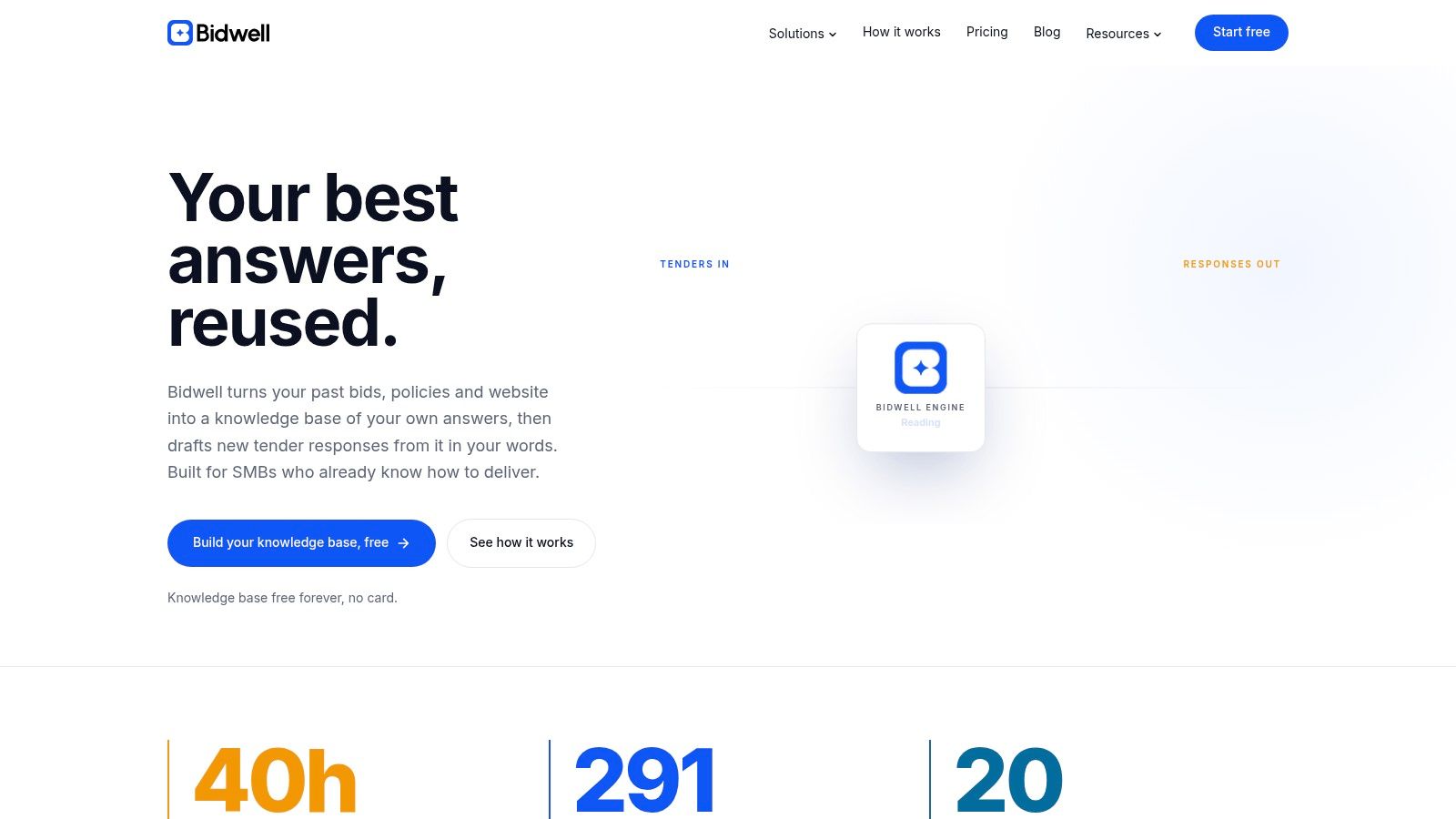
General AI writing tools can produce polished prose. They do not automatically know which evidence is approved, whether a policy is current or how a UK tender workflow should be managed. Bidwell is designed for UK SMEs that need to find public-sector opportunities and build evidence-led responses without reopening a blank document for every submission.
It combines tender monitoring, a company-owned knowledge base and AI response generation in one workflow. The platform monitors major UK portals, including Find a Tender, Contracts Finder, Public Contracts Scotland and Sell2Wales, then matches opportunities by sector, CPV code, region and contract value. Bidwell's tender response software connects opportunity discovery with the work of preparing a submission.
Why it fits bid teams
Bid teams can add past bids, policies, case studies, credentials and website content to a searchable knowledge base. Bidwell uses that approved material to draft answers in the organisation's voice, with citations leading back to source documents. This gives reviewers a clearer evidence trail than a general chatbot usually provides.
The distinction matters in practice. A general writing platform may help improve wording, but it will not automatically identify the approved case study for a requirement or show which policy supports a claim. Bidwell still requires subject-matter review. It reduces repetitive drafting while leaving interpretation, compliance and evidence decisions with the bid team.
Bidwell states that a 20 to 40 hour bid-writing task can become a first draft in minutes, followed by 2 to 4 hours of review and refinement, as outlined in its product and pricing details. Treat those figures as a product claim and test them against a representative tender before building capacity plans around them.
The knowledge base is free forever, drafting costs £20 per month, the first three answers are free to try, and UK-wide tender discovery can be added for £10 per month, making £30 per month for both services.
Practical rule: Use AI to reduce repetitive drafting, not to remove the bid manager's responsibility for evidence, interpretation and compliance.
Bidwell stores data in the UK and says customer content is not used to train a shared model. It also works with Word and Excel outputs, which helps when a buyer supplies fixed templates or pricing schedules. The trade-off is scope. The platform focuses on UK public-sector tenders, rather than international or private-sector opportunities, and every response still needs expert checking.
A customer described the result this way: “Bidwell has completely redefined our RFP workflow... We aren't just saving time; we're submitting higher quality bids and staying ahead of the curve with proactive tender alerts.” The comment comes from Helen Stonehouse, VP Business Operations at Purple. It illustrates the intended workflow, but your own evaluation should carry more weight.
2. Microsoft Copilot for Microsoft 365
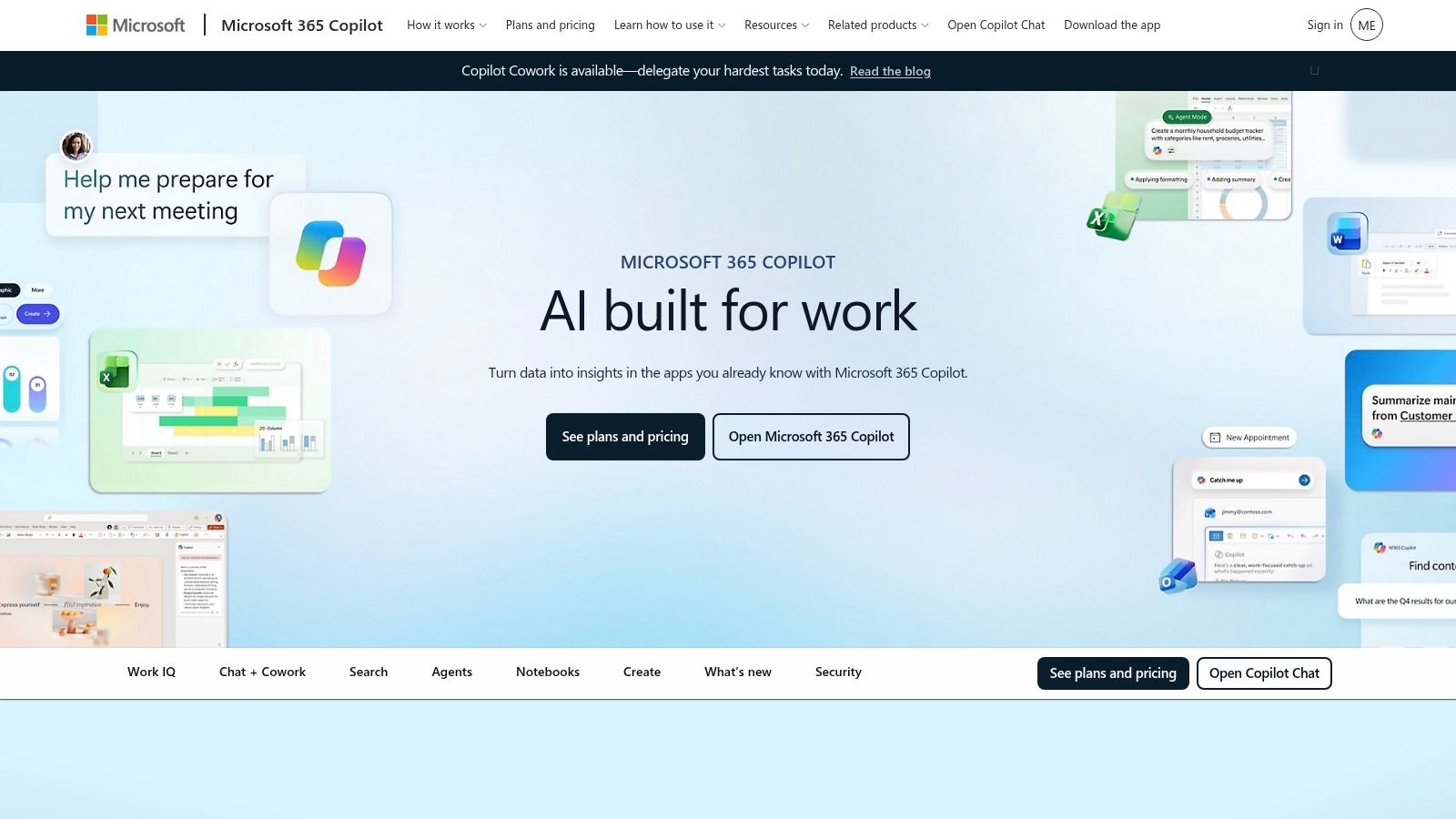
Microsoft Copilot for Microsoft 365 is the natural choice for teams that already work in Word, Excel, PowerPoint, Outlook and Teams. It puts drafting, rewriting, summarising and file creation inside the applications people already use, so the change to daily habits is relatively small.
For a bid manager, that can mean drafting a response directly in Word, turning a long document into an executive summary or asking Excel to help interpret a workbook. PowerPoint can create slides from a brief or source document, while Copilot Chat supports iterative editing within the wider Microsoft environment. Microsoft's Copilot product page explains the available app integrations and plan differences.
Where it works well
Microsoft's main strength is organisational fit. Teams with established SharePoint, OneDrive and Microsoft 365 permissions can keep work within familiar tenant controls. Auditability, retention and access policies can align with existing administration rather than creating a separate writing environment.
That makes Copilot useful for first drafts, red-lining, meeting summaries and internal review. It can help turn approved notes into a structured Word document, but the quality depends heavily on how clean and accessible those source materials are.
Copilot can improve the document you have. It can't compensate for a disorganised evidence library.
The limitation for tender teams is process coverage. Copilot doesn't, by itself, provide focused monitoring across Find a Tender, Contracts Finder, Public Contracts Scotland and Sell2Wales. It also doesn't automatically create a bid-specific knowledge base that maps company evidence to evaluation questions.
Its full feature set requires an appropriate Copilot licence, and availability varies by plan and tenant configuration. That makes cost and administration worth checking before rollout. For organisations that mainly need drafting within an established office suite, Copilot is a sensible option. For teams that need opportunity discovery and cited tender responses, it works better alongside a specialist platform such as Bidwell. A relevant Microsoft productivity software package can sit within that broader workflow.
3. Google Workspace with Gemini
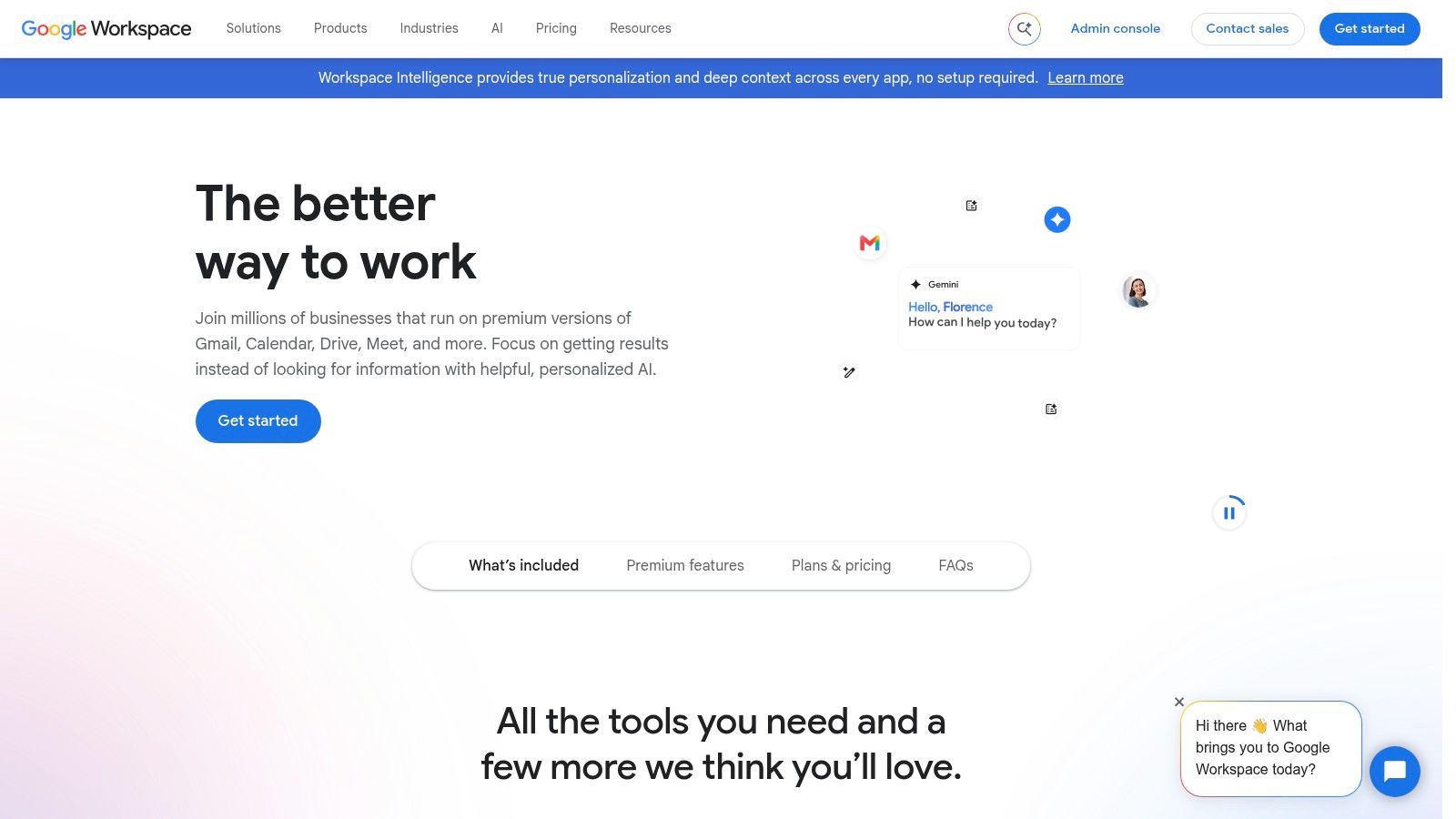
Google Workspace with Gemini suits organisations that write collaboratively in Docs, manage correspondence in Gmail and prefer browser-based working. Its value comes less from specialist bid knowledge and more from keeping AI assistance inside the existing Workspace flow.
In Docs, Help me write can draft, rewrite and adjust tone. Gmail offers similar assistance for correspondence, while Gemini features extend into other Workspace applications. Administrators can control licensing and enable or disable AI features, although availability depends on the Workspace edition.
A good collaborative drafting layer
Google Docs is useful when several contributors need to comment, edit and work from the same live document. That can help a bid team gather technical input from an operations lead, clarify a service method with a subject specialist and maintain one working draft rather than circulate multiple attachments.
The difficulty comes when the team needs evidence traceability. Gemini can assist with wording, but it isn't automatically a controlled repository of approved credentials, policies and past tender answers. Someone still needs to decide which source document supports each claim.
Teams should also check the relevant Workspace tier before committing. Features and access vary by edition, and organisations on non-eligible tiers may need to upgrade. The current Google Workspace product information is the right place to confirm what's included.
For a bid team, Gemini is strongest as a collaborative writing layer. It can help with a response outline, a clarification email or a concise summary of a technical method. It's less suited to the full process of monitoring UK opportunities, classifying them and generating cited answers from a dedicated knowledge base. The Google document creation software package is relevant for teams assessing that office-workflow category.
Review the source, not just the sentence. A fluent paragraph can still contain an unsupported promise or an inaccurate interpretation of the tender.
Gemini therefore makes sense for teams already organised around Google Docs and Gmail. Add a specialist tender platform when the work depends on portal coverage, reusable evidence and question-by-question response control. Writing teams can also compare its Workspace role with Google Workspace AI tools from Writingmate.
4. Grammarly
Grammarly is a final-mile writing tool rather than a complete tender platform. It's particularly useful when several people contribute to a bid and the final document needs consistent grammar, tone and regional English.
Its AI prompts can suggest rewrites, while grammar and style checks identify awkward phrasing. Higher tiers add plagiarism checking and AI-generated text detection. Teams can also set the dialect to British English, which helps prevent American spelling and usage from appearing in a UK submission.
Where Grammarly earns its place
A bid writer can use Grammarly after the substantive answer has been drafted and checked against the tender. It can tighten a long paragraph, improve an email to a procurement contact or identify inconsistent wording across a document.
That's a valuable distinction. Grammarly can improve clarity, but it doesn't know whether a service description reflects the actual delivery model. It won't decide whether a case study is relevant to the evaluation criterion or whether a proposed commitment has been approved internally.
Team and enterprise management are available on higher tiers. Prompt allowances vary by plan, so frequent users should check the current limits on the Grammarly website before selecting a package.
Use Grammarly after evidence review. Polishing an unsupported claim only makes the claim more persuasive.
The main trade-off is configurability. Grammarly is easy to adopt and helpful across large documents, but its generative output is less specific than a system built around a company knowledge base. It also needs to be paired with a document workflow, tender monitor or response platform.
For Bidwell users, Grammarly can be a useful finishing layer. Bidwell finds relevant opportunities, stores approved evidence and creates cited drafts. Grammarly can then help the writer refine readability and UK English before the final internal sign-off. That combination keeps editing separate from evidence generation, which is usually safer than asking one tool to do everything.
5. Jasper
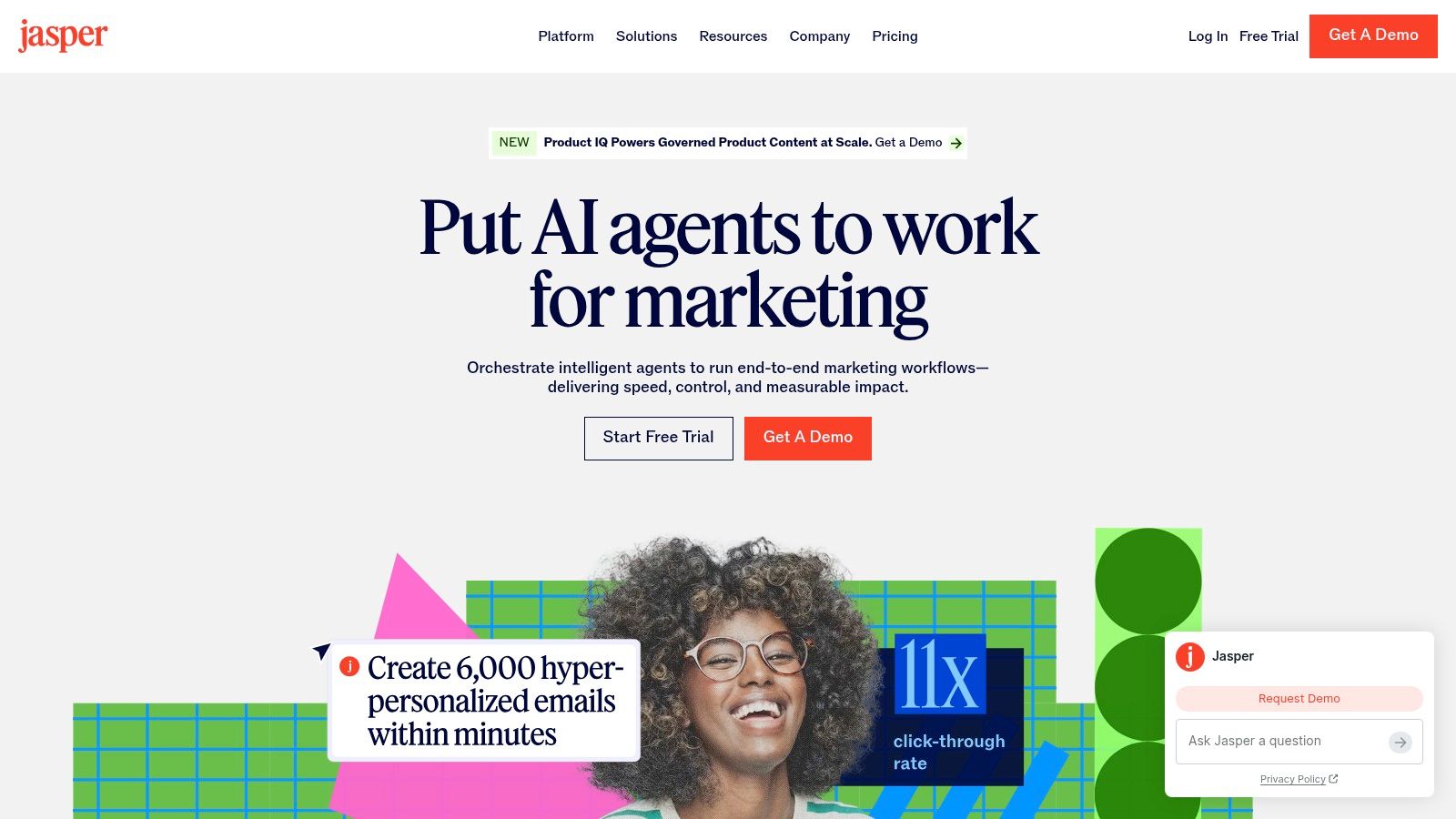
Jasper is aimed at teams that need a consistent brand voice across marketing, sales and supporting bid content. Its Brand Voice controls, style guides, knowledge connectors and Jasper IQ features help teams establish common terminology and preferred ways of presenting information.
That makes it useful for case studies, executive summaries, capability statements and web content that supports tender evidence. A marketing team can prepare a case study in the same voice used by the bid team, rather than creating a separate style for every channel.
Stronger for brand governance
Jasper's value appears when several people create content and the organisation needs more than an informal prompt library. Workspace defaults can guide tone and terminology, while connectors can bring in approved knowledge from connected sources. Its integrations include services such as Semrush, Webflow, SharePoint, Google Drive and Zapier.
For a bid manager, the practical use is preparing consistent supporting material. Jasper can help turn service notes into a case study or create a concise capability summary that later enters the company's approved evidence store.
It isn't a tender-monitoring system. It won't replace opportunity matching across UK portals, and it doesn't automatically provide the bid-specific citation path that a specialist response tool should offer. Its strongest role is content governance around the bid process.
Pricing is higher than lightweight generators, with the best value generally appearing at team scale. Some SEO functions may also require an external subscription, such as Semrush, for live data. Check the current offer on the Jasper website before comparing it with smaller tools.
Jasper is a good choice when brand control and multi-user content production matter as much as drafting speed. It's less compelling for a small SME whose immediate problem is finding live tenders and answering evaluation questions from approved evidence. In that situation, Bidwell's tender monitoring, knowledge base and AI response generation are closer to the operational need.
6. Writesonic
Writesonic is built for teams that connect writing with search visibility, research and publishing. Its SEO AI Agent can help plan, brief and optimise content, while its AI Content Agent supports research, drafting, review and brand polishing in a more structured sequence than a basic chat tool.
That workflow suits a business that bids for contracts and also publishes thought leadership, service pages and supporting articles. The same subject-matter expertise can feed both channels, provided the bid team approves the factual content before publication.
Useful beyond the tender document
Writesonic's brand-voice profiles and multi-brand management can help agencies or groups with several service lines. The platform is also designed to support a content pipeline rather than isolated prompts, which can reduce the amount of manual direction needed for recurring marketing work.
Its weakness is the difference between search content and procurement content. An article can be improved for search intent without needing to preserve mandatory tender wording, answer a scoring criterion or stay within a buyer's exact word limit. Tender answers need tighter evidence control.
Higher starting prices than basic generators may make Writesonic more suitable for teams with regular publishing activity. Its advanced SEO recommendations still require human oversight, particularly where they affect technical or regulated claims. Review current plans through the Writesonic website.
Use Writesonic when the commercial team needs a content operation around the bid function. Use Bidwell when the central task is monitoring UK tenders and producing cited responses from approved company information. The two tools address related content needs, but they don't replace one another.
A good content pipeline can produce more drafts. A good bid workflow must also show why each important claim is there.
7. QuillBot
QuillBot focuses on paraphrasing, rewriting and summarising. It's one of the more practical options for a bid writer who has solid source material but needs to remove repetition, tighten boilerplate or make a technical passage easier to read.
Its Paraphraser includes multiple and custom modes, supported by a summariser and grammar checker. The platform supports 20 or more languages and includes UK and US regional English options. Premium plans add plagiarism checking and an AI detector. Those capabilities and limits can change, so confirm them on the QuillBot website.
Best for controlled rewriting
Suppose a supplier has a standard mobilisation paragraph used in previous responses. QuillBot can help reshape the wording for a new question, reduce duplication and move the answer towards plain English. The bid writer remains responsible for checking that the revised version still describes the actual service.
That last point matters because aggressive paraphrasing can change meaning. A sentence about contractual responsibility may sound smoother while shifting who does what. This is why QuillBot works best after the evidence has been selected and before the final compliance review.
The tool has a low learning curve and browser and app extensions can fit around existing document habits. It doesn't provide tender monitoring, a structured evidence library or complete response generation.
For a small team, QuillBot can complement Bidwell. Bidwell can identify the relevant opportunity and draft a cited answer from the knowledge base. QuillBot can then help with a specific passage where the writer wants a clearer, less repetitive version. Keep the cited source and original wording available during review.
It's a useful specialist editor, not a bid-management system. That narrower role is also its advantage. Teams don't need to introduce a large content platform when the issue is that a paragraph is too dense or too close to an older submission.
8. Anyword
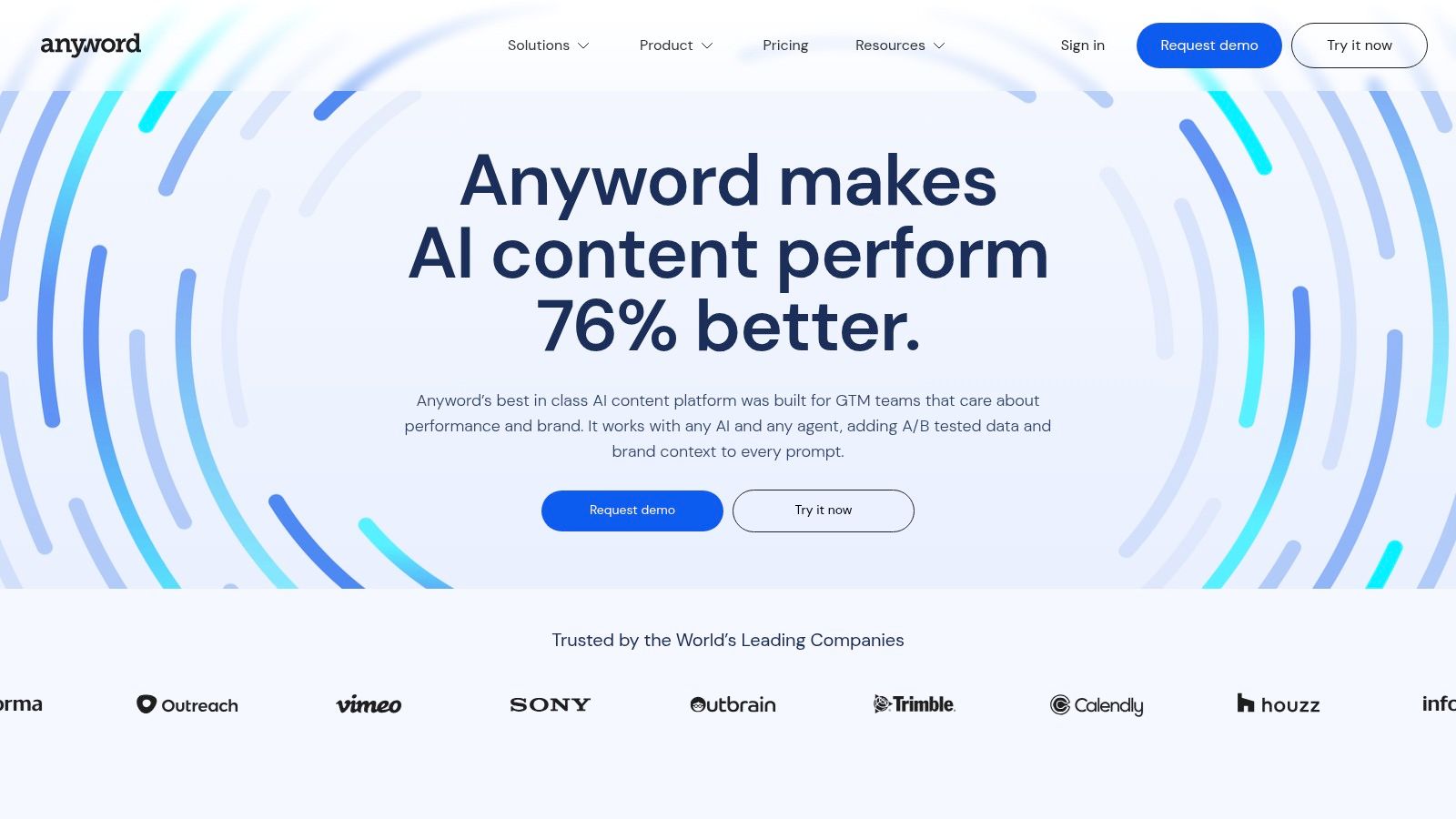
Anyword is designed around marketing copy and predictive performance scoring. It can score and compare alternatives for headlines, adverts and social posts, with persona-driven copy intended to support campaign decisions.
That can help a commercial team align campaign messaging with the themes used in its bids. For example, a service proposition developed for a tender can inform a clearer website headline or a campaign variation. The platform can also ingest past messages at Business and Enterprise levels to improve later outputs.
A marketing tool with a clear boundary
Anyword's scoring is useful when the decision concerns engagement-oriented copy. It gives a team a way to compare alternatives quickly instead of debating every headline from instinct alone.
Tender writing has a different success condition. A procurement response needs to address the question, preserve the bidder's evidence and avoid unsupported commitments. A predicted marketing score doesn't tell a bid manager whether an answer meets the evaluation method.
Paid tiers provide unlimited word generation, and a Chrome extension supports writing in the browser. The most valuable data features sit at higher tiers, so smaller SMEs should examine whether campaign optimisation justifies the cost. The Anyword website sets out the current plans and feature availability.
Anyword is therefore a supporting tool for marketing and business development, not a replacement for Bidwell's tender monitoring, knowledge base or AI response generation. It's most useful when the same organisation needs to coordinate public-facing messaging with bid themes.
For technical tender sections, treat its predictions as irrelevant to compliance. A plain, precise answer supported by evidence is often more valuable than language selected for promotional performance.
9. Copy.ai
Copy.ai combines AI chat, multi-step workflows and go-to-market automation. It gives teams access to OpenAI, Anthropic and Gemini models, then adds configurable workflows, integrations and an API for repeatable business tasks.
That flexibility suits organisations trying to codify house style and automate recurring writing. A team might build a process that takes product notes, produces a first draft, applies a preferred structure and sends the result to a review stage.
Flexible, but not frictionless
Copy.ai's workflows are more useful than one-off prompting when the same task happens repeatedly. A sales or marketing team can create a standard process for outreach, campaign material or account research. The platform also offers 20 or more integrations, while paid chat plans provide unlimited words. Check the current Copy.ai plans because pricing and credit arrangements can be complex.
The setup time is the trade-off. Someone has to define the workflow, test the instructions, decide which sources are trusted and maintain the process when the organisation changes its messaging. Small teams may find that configuration takes longer than expected if their content and evidence are not already organised.
Copy.ai can support bid-adjacent tasks, such as turning approved case-study information into sales material or preparing an internal opportunity summary. It isn't focused on UK tender portals, buyer documents or question-by-question evidence mapping.
That makes it a stronger choice for a team with a wider go-to-market automation requirement than for an SME choosing its first tender-writing tool. Bidwell offers a more direct route for UK tender monitoring, a reusable knowledge base and cited AI response generation. Copy.ai becomes more attractive when a larger team needs several automated content workflows beyond bids.
10. Writer
Writer is an enterprise AI writing and agent platform built around governance. It provides centralised style guides, terminology, policies, knowledge, role-based permissions and audit logs. Customer-managed encryption keys and controls such as SSO and SCIM make it relevant to regulated organisations that need observability around AI use.
For public-sector or highly regulated work, those controls can matter more than a marginal difference in prose quality. A central team can define approved terminology, restrict access and inspect how people use the system.
Built for control at scale
Writer's AI Studio, agents and playbooks support structured team workflows rather than informal prompting. Analytics can help administrators monitor usage and limits, while the credit-based enterprise model supports controlled consumption.
The cost and setup are significant trade-offs. Writer is enterprise-oriented, typically uses custom pricing and needs time to configure its style, knowledge and permissions properly. A small bid team may not need that level of administration, particularly if it has only a few contributors and a limited tender pipeline.
Writer also doesn't automatically solve tender discovery. Governance around drafting is not the same as monitoring Find a Tender or mapping a response to a tender's specification, evaluation questions and contract conditions. A specialist platform may still be needed for the operational bid process.
The Writer platform is worth considering when an organisation needs central controls across many departments, especially in a regulated environment. It is less likely to be the most economical choice for an SME that primarily wants a reusable knowledge base and cited responses.
Good governance should make the safe workflow easier to follow, not simply add another approval screen.
Top 10 AI Writing Tools: Feature Comparison
| Product | Core features | UX & Quality (★) | Price & Value (💰) | Target audience (👥) | Unique selling points (✨) |
|---|---|---|---|---|---|
| Bidwell 🏆 | AI-drafted tender responses; UK portal monitoring; reusable, user-owned KB; citation-backed answers | ★★★★★, Rapid drafts; traceable citations | 💰 KB free; £20/mo drafting; +£10/mo for UK discovery | 👥 Bid managers, BD leads, SME owners pursuing UK public contracts | ✨ UK-focused alerts, cited user-owned KB, flat SME pricing |
| Microsoft Copilot for Microsoft 365 | Copilot in Word/Excel/PowerPoint; Copilot Chat; agents & OneDrive saving; tenant controls | ★★★★☆, Native editing, familiar UI | 💰 Requires Copilot license; varies by M365 plan | 👥 Enterprises standardised on Microsoft 365 | ✨ Deep M365 integration; enterprise privacy & audit controls |
| Google Workspace with Gemini | Gemini in Docs/Gmail; "Help me write"; admin-controlled AI features | ★★★★☆, Collaborative drafting inside Workspace | 💰 Tier-dependent; admin licensing & billing | 👥 Organisations using Google Workspace | ✨ Built-in Gemini assistant; seamless collaborative workflows |
| Grammarly | Grammar/style correction; rewrites, plagiarism & AI-text detection; dialect control | ★★★★☆, Reliable final‑mile polish, UK English support | 💰 Free tier; Pro/Business paid plans | 👥 Writers, bid editors, compliance teams | ✨ Plagiarism & AI-detection; dialect tuning (UK) |
| Jasper | Brand Voice, knowledge connectors, SEO integrations | ★★★★☆, Strong brand governance for teams | 💰 Higher; best value at team scale | 👥 Marketing & content teams supporting bids | ✨ Brand Voice + knowledge connectors for on‑brand content |
| Writesonic | SEO AI Agent, content agent pipeline, brand profiles | ★★★☆☆, End‑to‑end content workflows | 💰 Mid‑to‑high tiers; agent features paid | 👥 Content/SEO teams pairing bid work with thought leadership | ✨ SEO-driven content pipelines and agent workflows |
| QuillBot | Paraphraser (multiple modes), summarizer, grammar, plagiarism checker | ★★★☆☆, Fast paraphrase & summarise | 💰 Low-cost Premium | 👥 Bid writers refining boilerplate | ✨ Multi-mode paraphrasing; UK/US English options |
| Anyword | Predictive performance scoring for headlines/ads; persona copy | ★★★☆☆, Marketing-focused scoring | 💰 Paid tiers; best at Business/Enterprise | 👥 Marketing teams aligning campaign language with bids | ✨ Predictive performance scores for copy choices |
| Copy.ai | Chat with multiple models; workflows; integrations & API | ★★★☆☆, Flexible multi-model chat & automation | 💰 Free plan; paid team/enterprise tiers | 👥 Teams needing automation & reusable workflows | ✨ Multi-model access + workflow automation & API |
| Writer | Centralized styleguides, terminology, RBAC, audit logs, KM | ★★★★☆, Enterprise governance & observability | 💰 Enterprise pricing; credit-based model | 👥 Regulated orgs, public‑sector & enterprises | ✨ Strong governance, SSO/SCIM, customer-managed keys & audits |
Choose the Workflow, Not Just the Writer
The best AI writing tools aren't interchangeable. Each one solves a different part of the writing process.
Choose Bidwell when UK tender discovery, a reusable evidence base and cited response generation sit at the centre of your work. It's the closest match for Bid Managers, Business Development Directors and SME owners who need to find relevant public-sector opportunities, reuse approved knowledge and produce complete drafts without losing the link to source material.
That workflow reflects how a real tender progresses. A team first needs to identify an opportunity, then read the notice and associated documents, decide whether it fits, gather evidence and answer the buyer's questions. Under the Procurement Act 2023, contracting authorities publish tender notices for relevant procedures, while associated documents provide the detail suppliers need to prepare a response. A headline alert alone isn't enough.
Choose Microsoft Copilot for Microsoft 365 or Google Workspace with Gemini when the main requirement is drafting inside an existing office suite. Both can reduce friction for documents, emails, summaries and collaborative editing. Neither should be treated as a complete tender process unless your team has separately solved opportunity monitoring, evidence control and response review.
Choose Grammarly or QuillBot for editing. Grammarly is stronger for grammar, tone, consistency and British English checks across a finished document. QuillBot is more focused on paraphrasing, summarising and reshaping boilerplate. Neither should decide whether a claim is true or whether a response meets the buyer's scoring criteria.
Choose Jasper or Writesonic when content operations and brand governance matter. Jasper is a strong fit for multi-user brand control and supporting case studies. Writesonic is more relevant when SEO, research and publishing sit alongside bid activity. Anyword is best kept for marketing-oriented performance comparisons, particularly headlines and campaign copy.
Choose Copy.ai when you want configurable workflows and go-to-market automation. Choose Writer when enterprise governance, permissions, audit logs and central policy control justify the implementation effort and cost. These tools can support a broader content or compliance operation, but they don't automatically provide the UK tender workflow that a specialist platform covers.
Whatever you choose, human review remains essential. UK Government procurement guidance says suppliers may be asked to disclose AI use, and it recommends controls around confidential authority information and AI-generated tender content. Procurement Policy Note 017 also makes the operating principle clear. AI can support procurement decisions, but people shouldn't rely on it without judgement.
A reviewer should check every generated answer against the full tender pack, not just the opportunity summary. That includes the tender question, evaluation criteria, word limit, specification, pricing schedule, draft contract, clarification notices, confidentiality terms and any disclosure requirement. The UK Government's AI procurement guidance also highlights the need to consider security, privacy and unreliable outputs.
Run a controlled test before you commit. Use one representative document, add the same approved source material to each shortlisted tool and ask the team to assess factual accuracy, citation quality, UK English, formatting, review time and ease of collaboration. Don't judge the result only by how polished the first draft sounds.
The right question isn't “Which AI writes best?” It's “Which workflow helps us submit an accurate, compliant and defensible response?”
For many UK bid teams, that leads to a combination rather than a single universal winner. Bidwell can cover tender monitoring, knowledge management and response generation. Copilot or Gemini can support everyday office work, while Grammarly or QuillBot can polish the final document. Jasper, Writesonic, Copy.ai or Writer can add brand, publishing, automation or enterprise controls where the organisation needs them.
Start with the bottleneck that costs your team the most time. If it's finding suitable tenders, organising evidence and answering repetitive questions, test Bidwell first. If it's internal drafting inside Word or Google Docs, start with the office suite your team already uses. If it's inconsistent wording at the final review stage, choose an editing tool. The tool should follow the workflow, not force the workflow to follow the tool.
Bidwell combines UK tender monitoring, a reusable knowledge base and cited AI-generated responses for teams bidding on public-sector contracts. Test your own approved evidence on a representative opportunity, then visit Bidwell to see whether it can reduce repetitive drafting while keeping your bid team in control of the final submission.