You've got a live tender to assess, several portals to check, a long ITT to understand, and a deadline that leaves little time for a first draft. The team is searching through old folders for a relevant case study while subject-matter experts wait for questions they should have received earlier.
That's the practical problem AI RFP software addresses. It doesn't remove the need for bid judgement, commercial thinking, or final review. It helps your team find relevant opportunities, organise trusted information, and produce a useful first draft without starting with a blank page.
For UK public-sector bidding, the context matters. Opportunities appear across Find a Tender, Contracts Finder, Public Contracts Scotland, and Sell2Wales, with different notice types and procurement stages. A useful system must handle that reality, not just rewrite sentences in a document.
This guide explains how the category works, what to assess before buying, and how Bidwell connects tender monitoring, a knowledge base, and AI response generation into one working process.
Why Bid Teams Are Turning to AI RFP Software
A bid manager starts Monday with three competing tasks: a new local-authority opportunity, an amendment to an existing tender, and an internal request for a framework submission. The information may sit in an invitation to tender, specification, pricing schedule, or clarification notice, often across different file formats.
Before anyone drafts a response, the team must decide whether the opportunity fits, record the applicable deadlines, identify mandatory requirements, and find evidence that can be used with confidence. Missing an amendment or relying on an outdated policy can weaken the bid before the first answer is written.
UK public procurement makes this harder. Opportunities and notices are distributed across Find a Tender, Contracts Finder, Public Contracts Scotland, and Sell2Wales, while procurement stages and document requirements vary. Analysts report that the four main public-sector portals collectively contain more than 610,000 notices and about 444,000 distinct procurements since 2016, with live feeds running into mid-May 2026. Their different launch timings also mean a UK tender tool must combine and normalise several feeds. (UK procurement portal data and timelines)
Practical rule: If your team cannot explain where an opportunity came from, which stage it has reached, and which deadline applies, it is not ready for automated drafting.
AI RFP software handles repetitive work around that decision. It can monitor selected opportunities, summarise tender documents, search approved company information, and suggest answers for a bid manager to check and adapt.
The distinction from a generic writing assistant is important. Fluent text is not enough. The system must help identify an open notice, select an approved case study, and match evidence to the buyer's exact question.
Bidwell connects those tasks through three pillars: monitoring identifies the bid, the knowledge base supplies evidence, and AI generation creates a draft. The value comes from the connection. A relevant opportunity can lead directly to trusted source material and a reviewable response.
The process still needs human control. Bid teams decide whether to bid, confirm accuracy, shape win themes, approve sensitive claims, and sign off the final submission.
What AI RFP Software Is and How It Actually Works
Think of AI RFP software as a bid library with a fast assistant attached. The library contains your credentials, policies, case studies, previous answers and service information. The assistant searches that material, compares it with a new tender, and helps turn the relevant evidence into a response.
A practical workflow usually has four stages.
First, it finds and organises opportunities
The platform collects notices from the portals your team follows. It then normalises the information, so fields such as buyer, location, category, stage and deadline can be searched consistently.
This is important in the UK because public procurement information is distributed across several services. Bidwell's tender response workflow is designed around finding opportunities, storing business knowledge and producing responses rather than treating writing as an isolated task.
Next, it makes the tender easier to assess
A long ITT may contain instructions, evaluation criteria, service requirements, contract terms and evidence requests. AI can extract questions and key requirements, group related content, and produce a summary for the bid team.
The software isn't deciding what a requirement means in a legal or commercial sense. It's reducing the amount of manual searching needed before the team applies its judgement.
It then retrieves trusted evidence
The knowledge base gives the system material to work from. A good setup makes it possible to find the right health and safety policy, relevant project example or named capability without searching every shared drive.
The quality of the draft depends heavily on the quality of this source material. If the library contains expired credentials, conflicting figures or unapproved language, the team can't treat the generated response as reliable.
Finally, it creates a first draft for review
The AI uses the tender question and selected company information to suggest a response in the organisation's preferred voice. A bid writer checks whether the draft answers the question, uses the right evidence, avoids unsupported claims and follows the buyer's format.
That's the difference between AI RFP software and a general AI writing tool. The former is connected to opportunity discovery, bid evidence and response controls. The latter may help with wording, but your team must provide the context and manage the process around it.
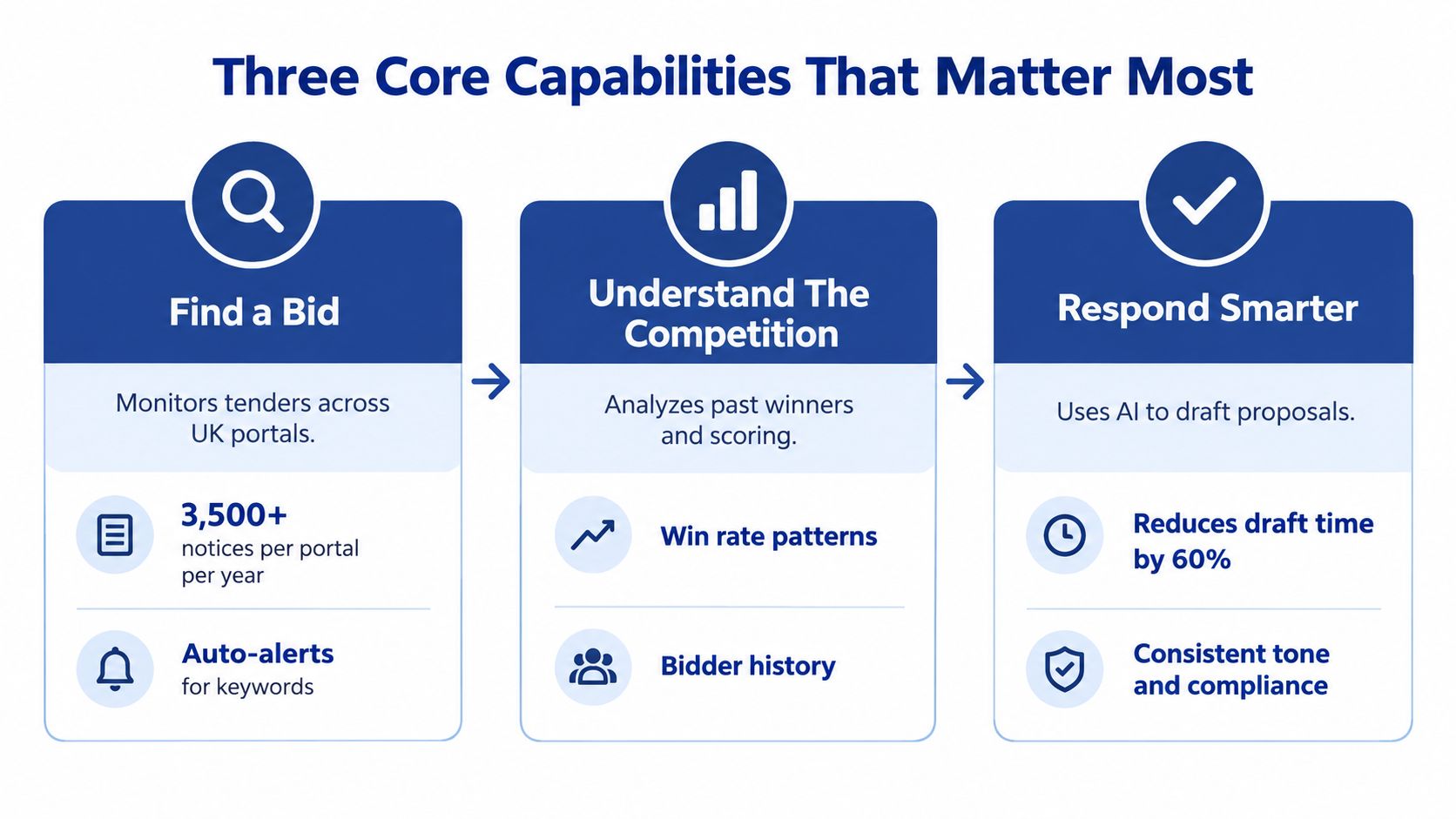
The Three Core Capabilities That Matter Most
A bid team should assess AI RFP software by the work it must complete, rather than by the length of a vendor's feature list. For UK public-sector procurement, the system needs to connect three jobs: monitoring opportunities, managing evidence and generating controlled responses.
Tender monitoring
Monitoring should cover the portals used by your target market, including Find a Tender, Contracts Finder, Public Contracts Scotland and Sell2Wales. Each portal carries different notices and procurement stages, so a single search box is not enough. Filters for keywords, categories, locations and stages help the team focus on contracts it can deliver.
The volume across these portals makes manual checking difficult. A team member may otherwise move between sites, compare notices and record suitable opportunities before anyone has assessed the fit.
An alert should do more than announce a new tender. It should summarise the buyer, requirement, likely fit, key dates and documents to review. The bid manager can then decide whether the opportunity merits internal attention and check the relevant compliance duties.
A maintained knowledge base
The knowledge base is the evidence layer. It should contain approved answers, policies, accreditations, staff profiles, delivery methods, case studies and lessons from previous bids.
Treat it like a controlled evidence library, not a shared folder. Give content owners responsibility for updates, remove superseded versions and flag material that needs review. For example, a social care tender may require a current safeguarding policy and a relevant service example. The team should find both without searching old bid folders or personal notes.
The quality of an AI-generated response depends on the material available to it. Expired credentials, conflicting figures and unapproved wording can produce a draft that requires extensive checking.
AI response generation
Generation should start with the buyer's question and the evidence relevant to it. The software should help extract questions from uploaded tender documents, suggest first-draft answers and maintain the organisation's preferred voice.
A polished paragraph is not enough. The draft must be traceable, relevant and easy to review. The writer should see which source material informed the answer, identify unsupported claims and spot gaps where further evidence is required.
The three capabilities form one working loop. Monitoring finds a suitable social care tender. The knowledge base surfaces the safeguarding policy and service example. AI generation uses those sources to prepare a response that the bid manager refines against the evaluation criteria.
Ask vendors to demonstrate the connections between these functions. If monitoring, evidence and drafting sit in separate systems, the team may still copy information between tools and lose the control the software is meant to provide.
Key Features and Benefits for Busy Bid Teams
A bid manager handling UK public procurement may start the day across several live portals, comparing pipeline notices with open tenders, downloading attachments and checking whether the team has the right evidence. Without dedicated software, suitable opportunities are copied into spreadsheets, past answers are hunted through folders, and questions are sent across email and chat.
AI RFP software brings these tasks into a working loop. Monitoring filters notices and highlights relevant stages. The knowledge base gathers approved evidence. AI generation prepares a first draft against the buyer's questions, while the bid manager checks the requirements and assigns work from the same context.
| Activity | Traditional Approach | With AI RFP Software |
|---|---|---|
| Opportunity search | Check several portals and record suitable notices manually | Monitor selected portals and receive filtered alerts |
| Tender triage | Read every document before deciding whether to proceed | Review structured summaries, stages, dates and key requirements |
| Finding evidence | Search shared drives, email threads and old bid folders | Search a central knowledge base of approved content |
| First draft | Start with a blank document or copy an old answer | Generate a first draft from the tender and relevant sources |
| Quality control | Build manual checklists and rely on memory | Review extracted questions, evidence links and response gaps |
| Team coordination | Follow up with contributors across separate channels | Keep ownership, comments and review activity in one workflow |
The time saving comes from removing repeated handovers. A writer can spend less time formatting or locating files, then focus on connecting the answer to the authority's evaluation criteria.
A missed opportunity becomes visible earlier
A construction SME searching only for its exact service name can miss a notice using a broader category or different wording. Monitoring can combine related terms, buyer details and notice stages to surface possible matches. The bid manager still decides whether the opportunity fits.
A reused answer becomes a relevant answer
An old case study may contain the wrong client name, scope or outcome. The knowledge base helps locate approved material, and AI generation can reshape it around the new question. The writer must verify each factual detail before submission.
A blank page becomes a review task
A first draft gives subject-matter experts something concrete to challenge. They can correct an assumption, add technical detail or remove a claim that does not apply. Their time goes into judgment rather than writing every response from scratch.
The benefits depend on control. Teams need clear ownership, approved source material and a review process. If monitoring, evidence and drafting remain disconnected, staff may continue copying information between systems. If the source material is outdated, faster generation can produce inaccurate text more quickly.
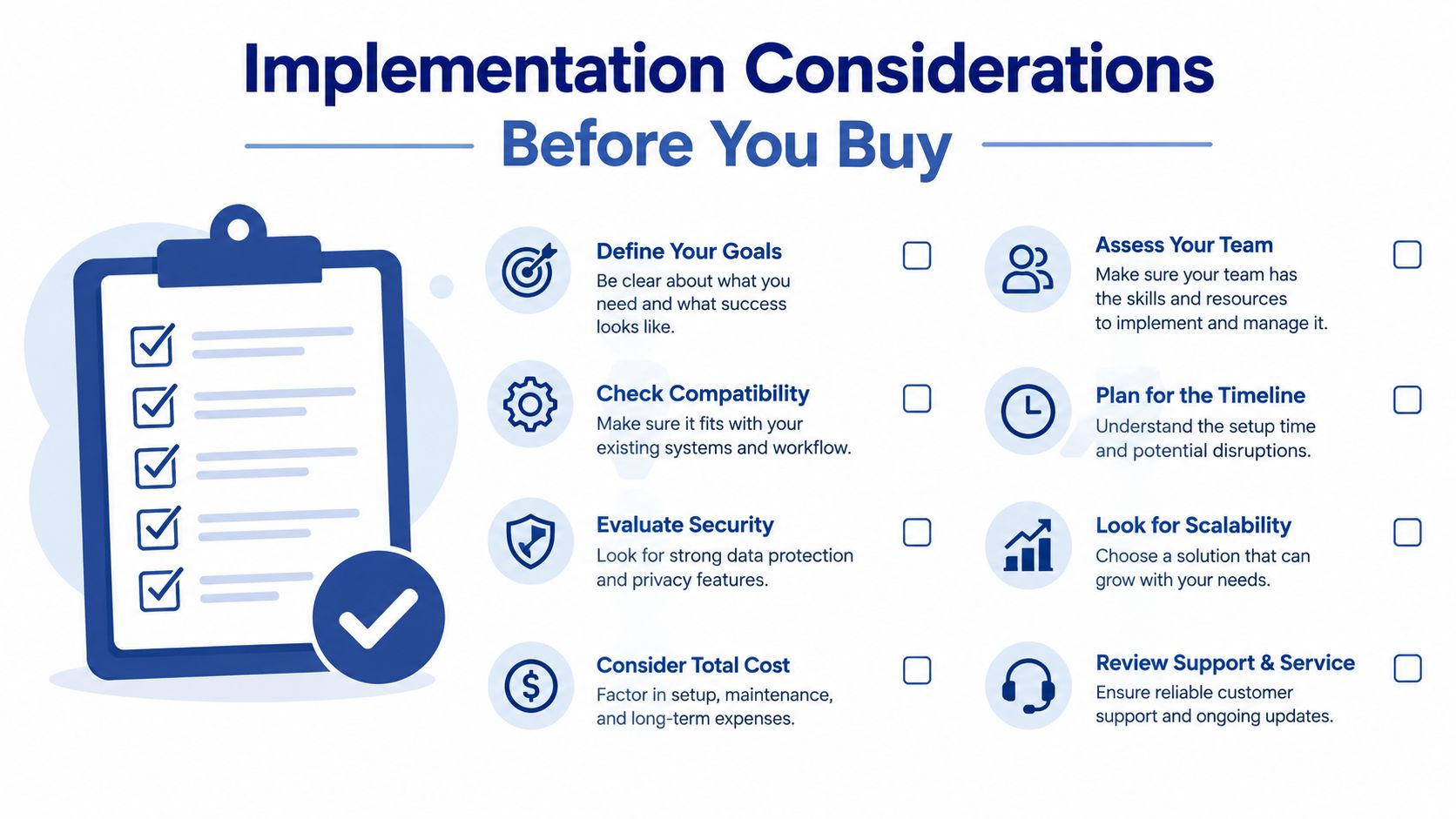
Implementation Considerations Before You Buy
Buying the software is easier than preparing the process around it. Start by defining the problem in operational terms. Is your main issue missing opportunities, slow document review, scattered evidence, inconsistent answers, or a lack of visibility over bid progress?
Then test whether the platform reflects the way UK notices work. Find a Tender says that from 24 February 2025, above-threshold and below-threshold notices for new UK procurements are published on the service, except below-threshold notices in Scotland. It also explains that above-threshold notices outside Scotland can cover the full contract life cycle, from pipeline to termination. (Find a Tender service information)
That means monitoring should not treat every notice as an open tender. A pipeline notice, preliminary engagement notice and live tender notice have different implications for planning.
Check the source and stage logic
Find a Tender's notice guidance says that only UK1 pipeline, UK2 preliminary engagement, UK3 planned procurement and UK4 tender notices can currently be edited directly in the service. Other notice types may be edited through e-procurement system providers, while UK7 contract details notices attach signed contract documents. (Find a Tender notice types)
Your platform should understand where a procurement sits in the process and retrieve the relevant documents. Contracts Finder supports searches by keyword, location and procurement stage, with filters for date range, contract value and industry code, plus XML and CSV downloads. (Contracts Finder collection on GOV.UK)
Prepare the evidence and the controls
Before importing content, decide who owns each type of information. A service lead may approve delivery descriptions, finance may approve financial information, and an information security owner may approve policy wording.
Use human review as a required stage. GOV.UK guidance separates procurement into planning, publication, selection and evaluation, and contract management. The guidance also emphasises fairness, accountability, sustainability and transparency, so generated content needs review for accuracy, relevance and disclosure risk. (GOV.UK guidelines for AI procurement)
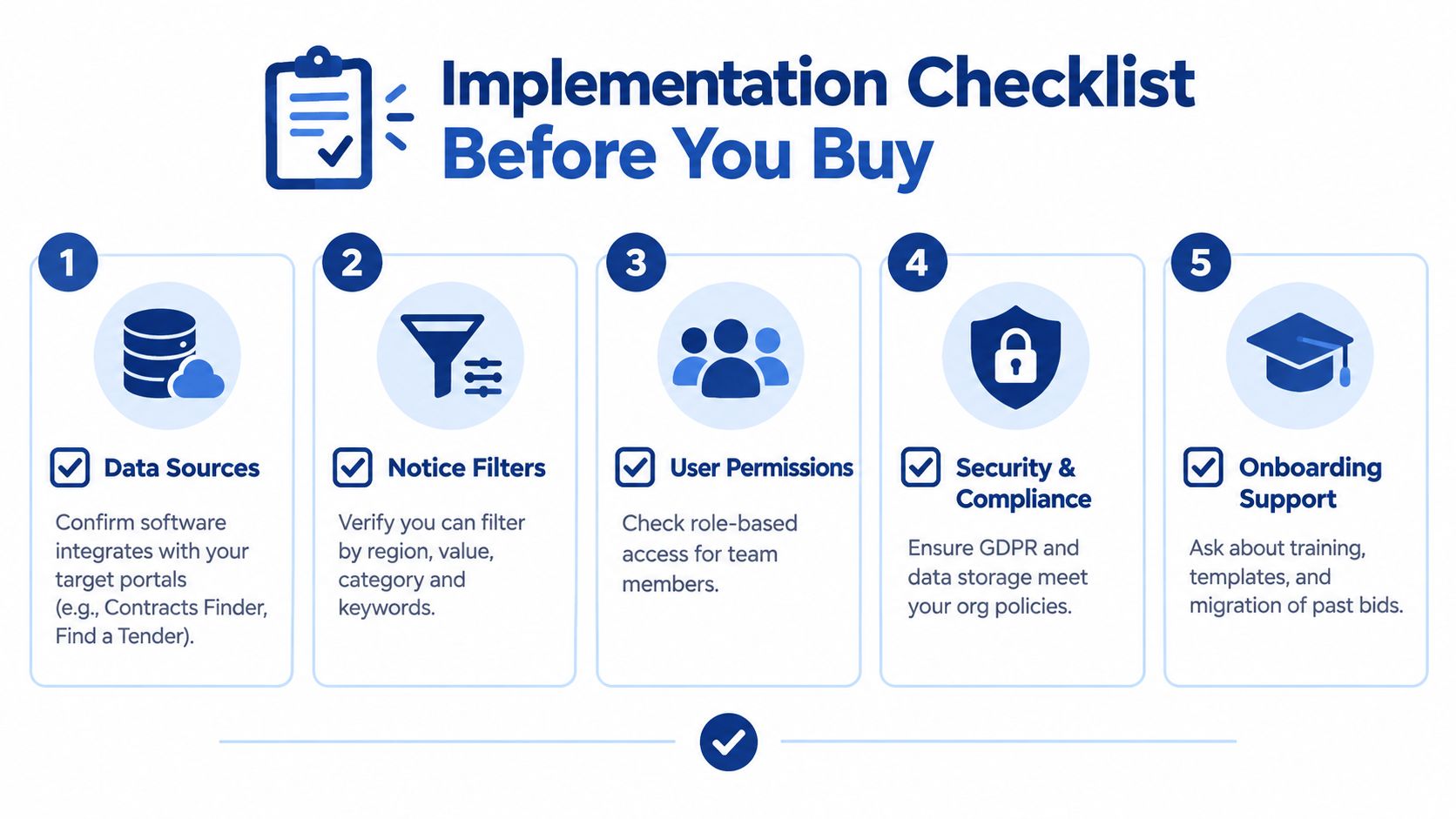
Use this buying checklist:
- Portal coverage: Confirm the platform monitors the sources your team needs.
- Notice handling: Check that it separates pipeline, planning, engagement and live tender stages.
- Knowledge governance: Ask how content is approved, updated and retired.
- Permissions: Confirm that sensitive bid material is visible only to the right users.
- Auditability: Check whether reviewers can trace the source and changes behind a response.
- Pilot scope: Test the software on a real, manageable tender before wider rollout.
The Ada Lovelace Institute has identified a lack of a clear, detailed account of how local government should procure AI in the public interest. (Ada Lovelace Institute on buying AI through procurement) That reinforces the need for a system that supports evidence and oversight, not one that encourages blind acceptance of generated text.
ROI Use Cases and How Bidwell Fits
ROI usually appears in the points where bid teams lose time repeatedly. An SME may spend part of every working day checking portals, then repeat the same search through folders for policies, credentials and case studies. AI RFP software creates value when it reduces those repeated tasks while keeping the final decision with the team.
The opportunity set is large enough to justify a systematic approach. Find a Tender's live search results show over 309,000 notices, and the service distinguishes planning or tender-stage opportunities with future deadlines. (Find a Tender live search results)
That distinction helps a team prioritise. A planning notice may deserve a watch and an early relationship plan. A tender notice with a submission deadline needs immediate qualification and ownership.
Use case one, daily opportunity filtering
Set target sectors, locations, keywords and procurement stages. The monitoring pillar brings relevant notices into one view, while AI summaries help a bid manager decide which opportunities need a closer read.
The value isn't about seeing more notices. It's reducing the chance that a suitable opportunity remains buried among irrelevant results.
Use case two, evidence reuse
A team responding to a housing services tender may need a mobilisation plan, safeguarding approach, service-user engagement example and performance evidence. A searchable knowledge base can surface the relevant approved material, rather than forcing the writer to search across previous submissions.
The writer then checks whether the evidence matches the new buyer, contract scope and evaluation question. Reuse should improve consistency, not encourage unedited copy and paste.
Use case three, tailored first drafts
For a framework bid, AI response generation can extract the questions from the tender document and propose answers based on the organisation's stored information. The bid writer reviews the draft, adds the specific win theme, confirms evidence and removes anything unsupported.
Bidwell brings these three use cases together through monitoring, knowledge base management and AI response generation. Its use cases for tender teams show how those capabilities can support opportunity discovery and response work in the same process.
The useful ROI question isn't “Can AI write a bid?” It's “Which repeated bid tasks can our team review faster without lowering accuracy?”
UK public-sector demand also provides a wider reason to improve the process. Tussell's tracker reports 2,129 AI contracts worth £5 billion between 1 January 2018 and 3 August 2026, with 2026 reaching 453 contracts worth £1.4 billion by mid-August. (UK public-sector AI procurement tracker reporting)
As buyers issue more technically demanding opportunities, teams need a repeatable way to monitor, qualify, retrieve evidence and draft. ROI should be assessed through the work your team can complete with greater control, not through an assumed automatic win-rate increase.
Making AI RFP Software Work for Your Next Bid
The right decision depends on your current bottleneck. If your team misses relevant notices, start with monitoring. If writers keep recreating the same company description, build the knowledge base. If the team understands the tender but struggles to produce a complete first draft, test AI response generation.
These pillars should support one another. Monitoring without a knowledge base leaves the team with more opportunities but no faster way to respond. A knowledge base without monitoring may hold useful evidence while suitable tenders pass unnoticed. Draft generation without review can create fluent answers that don't meet the buyer's requirements.
A practical starting plan
- Audit your current workflow: Record where opportunities come from, how they're assessed, where evidence is stored and how answers are reviewed.
- Choose a controlled content set: Begin with current credentials, policies, service descriptions and a small group of relevant case studies.
- Trial one live tender: Pick a bid with a manageable risk profile and use the software to extract questions, find evidence and create first drafts.
- Keep human approval in place: Ask the bid manager and subject-matter experts to verify accuracy, compliance, tone and buyer relevance.
- Review the result: Note which sources were useful, which answers needed substantial editing and which portal or notice details were missing.
Public-sector procurement needs careful records and defensible decisions. That's why the strongest use of AI is usually assistive. It handles searching, sorting, summarising and drafting, while people handle interpretation, strategy and approval.
Bidwell is one option for UK businesses that want these activities connected. The platform monitors major UK tender portals, organises business evidence in a knowledge base, and generates tender response drafts for review. You can request a Bidwell demo to assess the workflow against your own tender documents and content.
Start with one clear problem and one measurable internal outcome, such as reducing time spent finding evidence or improving visibility of upcoming opportunities. Build from there once the team trusts the process and knows where human judgement remains essential.
Bidwell brings tender monitoring, a searchable knowledge base and AI response generation together for UK public-sector bidding. Visit Bidwell to see how your team can find relevant opportunities earlier, reuse approved evidence and review customized first drafts with the right controls in place.