There isn't one tender portal to watch. UK opportunities are spread across national registers, devolved systems, specialist procurement channels and buyer-managed e-sourcing platforms. Checking a single website can leave gaps in your pipeline, especially when a contract is advertised in one place but submitted somewhere else.
This list covers ten tender websites and procurement channels that UK businesses should understand in 2026. The right mix depends on your geography, sector, target contract value, buyer type and the submission system named in each notice.
Start with the official national portals that match your market. Add regional platforms where councils, housing providers, universities or NHS organisations buy. Then include specialist channels for defence, infrastructure and supply-chain work.
Bidwell can sit across that fragmented process as a monitoring layer. It watches major UK portals, sends daily summaries of relevant notices and connects opportunities with a reusable knowledge base. When a bid is worth pursuing, its AI response generation can use your approved credentials, policies, past responses and case studies to produce a draft for human review.
1. Find a Tender
Find a Tender is the main official source for UK procurements covered by the current above-threshold notice regime. It became the UK's central digital platform under the Procurement Act 2023 on 24 February 2025, while older procurements continue under the previous rules. It also replaced the EU's Tenders Electronic Daily in the UK on 31 December 2020. (Find a Tender search)
Use it for major central-government and sub-central opportunities, particularly when the contract value and formal notice trail matter. Buyers publish planned and pipeline information, contract notices, awards and performance-related notices. Pipeline Notices for anticipated procurements valued at £2 million or more are also published through the current framework. (Government guidance on the Central Digital Platform)
Search carefully, then follow the submission route
Create saved searches around buyer, category, region and keywords. Read the notice rather than relying on the title. The notice normally sends you to the buyer's e-tendering system, because Find a Tender is a discovery and notice platform, not the place where you complete the bid.
That hand-off is the main operational weakness. Your team may discover an opportunity in one system, register on another, download documents from a third and submit through a buyer workspace with its own deadline controls.
Practical rule: Treat the notice as the start of bid qualification, not the complete tender file.
Bidwell's tender monitoring can bring the notice into one daily workflow, while its knowledge base keeps approved evidence ready for the response stage. Its AI response generation can then map relevant source documents to draft answers, but a bid manager still needs to verify every requirement in the buyer's portal.
2. Contracts Finder
Contracts Finder remains a key source for lower and mid-value public-sector work. It covers central government contracts worth £12,000 or more including VAT, with high-value contracts directed to Find a Tender. (GOV.UK Contracts Finder guidance)
For many SMEs, a practical pipeline begins here. Search open opportunities by keyword, buyer, location and category, then inspect past awards to understand who buys the service and which suppliers have previously won similar work. Award records can support competitor research and help your team decide whether a notice fits your delivery model.
The portal's strengths are access and breadth. It's free, central and useful for finding work that may be more approachable than a large national competition. Its limits are consistency and metadata. Local and wider public bodies don't all publish with the same level of detail, and submission usually takes place on an external buyer portal.
Use awards as qualification evidence
A saved search should be narrow enough to produce a manageable daily review. Separate alerts for your core services, target regions and named buyers. Add exclusions where recurring irrelevant terms create noise.
For below-threshold work, publication rules still matter. Central government contracts at £12,000 or more, and contracts from sub-central bodies, NHS trusts and NHS foundation trusts at £30,000 or more, fall within the relevant transparency guidance for Contracts Finder. (GOV.UK guidance on below-threshold contracts)
Bidwell's tender monitoring for public-sector opportunities can help consolidate relevant notices and summarise why they matter. Store your standard answers, accreditations and case studies in the knowledge base, then use AI response generation to prepare a first draft once the submission documents are confirmed.
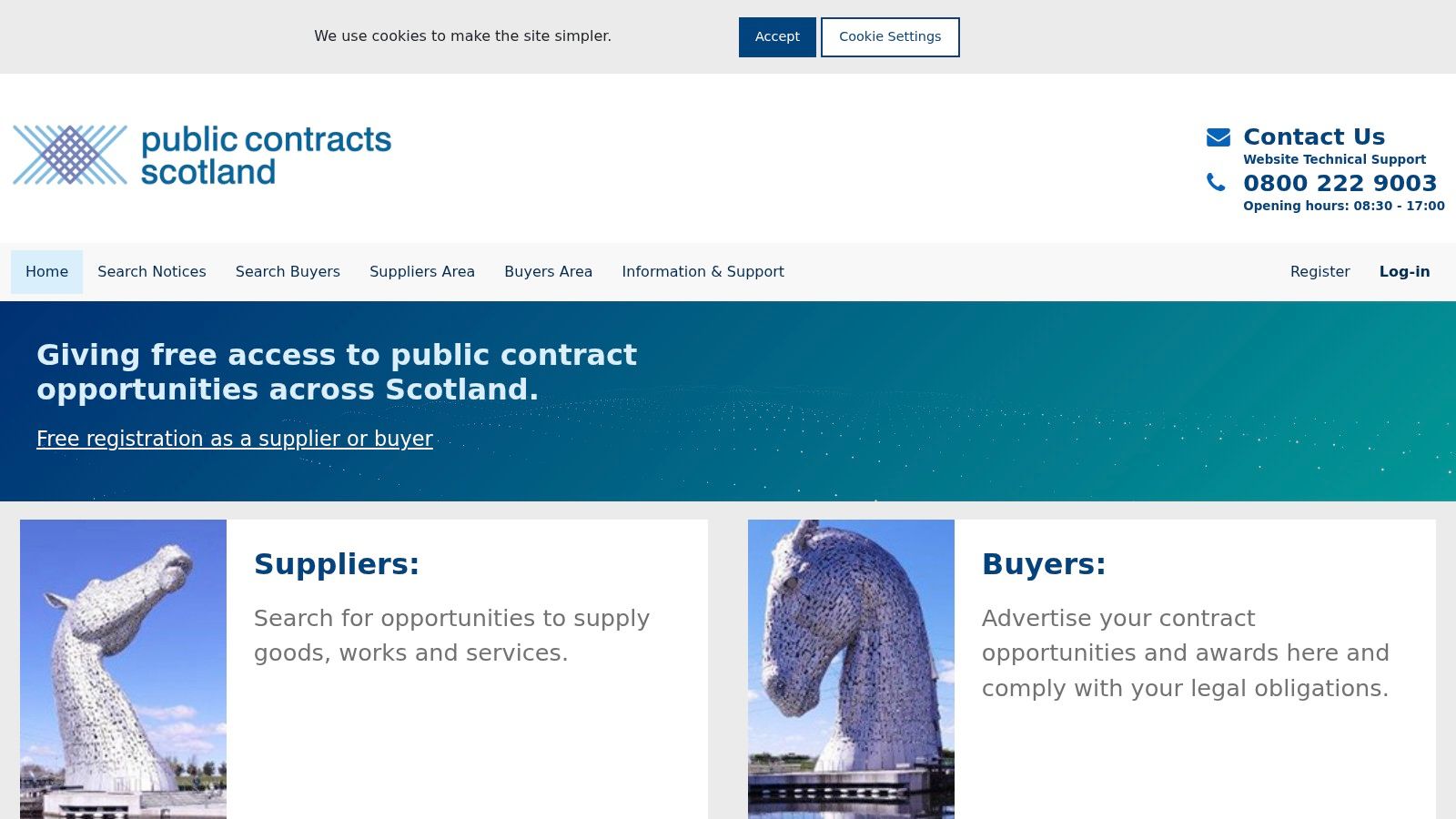
3. Public Contracts Scotland
Public Contracts Scotland is the official Scottish public-sector advertising platform. It's relevant for both sub-threshold and above-threshold notices, so suppliers targeting Scotland shouldn't treat it as a secondary regional site.
Register as a supplier, build searches around your service categories and locations, and configure alerts for the buyers you want to follow. The portal also provides supplier guidance, registration support and resources that can help businesses unfamiliar with Scottish procurement processes.
Expect the submission to move
Public Contracts Scotland is often the entry point, but the full tender may run through PCS-Tender or another buyer-configured system. Check the instructions as soon as you identify a credible opportunity. Registration alone doesn't guarantee that your organisation has access to every event or document.
The practical advantage is consistent Scottish coverage. The practical limitation is that the user experience and filtering can feel less polished than a commercial aggregator, particularly when you're searching across several service lines.
Use a two-stage workflow:
- Discover the notice: Record the buyer, reference, scope, estimated value where provided and relevant dates.
- Prepare for submission: Follow the linked workspace, confirm account permissions and download the complete tender pack.
- Preserve the evidence: Save clarifications, addenda and buyer instructions alongside your internal bid record.
Bidwell can monitor PCS alongside national channels, reducing the risk that a Scotland-specific search sits outside the main pipeline. Its knowledge base gives your team one controlled place for approved evidence, while AI response generation can adapt that material to Scottish buyer requirements after a human confirms the scope.
4. Sell2Wales
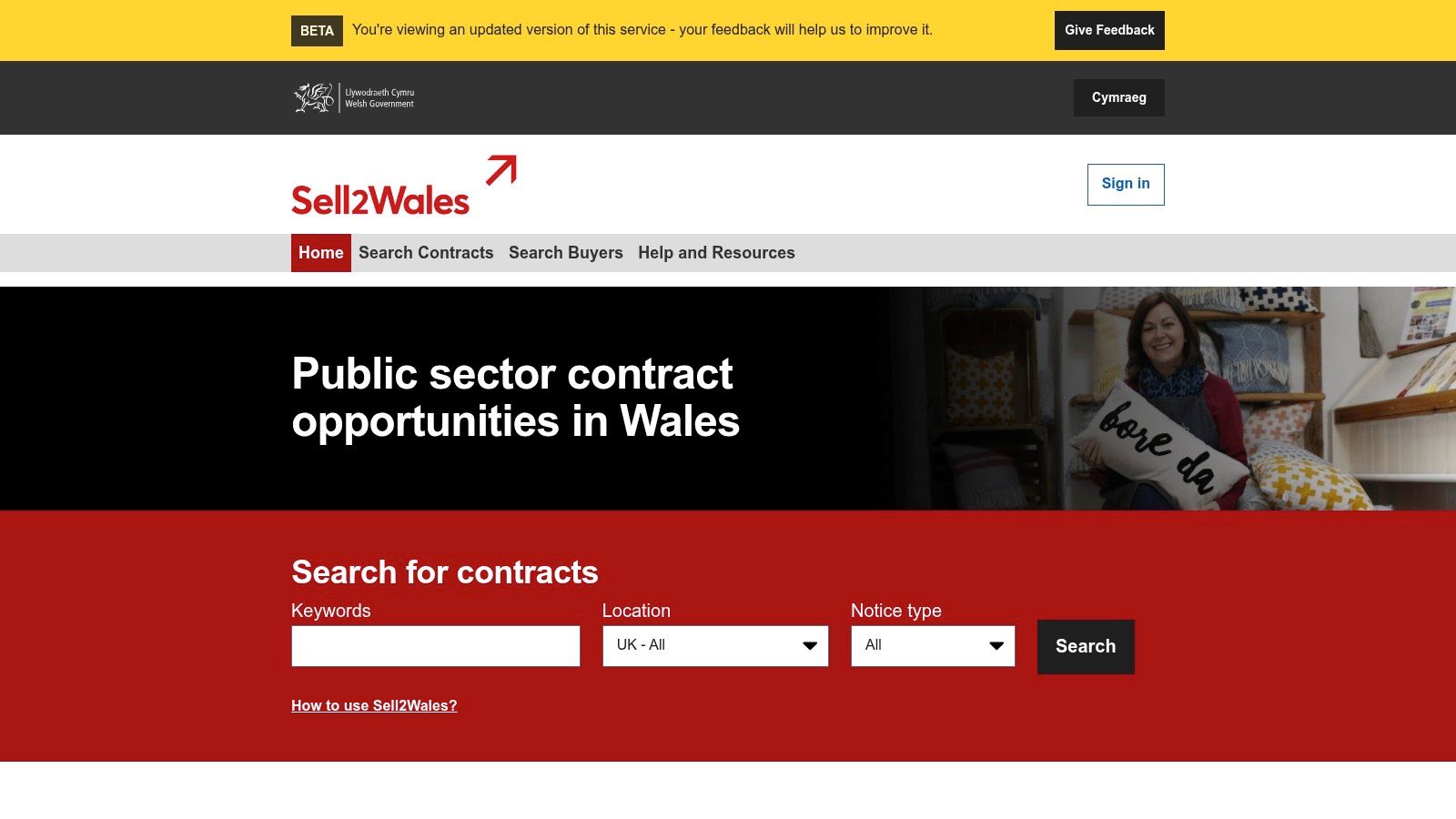
Sell2Wales is the Welsh Government's national platform for public-contract notices and supplier engagement. It's the right starting point for businesses that want authoritative coverage across Wales, particularly where the buyer is a Welsh public body or the opportunity has a regional delivery requirement.
Create a supplier account, complete the organisation profile and set alerts that reflect your actual capability. Broad searches create noise quickly. A construction firm might separate building maintenance from capital works, while a professional services supplier could split advisory, training and managed-service terms.
The platform provides guidance aimed at new bidders and SMEs, which makes it useful for teams building their first public-sector process. It also includes buyer information and supplier-facing support, but the notice isn't always the place where you'll complete the submission.
Check the buyer's e-portal early
Some opportunities require bids through an external e-tendering system. Don't wait until the submission day to create an account or find out that another colleague controls access. Download the documents, identify the response format and note whether clarifications must be submitted through the buyer's workspace.
Sell2Wales is free to search and register, but coverage depends on participating buyers posting their opportunities there. That makes it valuable, not sufficient. UK suppliers with Welsh delivery capability should combine it with the other national sources that match their market.
Bidwell's tender monitoring can bring Welsh notices into the same review as Find a Tender and Contracts Finder. The knowledge base can hold Welsh-language or local delivery evidence where relevant, and AI response generation can create a structured draft from approved content without removing the need for a final compliance check.
5. eTendersNI
eTendersNI is the main regional tender portal for Northern Ireland government departments, agencies and arm's-length bodies. Suppliers pursuing goods, services or works there should monitor it directly, because a UK-wide search may miss relevant notices or buyer-specific activity.
Its workflow often covers notice access, event documents, clarification messages and submission within the same system. That can reduce hand-offs, but the buyer controls each event's setup. Read the instructions before assuming that registration, questions, declarations and uploads follow a standard process.
Set up shared ownership from the start. Record the event reference in your bid folder and task system, then check who can access the workspace, receive notifications and submit the final response. Confirm the question route and deadline shown in the event rather than relying on informal email or a calendar entry.
Allow time to learn the interface. Documents, clarification threads and submission controls may sit in different parts of the event, and an incomplete upload or missing declaration can prevent a valid response. Download the pack early, identify mandatory fields, and leave time to validate the portal's final confirmation.
eTendersNI is a strong primary source for Northern Ireland suppliers. Suppliers elsewhere should first test the geography, mobilisation requirements and buyer type against their delivery model before investing in a full tender response. Regional coverage also needs to sit alongside national, specialist and supply-chain sources, since no single portal captures every route to public work.
Bidwell can combine monitoring across those fragmented sources, while its knowledge base keeps approved policies, credentials and case studies ready for reuse. AI response generation can turn that material into a working answer set. The bid team must still check compliance, adapt responses to the event and complete the final submission in eTendersNI.
6. Defence Sourcing Portal
The Defence Sourcing Portal is the Ministry of Defence's specialist route for defence competitions and related commercial activity. New MOD opportunities have been advertised and tendered through the portal since February 2021, making it a necessary channel for suppliers pursuing defence and security work. (Ministry of Defence procurement information)
DSP is more than a notice board. It supports defence-specific tender documentation, supplier messaging and in-portal submission. The procurement language, security expectations and compliance evidence can be demanding, so a general public-sector bid process often needs additional controls before it's suitable for MOD work.
Prepare evidence before the alert arrives
Create a defence-specific profile of capabilities, accreditations, security arrangements, quality controls and relevant delivery experience. Keep evidence current and clearly labelled. Don't force a generic case study into a security-sensitive requirement just because it appears to match a keyword.
Onboarding can take time, and access requirements may differ by event. Check the registration instructions, nominate more than one internal administrator and test document permissions before a competition becomes urgent.
Bidwell's Ministry of Defence buyer page can support the monitoring side of that process. Its knowledge base can separate approved defence evidence from general credentials, while AI response generation can prepare a draft aligned with the question structure. Human review remains essential for classification, security, technical accuracy and any commitments affecting delivery.
Defence bids punish casual evidence management. Keep the source document, approval status and expiry information visible to the person signing off the response.
The portal is centralised for MOD competitions, but it doesn't make the work easy. Competition remains compliance-heavy, and a polished draft won't compensate for a missing mandatory requirement.
7. NHS Health Family eCommercial System
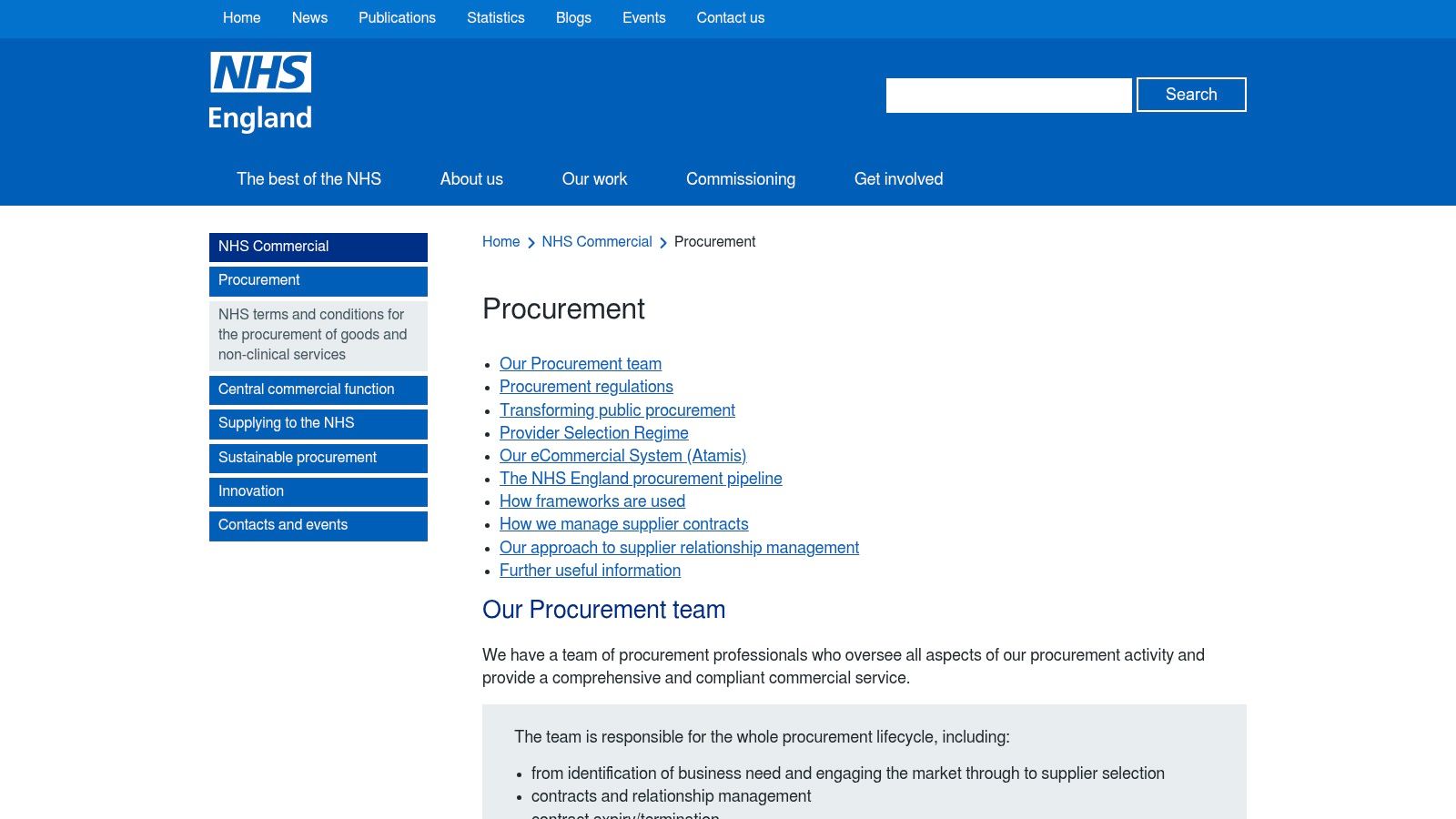
The NHS Health Family eCommercial System, commonly known as Atamis, is used by the majority of NHS organisations for procurement planning, tendering, contract management and supplier activity. Its purpose is to consolidate NHS commercial work, although suppliers still need to check whether a particular trust or organisation has adopted it for the relevant event.
Atamis can reduce the need to track many separate NHS workspaces. Registration and document access are controlled, and some events may require buyer-specific invitations or permissions. That means a supplier shouldn't assume that a general account automatically exposes every NHS opportunity.
Treat rollout as a live operating detail
The rollout is phased. Some NHS organisations continue to use other e-sourcing systems, so a healthcare supplier should keep checking buyer pages, national notice sources and any established regional channels that cover its target organisations.
Use Atamis when the notice or buyer directs you there. Confirm who can access the event, who receives clarifications and who has authority to submit. NHS procurement packs often combine service specifications, mobilisation plans, information governance, quality requirements and commercial schedules. Your internal response process needs to keep those strands connected.
Bidwell can support the discovery and preparation stages. Tender monitoring brings relevant NHS notices into a review queue, the knowledge base stores policies, accreditations, service descriptions and case studies, and AI response generation can draft answers against the buyer's questions. The bid team must still check every draft against the current NHS instructions and portal documents.
A useful setup separates reusable organisational evidence from event-specific clinical, operational or information-governance answers. That prevents old material from being reused without checking its scope, approval and relevance.
8. Proactis ProContract
Proactis ProContract is a regional e-sourcing route rather than an official national notice register. Councils, housing providers, police organisations and universities use it through branded portals such as the London Tenders Portal, YORtender and The Chest.
The practical benefit is buyer reach. A supplier account can expose opportunities across several local procurement routes, depending on how each buyer has configured its workspace. Search by service, buyer and delivery area, then set alerts only for categories that match your capacity. Review the organisation profile as well. Keep its capability claims accurate and supported by evidence, because buyers may use supplier information for future engagement.
Portal branding is only the visible difference. Buyers can arrange documents, questionnaires, evaluation sections, clarification exchanges and deadlines in different ways. A supplier may register once, yet still need to learn each event's instructions and confirm where the final submission must be made.
Use the regional portals that cover your target market, then maintain an external bid record. Store the account owner, clarification log, addenda, final uploaded files and submission confirmation. This protects the bid when access is shared across the team and provides an audit trail if the workspace closes or changes.
ProContract can miss opportunities published through official notice sources or other regional systems, so it should sit within a wider monitoring process. Bidwell's tender monitoring can bring relevant ProContract opportunities together with those notices. Its knowledge base keeps recurring policies, accreditations, service descriptions and case studies ready for review, while AI response generation can prepare drafts against the buyer's questions. The bid team still needs to check each answer, attachment and deadline in the buyer-configured workspace before submitting.
9. Delta eSourcing
Delta eSourcing is a buyer-managed e-tendering system used by central bodies, arm's-length organisations, housing providers and utilities. It is a specialist procurement channel, not a complete source of public notices. Suppliers may register, express interest, download documents, submit clarifications and upload a bid within the buyer's event workspace.
Start by creating an accurate organisation profile and checking the Select supplier community. A shared profile can support access to several competitions, but it does not replace reviewing each opportunity. Search results and invitations depend on the buyers using Delta, so add relevant official notice sources and regional systems to the same monitoring routine.
Inside an event, follow the buyer's instructions rather than relying on a familiar portal workflow. Confirm where questions must be sent, whether documents sit in separate folders, which fields require an answer and how pricing schedules should be returned. Some workspaces are clearly structured. Others depend on guidance documents or a named support contact.
A practical review should cover:
- Eligibility: identify pass or fail requirements, declarations, insurance and accreditations before committing bid time.
- Response design: separate scored questions, pricing, method statements and attachments so no field is overlooked.
- Submission control: check the deadline, upload the final files and retain the platform confirmation in the bid record.
Delta may be the place where submission happens, even when the opportunity was first found through another source. Keep the event reference, clarification log, addenda and final response outside the portal as well. This protects the audit trail when several contributors share an account or the buyer later changes access.
Bidwell's BIP Solutions buyer information can sit alongside this fragmented search process. Tender monitoring can collect relevant notices, the knowledge base can hold approved policies, accreditations and case studies, and AI response generation can prepare a draft for review against the live Delta questions. The bid team remains responsible for checking evidence, attachments, pricing and submission status.
Keep the portal's workflow separate from the evidence your organisation approves. That prevents old answers being reused after the buyer changes its questions, scoring method or proof requirements.
10. CompeteFor
CompeteFor targets supply-chain and subcontracting opportunities that may sit beneath a prime contract. It has been associated with major buyers and infrastructure projects including HS2, Heathrow and the Metropolitan Police, giving SMEs a route into tier-2 and tier-3 work that may not appear on the main national portals.
Create a complete supplier profile, describe your capabilities precisely and use the matching functions to identify packages that fit your capacity. The platform works best when your profile makes it easy for a prime or major buyer to understand what you deliver, where you operate and what evidence supports your claims.
Use it beside official sources
CompeteFor isn't a replacement for Find a Tender, Contracts Finder or the devolved portals. Its coverage depends on participating buyers and projects, and supply-chain opportunities can follow different timelines from formal public notices.
The qualification questions also need a different mindset. A subcontract package may look smaller than a direct public contract but still involve demanding insurance, safety, quality, programme and supply-chain requirements. Check the prime contractor's instructions, commercial terms and flow-down obligations before committing bid resource.
Bidwell can help combine this channel with formal tender monitoring. Store capability statements, accreditations, delivery examples and approved personnel information in the knowledge base. When a suitable opportunity appears, AI response generation can produce a customized draft that reflects the package, while the team checks that every claim is supported and commercially realistic.
CompeteFor is particularly useful for SMEs that want to build relationships beneath major projects. It's less useful if treated as a complete public procurement search engine. Keep the profile current, respond selectively and record which opportunities are worth pursuing based on fit, evidence and delivery capacity.
Top 10 UK Tender Portals Comparison
| Portal | Core features ✨ | UX / Quality ★ | Value / Price 💰 | Target audience 👥 | Unique selling point 🏆 |
|---|---|---|---|---|---|
| Find a Tender (FTS) | ✨ Official above‑threshold notices; powerful search, saved alerts; links to buyer e‑portals | ★★★★☆ (authoritative) | Free 💰 | 👥 Suppliers targeting high‑value central & sub‑central contracts | 🏆 Official source for high‑value UK procurements |
| Contracts Finder | ✨ Low‑to‑mid value opportunities; past awards; alerts & buyer links | ★★★★☆ (SME‑focused) | Free 💰 | 👥 SMEs and local suppliers | 🏆 Award data for competitor & pricing intelligence |
| Public Contracts Scotland (PCS) | ✨ Scotland‑wide notices; supplier registration; PCS‑T integration for e‑submission | ★★★☆☆ (consistent but less polished) | Free 💰 | 👥 Suppliers bidding across Scotland | 🏆 Single entry point for Scottish public sector |
| Sell2Wales | ✨ Wales‑wide notices; tailored alerts; guidance for new bidders | ★★★☆☆ (practical & supportive) | Free 💰 | 👥 SMEs and suppliers for Welsh public sector | 🏆 Clear SME support and Wales‑specific coverage |
| eTendersNI | ✨ Centralised NI noticeboard with in‑portal submission, messaging & docs | ★★★☆☆ (functional, dated UI) | Free 💰 | 👥 Suppliers targeting Northern Ireland | 🏆 One‑stop shop with full in‑portal e‑tender workflow |
| Defence Sourcing Portal (DSP) | ✨ MOD tenders, secure messaging, in‑portal submissions, defence guidance | ★★★★☆ (secure, compliance‑heavy) | Free (stringent onboarding) 💰 | 👥 Defence & security suppliers | 🏆 Essential channel for MOD competitions |
| NHS Health Family eCommercial (Atamis) | ✨ Centralised NHS tendering & contract lifecycle; supplier registration | ★★★★☆ (consolidating systems) | Free 💰 | 👥 Suppliers to NHS trusts & healthcare bodies | 🏆 Consolidates NHS procurement into one system |
| Proactis ProContract (regional portals) | ✨ Single supplier login across many buyer portals; e‑submission & alerts | ★★★★☆ (variable by buyer config) | Free to register 💰 | 👥 Local authorities, councils, housing & universities | 🏆 Wide local‑government footprint & single login access |
| Delta eSourcing (BiP Solutions) | ✨ Buyer‑managed events, in‑portal Q&A/submissions, shared supplier profile | ★★★★☆ (structured; learning curve) | Free to register 💰 | 👥 Central bodies, utilities, housing & frameworks | 🏆 Broad buyer base (300+ public bodies) |
| CompeteFor | ✨ Aggregates tier‑2/3 subcontract opportunities; profile matching | ★★★★☆ (valuable niche access) | Free / marketplace 💰 | 👥 SMEs seeking supply‑chain/subcontract packages | 🏆 Finds subcontract opportunities not always on official portals |
Build a Shortlist, Not a Bigger Inbox
More tender websites don't automatically create more wins. They create more accounts, alerts, passwords, duplicated notices and deadlines unless someone decides which channels matter.
Start by matching portals to your operating footprint. A Welsh supplier should configure Sell2Wales first. A Scotland-focused team should prioritise Public Contracts Scotland. A Northern Ireland supplier needs eTendersNI in the core workflow. Businesses pursuing MOD, NHS, infrastructure or local-government work should add the specialist and buyer-managed systems that those markets use.
Then separate discovery from submission. Find a Tender, Contracts Finder, Public Contracts Scotland and Sell2Wales are important notice sources, but the bid often moves into an external e-sourcing workspace. ProContract, Delta and Atamis may contain the event documents, questions and final upload controls. CompeteFor can expose supply-chain packages that don't follow the same publication path.
The UK market remains fragmented even after Find a Tender became the central digital platform under the Procurement Act 2023. Portal-level data shows different completeness across the main registers. Find a Tender recorded contract end dates for 38% of procurements, while Contracts Finder recorded 0%, Public Contracts Scotland 10% and Sell2Wales 7% in the analysed dataset. (UK procurement data systems analysis) That's a practical warning: don't assume a single feed contains every field you need for qualification.
A disciplined routine is more useful than a larger inbox:
- Register selectively: Choose portals based on region, sector, buyer type and likely contract fit.
- Create narrow alerts: Use service terms, CPV categories, regions and named buyers where available.
- Record the route: Note where the notice was found, where documents live and where submission happens.
- Capture the deadline: Include clarification cut-offs, site visits, portal closing times and internal review dates.
- Qualify early: Check capability, mandatory evidence, relevant experience, contract value, mobilisation demands and available bid time.
- Keep the record together: Store the notice, addenda, questions, answers and final submission confirmation against one opportunity.
Bidwell can provide the monitoring layer across major portals, including Find a Tender, Contracts Finder, Public Contracts Scotland and Sell2Wales. Its daily alerts and summaries help the team focus on relevant notices rather than manually checking every source. The knowledge base keeps approved credentials, policies, past responses and case studies available for reuse. AI response generation can then prepare custom draft answers, with source documents linked for review before submission.
Use those features to reduce repeated searching and writing, not to bypass bid judgement. A system can identify a strong match and produce a useful draft, but the supplier still owns the promises made to the buyer. Check every answer against the live tender pack, confirm that evidence is current and ask a subject expert to review technical or operational commitments.
The right tender website is the one that consistently surfaces winnable work for your business. It isn't necessarily the site with the largest notice count. A smaller, well-qualified pipeline with clear deadlines and credible evidence will serve your team better than a crowded inbox full of opportunities you can't deliver.
Bidwell monitors major UK tender websites, summarises relevant opportunities and connects them with a knowledge base of your approved credentials, policies and case studies. Its AI response generation helps produce customized first drafts for human review, so visit Bidwell to see how it can support your tender workflow.