
Most tender answers don't lose marks because the bidder is weak. They lose marks because the answer is vague, out of date, or written for a buyer who never asked that question. Facilities Management Journal, reporting FSB research, found that only 5% of small firms received detailed, actionable feedback after losing a tender, while 35% repeatedly wasted time resubmitting identical information. You can spend a week on a bid and still have nothing solid to improve next time.
The eight questions below turn up in almost every UK public sector submission. For each one you'll get a model answer with placeholders, the points evaluators score, and the mistakes that cost marks. Keep the brackets. Swap in your staff numbers, contract names, dates and owners. Leave the structure alone.
I wouldn't paste these models into a portal. I'd store each finished version once, dated, with the source document beside it. The knowledge base holds that record. AI response generation drafts the next tender questions and answers from it, in your voice, with a citation you can check. Tender monitoring flags the notice while you still have time to tailor the facts, not the adjectives.
Word limits punish padding. If a sentence doesn't help an evaluator award a mark, cut it. Check the buyer's wording and mirror it. A clear delivery method beats a polished claim every time.
1. Company Background and Capability Overview
Evaluators use this opening question to test scale, not your origin story. The Department for Business and Trade SME action plan defines an SME for procurement as an organisation with fewer than 250 staff and turnover of no more than £44 million, or a balance-sheet total of no more than £38 million. If that's you, say so, then show you can still cover this contract.
Model answer. "[Organisation] is a [sector] supplier with [staff] people and [years] delivering [service] for [buyer type]. In [year] we ran [contract] for [client], covering [scope] at [volume]. [Name], [role], owns this contract. We hold [accreditation] [certificate number], renewed [date]."
A regional cleaning firm should lead with 14 years of local delivery and three named council references. A small IT support business should put its Cyber Essentials Plus certificate number and renewal date in the first paragraph.
What they score, and what drops a mark
Stability: size, structure and who owns delivery.
Track record: named contracts you're allowed to cite.
Fit: why this buyer, not a generic market line.
Don't open in 1998. Don't hide headcount. Don't write "extensive experience" with no contract name. Check the word limit before you draft, and cut adjectives first.
Keep one master profile in the knowledge base and refresh it every quarter. AI response generation drafts this section from those facts. Tender monitoring gives you the buyer early, so the first line matches their service.
2. Relevant Experience Using the STAR Method
Buyers usually want one project from the last three years. Government SME bid-pack guidance recommends Point, Evidence, Benefit, and it says criteria should be clear, specific, measurable, proportionate and published in advance. STAR does that job. Situation, Task, Action, Result.
Say a facilities firm cut average response times from 48 hours to 6 hours within three months, then used that figure in four bids. Say a training provider showed 92% course completion across 300 learners, with a named client contact. The number is what travels.
This is the path from a located job, through the task list and the method, to a result you can score.
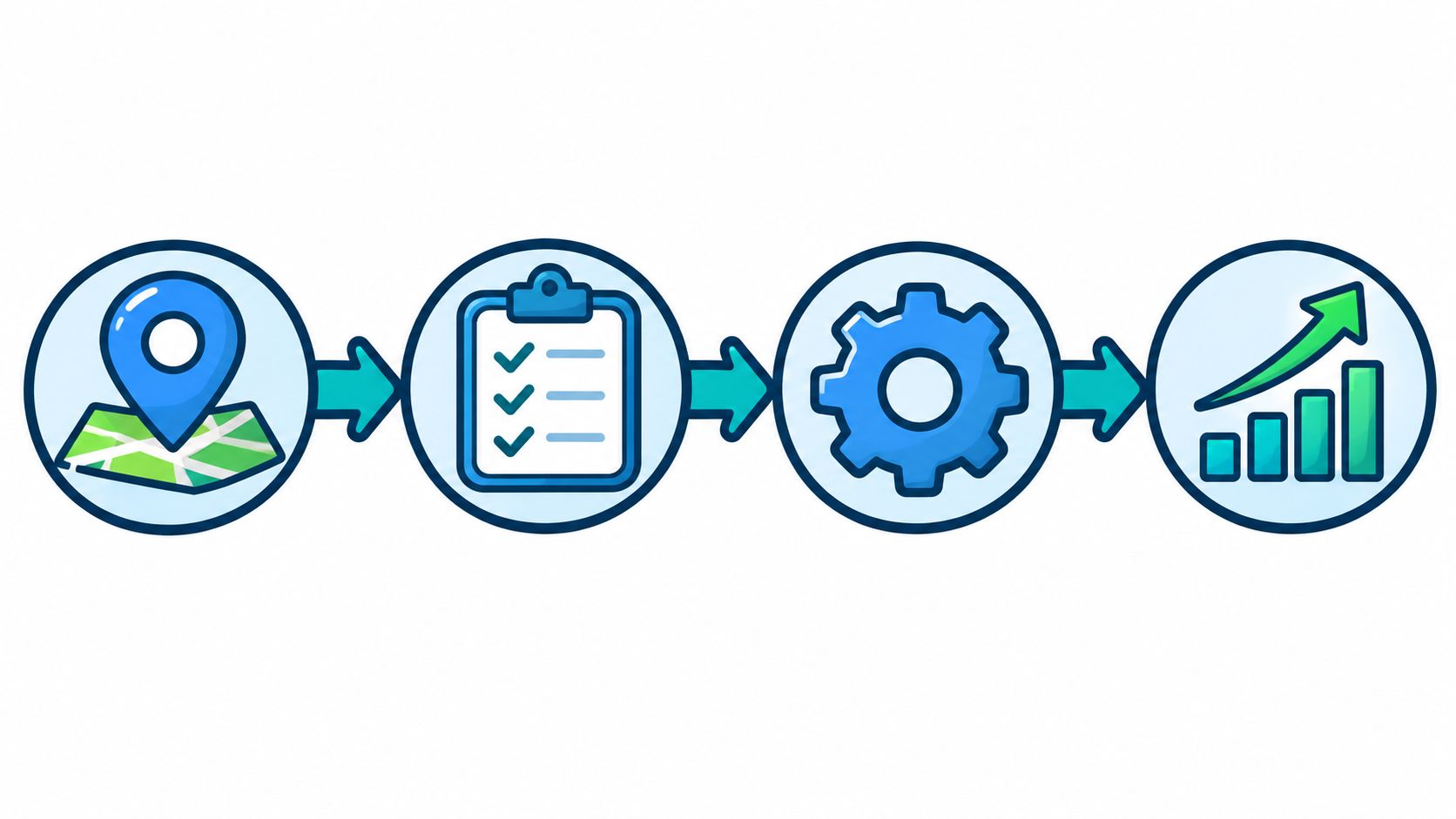
Model answer. "Situation: [client] faced [problem] across [sites]. Task: deliver [outcome] by [date]. Action: we [method], led by [name]. Result: [metric] in [period], confirmed by [evidence]."
Mistakes that cost the case study
Wrong scale: a tiny job offered against a multi-site contract.
No measure: "improved service" and nothing else.
A named client who hasn't agreed to be a reference.
Tag each study by sector and service in the knowledge base. Tender monitoring surfaces the new scope. AI response generation reshapes the closest study. You still check permission and dates. The bid writing software guide sits next to that workflow.
3. Quality Management and Service Delivery
A quality answer is a process with a name on it. Evaluators want the KPI, the owner and the fix that happens before the client chases you.
A catering contractor can set a 98% on-time delivery KPI and share a weekly dashboard. A social care provider that names a 24-hour escalation route and a duty manager often sees that line picked out in feedback. "We pride ourselves on quality" scores nothing.
The working picture is a small team checking a list against live performance, not a policy binder on a shelf.

Model answer. "[Role] owns quality. We track [KPI] every [frequency] in [system]. Below [threshold], [role] escalates within [hours] and reports to [client contact] by [day]. Cause and fix go into [record]."
KPIs you can defend
Start from a past contract, not a round number you hope for.
Name a person, not a department.
State the report the client gets, and how often.
Don't describe a certificate and skip Tuesday's failure. If you hold a certified system, show the live control. Our notes on ISO certification evidence set out how that pack is organised. Save the framework in the knowledge base so AI response generation can adapt it. Tender monitoring tells you the service before you lock the target.
4. Social Value Commitments
A social-value commitment earns marks when it names a local outcome, a measurable target and how the buyer will see progress. The Public Services (Social Value) Act 2012 expects authorities to consider wider benefits, while the Cabinet Office Social Value Model gives buyers themes they can use to assess them. Check the tender's weighting and priorities before choosing what to promise.
A construction firm could commit to apprenticeships linked to the contract area and report progress regularly. A catering supplier might propose local sourcing, if it can support the claim and include the cost in its price. “We support the community” gives evaluators nothing specific to score.

Model answer. “Under this contract, we will [outcome] for [place] by [date]. We will measure [number or indicator]. [Role] will report progress every [frequency] through [method]. The cost is included in our price at [amount or rate].”
Evaluators need to see the outcome, who benefits, how it will be measured and whether the commitment is deliverable. Avoid national pledges that do not fit a local contract, and do not promise an activity without a clear way to track its results.
Store each approved answer in the knowledge base with its supporting evidence and reported outcomes. Reuse it as a starting point, then replace the placeholders and tailor the commitment to the buyer, contract and location. Bidwell drafts answers from the knowledge base in the customer's voice, with citations for review. The customer checks and adapts the response before submitting it.
5. Environmental Sustainability and Net Zero
Evaluators can tell when there's no baseline. Say where you are, what you'll change on this contract, and how you'll measure it. A logistics company that cut fleet emissions by 18% over two years can use that record on a council transport bid. A print supplier that moved to FSC-certified paper and reported waste diversion each quarter is easier to score than a net-zero slogan.
If the contract creates waste on site, tie the answer to a real clearance method. The UK guide to clearing commercial premises is a plain reminder that waste leaving a building needs a documented route, not a green sentence.
Practical rule: If you can't measure it this quarter, say when the first reading will exist.
Model answer. "Our latest footprint for [activity] is [figure or 'first full reading due DATE']. On this contract we will [action] by [date], cutting [impact]. [Role] reports [metric] every [frequency]. We don't yet measure [gap]. We'll start on [date]."
Marks you lose on purpose
Invented labels instead of a known standard or certificate.
A target with no baseline and no date for the first number.
A promise that isn't in the price or the method statement.
Store policies and data summaries in the knowledge base and date them. AI response generation should only draft from those files. Tender monitoring tells you whether this buyer wants carbon, waste or transport, so you don't paste the wrong plan.
6. Data Protection and Information Security
This question is often a gateway. Miss UK GDPR, the Data Protection Act 2018, or a required certificate, and the scored answers never get read. PPN 02/24 on AI in procurement says using AI to create tender responses isn't prohibited. Buyers can ask you to disclose it, and they may stop confidential procurement information being used as training data. Draft from your approved knowledge base, keep a human review, and disclose AI use when the tender asks.
A software supplier can clear a mandatory check by stating its Cyber Essentials certificate number and renewal date. A care provider can describe staff training and quarterly access reviews. For a tighter pattern of vendor answers, compare WiFi vendor security answers. The security questionnaire workflow is the same discipline inside a bid.
Model answer. "We process [data types] under UK GDPR and the Data Protection Act 2018. Controls are [list], owned by [role]. Staff train on [date cycle]. A breach is contained within [hours], the ICO and the client are told within [timescale], and [role] records the fix."
Have your data protection lead check the final text. Keep certificates in the knowledge base with expiry dates visible. AI response generation must not invent a control you don't run. Tender monitoring flags gateway requirements before you start writing.
7. Business Continuity and Risk Management
"We will manage risk" doesn't score. Evaluators want a few likely failures, an owner and a time. A facilities company that names a pre-approved backup for a key subcontractor gives them something to mark. An IT provider that tests disaster recovery twice a year and reports the result does the same.
Pick three to five risks that could actually stop this contract. A long register of unlikely events looks like you haven't chosen.
Model answer. "Risk: [failure]. Owner: [name]. We detect it by [signal] and respond within [hours or days] by [action]. We last tested this on [date]. The client hears from [role] within [time]."
For a short second opinion on plans that survive contact with a real outage, read Networking2000's business continuity advice. Then write your own times. Don't copy theirs.
Don't list every theoretical risk. Don't leave the owner as "the team". Don't hide the response time. Keep a risk-register template in the knowledge base and adapt the rows to the service. Tender monitoring tells you the setting, a school, a depot, a care site, so the risks change. AI response generation can draft the rows. You confirm the test dates are real.
8. Mobilisation and Implementation Plan
Buyers want the first 30, 60 or 90 days, not a vision. A waste firm can plan a 60-day phased rollout across 40 sites and report weekly. A training provider can map every current course to the new plan so learners aren't dropped at handover. Poor mobilisation is how a won contract starts badly.
The first month is a route with milestones, not a slogan about partnership.

Model answer. "Day 0 to 30: [milestone], led by [mobilisation manager]. Day 31 to 60: [milestone]. Day 61 to 90: [milestone]. We need [access or data] from you by [date]. Existing services continue via [handover method]. You get a progress note every [frequency]."
What evaluators can mark quickly
A milestone table or simple Gantt, if the portal allows it.
A named mobilisation manager and what they do.
A handover that doesn't stop the live service.
Don't assume the buyer will drop everything for you. Confirm what you need from them while clarifications are still open. Keep a standard plan in the knowledge base and change the timings per contract. Tender monitoring gives you the start window. AI response generation drafts the skeleton. You check it against the sites and the people you have.
How the eight common tender questions compare
| Item | Main evaluator focus | Evidence to attach | Reusable across bids |
|---|---|---|---|
| Company Background and Capability Overview | Organisational capacity, financial stability, track record and fit for the contract | Company profile, audited accounts, contract references, staff figures and current accreditations | Core company facts are reusable; tailor the fit to each buyer |
| Relevant Experience Using the STAR Method | Relevant, verifiable experience and measurable outcomes | STAR case study, outcome data and an approved client reference | Yes; select and adapt case studies to match each tender |
| Quality Management and Service Delivery | Delivery processes, accountability, realistic KPIs and corrective action | Quality procedures, KPI data, reporting examples and relevant certifications | Yes; tailor measures and targets to the contract |
| Social Value Commitments | Specific, measurable local employment, skills, supply chain and community benefits | Commitment measures, delivery records and reporting arrangements | Proven examples are reusable; commitments should reflect the contract location |
| Environmental Sustainability and Net Zero | Baselines, measurable targets and practical environmental actions | Emissions and waste data, policies, action plans and relevant certifications | Policies and data summaries are reusable; tailor actions and targets to the contract |
| Data Protection and Information Security | Compliance, security controls, staff training and breach response | Current certificates, policies, training records and breach response procedures | Core controls are reusable; verify tender requirements and certificate validity |
| Business Continuity and Risk Management | Contract-specific risks, named owners, mitigations and tested recovery plans | Risk register, continuity plan and recovery test records | Templates are reusable; adapt risks and mitigations to each contract |
| Mobilisation and Implementation Plan | Realistic milestones, responsibilities, handover and continuity of service | Mobilisation timeline, milestone plan, staffing and training arrangements | Structure is reusable; tailor timings, resources and handover details |
Turning These Answers Into a Repeatable Bid Process
Write your own version of each answer, then store it once with a date and the source document. A policy PDF, a certificate or a KPI export is enough. If the file is old, the answer is old. That's how copy-and-paste bids keep failing when the sentences still look tidy.
The knowledge base is that store. AI response generation drafts from those files in your voice and cites the document behind each line. Tender monitoring shows you the notice in time to tailor. You review, polish and submit. We don't lodge the bid for you.
Bidwell drafts the first 80% of a tender response in around 30 minutes. That's a blank form turned into cited answers, not a finished submission. The last pass is yours. Only you know which client you may name and which figure is still true.
After a clarification changes the spec
Clarification replies go to every bidder, and they can change what you must answer. Log each published reply against the question, the assumption and the evidence. If you keep drafting to the original spec, you can fail a check you thought you'd passed. Ask when scope, price, evaluation or format is unclear, and flag commercial sensitivity. Stay quiet when you only want reassurance.
When the feedback is too thin to use
Test the comment. Can you tie it to a scored criterion, or is it a shrug? Separate a pass-or-fail miss from a competitive weakness. Record the proof you lacked, then update the stored case study before the next notice. When you win, put that response back into the knowledge base so the next draft starts from a real submission.
Portal coverage is the same habit. From 24 February 2025, Find a Tender became the main publication point for both above- and below-threshold notices for new UK procurements, except below-threshold procurements in Scotland. Below-threshold opportunities above £12,000 including VAT, or £30,000 outside central government, are published through regional services such as Contracts Finder, Public Contracts Scotland, Sell2Wales, eSourcing NI and eTendersNI. One saved answer doesn't help if the notice sits on a portal you never open.
Bidwell watches UK tender portals, keeps your approved tender questions and answers in a knowledge base, and drafts the next response from those documents for you to check. Put the eight models above into your own facts, then reuse them instead of starting from a blank page. Visit Bidwell when you want the draft, the citations and the daily notice feed in one place.

