
Most “best RFP software” lists start with feature checkboxes. That's a poor way to choose. A team writing one tender a month has different needs from one handling thirty a quarter, and a long feature list won't tell you which tool fits.
This roundup compares ten options for UK bidding teams. The focus is practical: published pricing, UK tender discovery, reusable knowledge bases and AI response drafting. Each tool is judged against the workload it suits: an occasional SME bidder, a high-volume framework team or a large proposal shop with many contributors.
Tender discovery matters because a relevant notice can be missed before the writing starts. Find a Tender's search results included more than 323,499 notices as of October 2026. Department for Business and Trade research on SME barriers highlights limited awareness, thin bid resources, short timescales, unclear requirements and poor feedback.
A drafting tool only helps if the opportunity fits your business. Compare each product's monitoring, knowledge base and response generation against the work your team does, then weigh the price against that fit. I'd shortlist by workload first and features second.
1. Bidwell
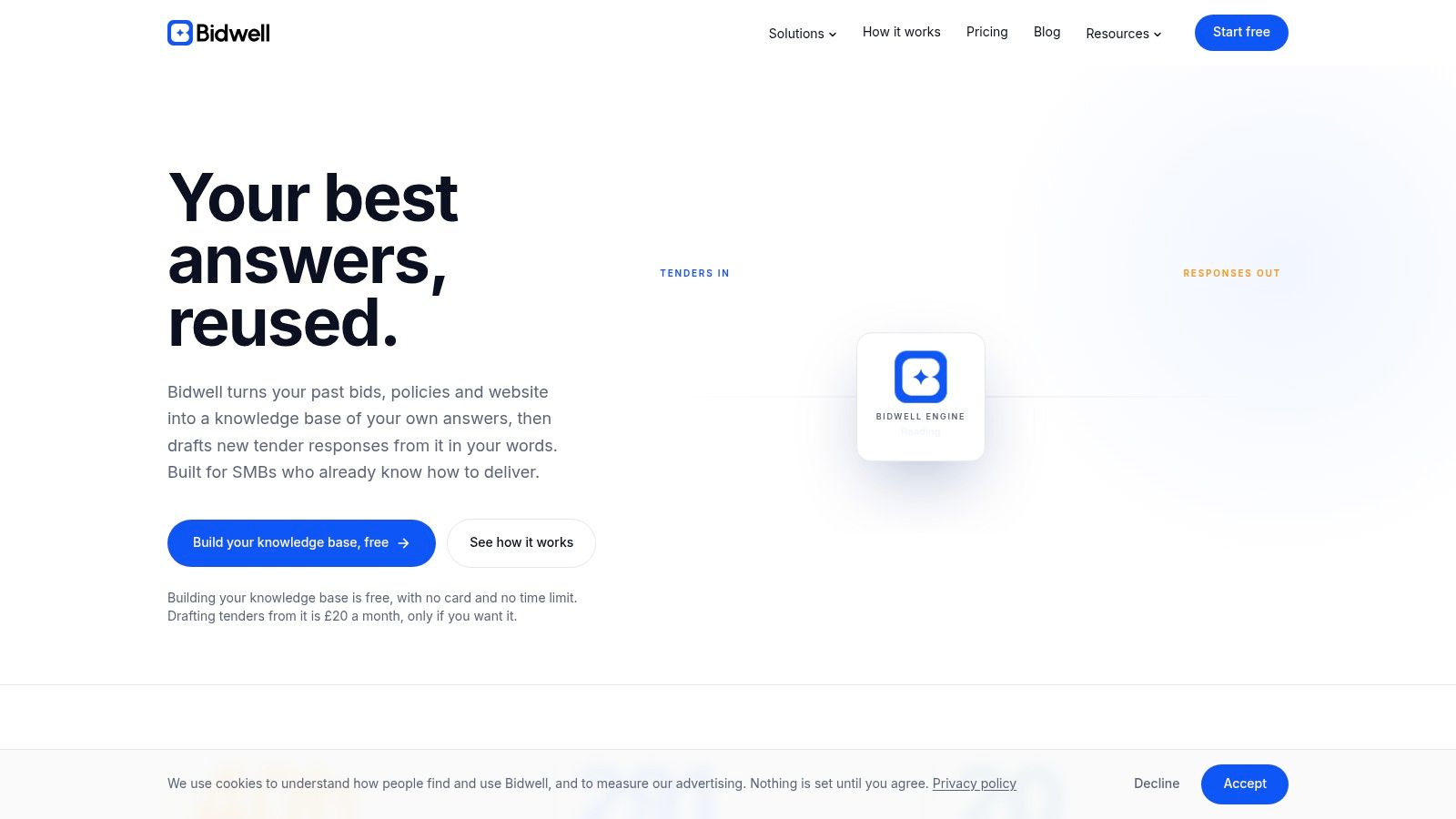
The bottleneck for an occasional bidder is often the blank page, not the software shortlist. Bidwell is an AI tender response platform for UK SMBs. It learns from a business's past responses and credentials, then drafts a first response in minutes. The team still reviews, refines and submits it.
Drafting, evidence and alerts
Bidwell watches UK tender portals and matches opportunities by CPV code, keyword, region and value. Its live IT services feed draws on Find a Tender and Contracts Finder. For a new bid, the Draft stage extracts questions from a tender or PQQ, matches them to the knowledge base, and prepares answers in the business's voice with citations for review. Drafts can be exported to Word or Excel.
That suits a small team with useful past evidence but limited writing time. Bidwell drafts complete tender responses in hours instead of weeks, and a first response to a 60-question PQQ can be ready in 30 minutes. There are no per-bid or per-seat fees. Check the published plans for the subscription price before comparing total cost.
Practical rule: Treat each draft as a first pass. Check every claim against your evidence and delivery capacity before submitting.
- Reusable evidence: Bidwell learns from past responses, credentials and case studies, then uses that knowledge to draft new answers.
- Reviewable answers: Citations point reviewers to supporting source material, so they can check the draft and refine it.
- Three free tools: A tender readiness checker, a framework eligibility tool and a cost-to-respond estimator help teams assess opportunities before committing bid-writing time.
Procurement Policy Note 02/24 says buyers may ask suppliers to disclose AI use, and that confidential authority information should not become training data. A human review remains part of the process. For a closer look at Bidwell's bid writing software, see how the drafting workflow fits a small team. Its purpose is tender work, unlike enterprise SysAid alternatives, which address service desk needs.
2. AutogenAI
AutogenAI suits established bid teams handling long, narrative responses. For occasional bidders, the setup and quote-based pricing may be harder to justify.
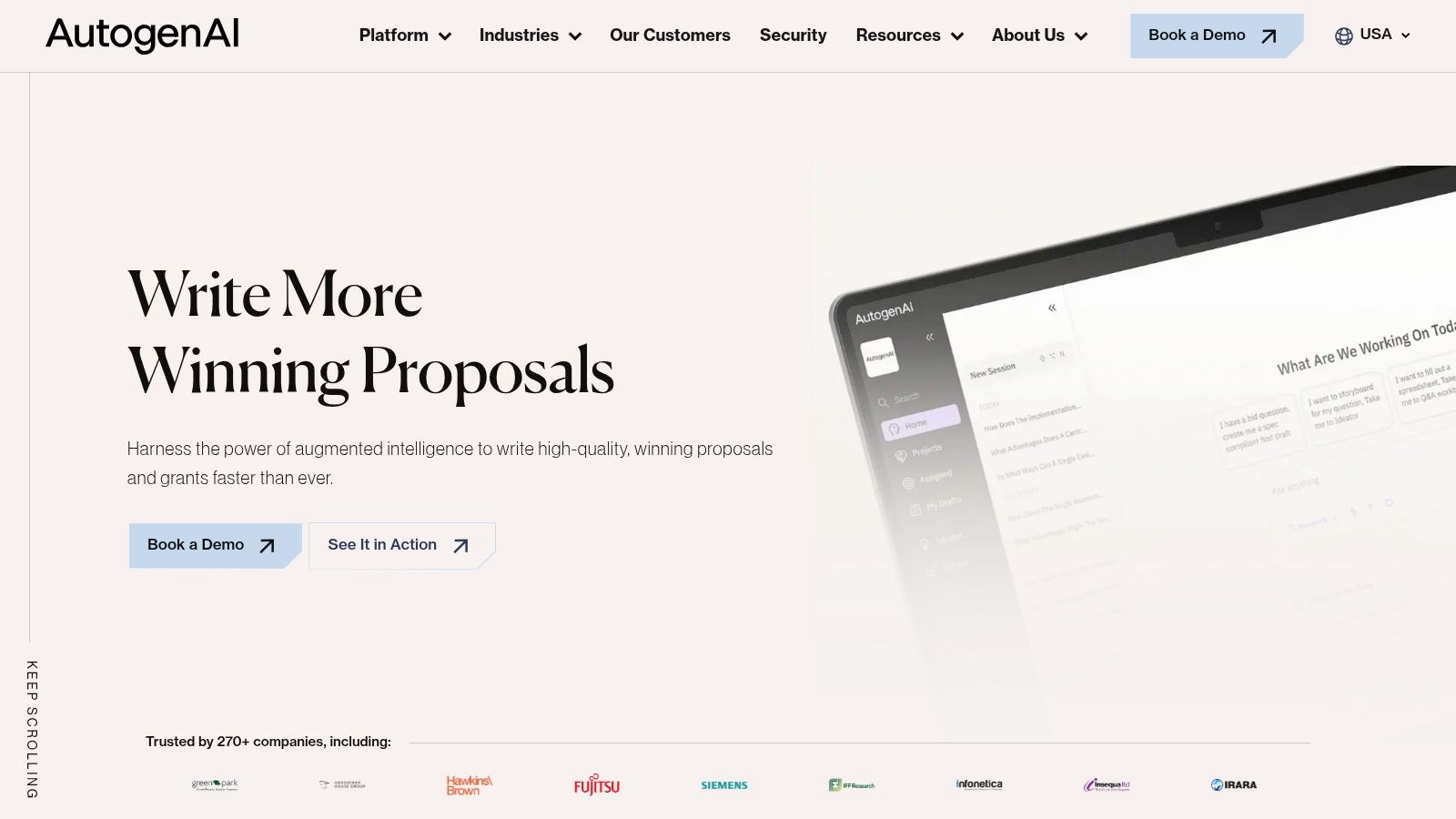
AutogenAI supports qualification, requirement extraction, planning, drafting from company knowledge, research, collaboration and review. It covers tenders, proposals, grants and other competitive submissions. G2 reviewers mention faster first drafts, storyboarding and finding existing case studies. That retrieval matters: a knowledge base only helps when writers can find relevant evidence and fit it to the buyer's word limit.
Pricing is quote-based, with no public figure for a quick comparison. Drafts and summaries still need careful review, and teams new to this type of software should allow time for onboarding. It is a stronger shortlist candidate for a high-volume framework team with bid writers than for a director handling a PQQ alone. For a slimmer UK option, compare AutogenAI alternatives before booking a demo.
3. Loopio
Loopio is a library product first. It suits a sales-led or central team that answers the same security questions and DDQs every month.
The Loopio library holds approved answers. AI drafting sits on top of response projects, with permissions and review. Higher tiers add things like multilingual libraries and separate business units. The Foundations tier includes 10 seats plus unlimited projects and library entries. Support and onboarding are part of the pitch, which helps if nobody on the team has owned a content library before.
A shared library cuts repeat writing only while someone retires stale answers. Leave it for a year and you will submit last year's pricing.
Pricing is quote-based, so you won't see a monthly figure on the homepage. UK tender discovery is not the core offer. You still need another way to hear about Find a Tender notices. The Government Commercial Agency reported £3.52 billion, 16.7% of central-government spend, going directly to 1,525 SMEs, and said 72% of suppliers on its commercial agreements were micro, small or medium-sized. Those firms rarely need a global library. They need reusable evidence and a person who maintains it. See how it compares with lighter Loopio alternatives if your volume is a handful of public bids, not a questionnaire factory.
4. Responsive
Responsive, formerly RFPIO, suits large proposal teams that need several departments to manage RFPs, RFIs, DDQs and security questionnaires in one system. It offers project workflows, a central content library, collaboration, reporting and AI-assisted drafting and search. Someone needs to configure and maintain the setup.
Responsive uses tiered editions. The entry tier and higher tiers are priced by quote, so you will need to speak with the vendor to establish the cost. That model fits a team with enough contributors and repeat proposal work to justify a dedicated platform. For an occasional bidder, the workflow and administration may outweigh the benefit.
UK public-sector tender discovery is a separate job. The National Audit Office's report on technology suppliers discusses government technology procurement, but Responsive's content library will not find opportunities for you. Pair it with a tender feed and a clear bid/no-bid process. Its value depends on the team using its library, reporting and review workflows consistently.
5. XaitPorter
XaitPorter is for the 80-page proposal with twelve contributors and a layout that must not break at midnight.
On XaitPorter, people co-author in the cloud with role-based permissions. Layout, numbering and formatting are handled for you. A reusable library and version tracking sit beside workflows that show section progress and deadlines. Reviewers the company cites call it intuitive and useful for keeping documents consistent. I believe the layout automation is especially valuable, as assembling a long bid in Word consumes a lot of time.
When the structure fights you
Pricing is not published. You book a demo. Teams that mostly complete short questionnaires will find the document-production focus excessive. You also have to accept structured authoring or you won't realise the benefit. There is no UK portal monitor here. Pair it with a separate discovery habit, or you will produce beautiful documents for notices you found late. Knowledge base reuse helps the repeat paragraphs. It does not decide whether the lot is worth the weekend.
6. Taypra
Taypra combines UK tender search with bid drafting. Its £780 monthly Bid package covers up to 36 bids a year, excluding VAT, so it suits a regular bidder better than a team responding occasionally.
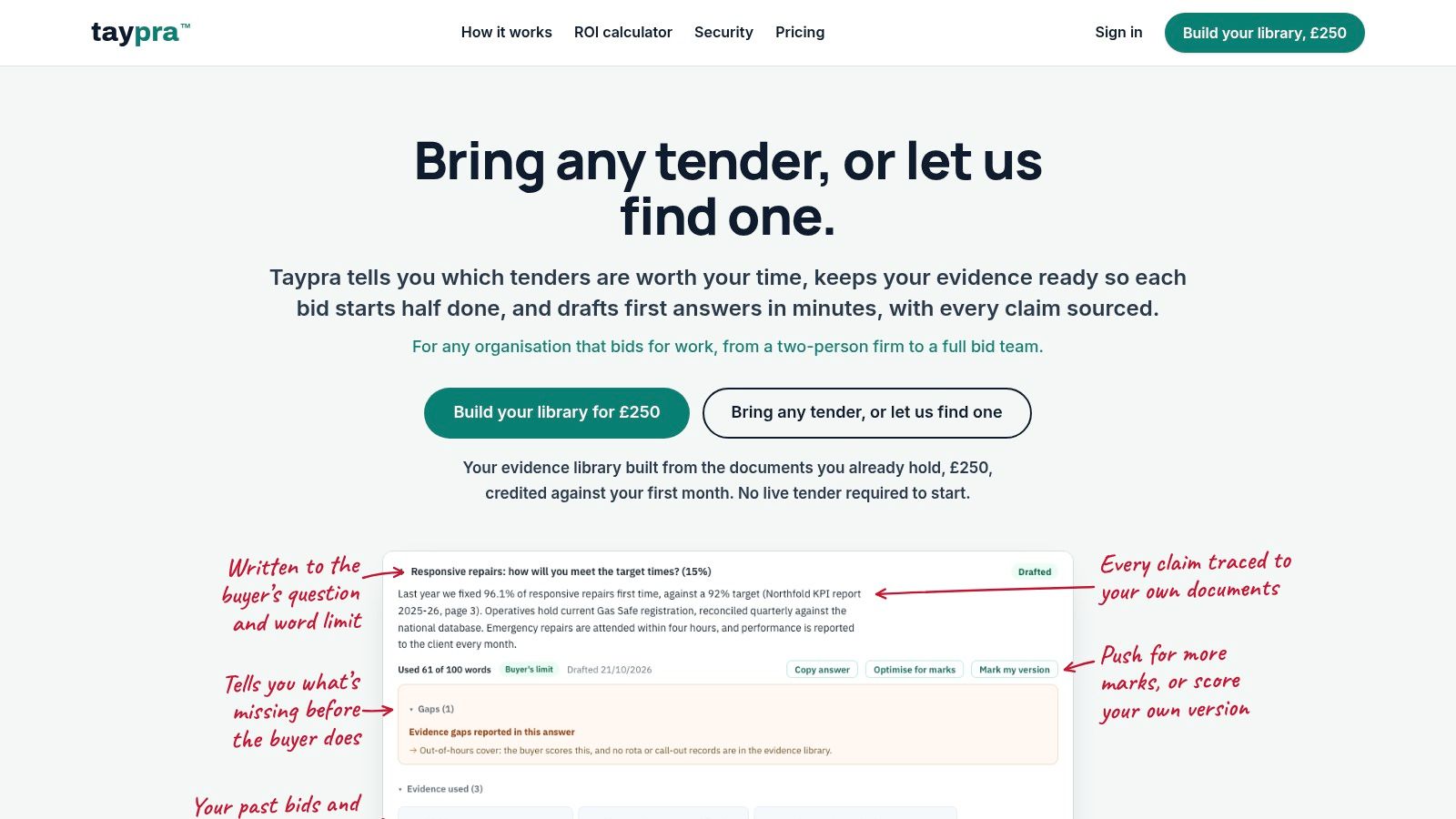
The Taypra package searches Find a Tender and Contracts Finder, matching notices to your services, contract sizes and exclusions. It reviews tender documents for evidence gaps, then drafts scored answers from your documents within the word limit. Finding a missing accreditation early can give the team time to address the gap before submission.
Notice coverage varies by nation and threshold. A search limited to two English-facing portals can miss devolved notices. Taypra says some text is processed by named US-based AI providers, while primary storage is in London. The company is taking a small number of foundation customers, so availability may be limited. For an occasional bidder, £780 a month is a heavy commitment compared with a drafting plan costing tens of pounds.
7. BidWriter by WinAContract
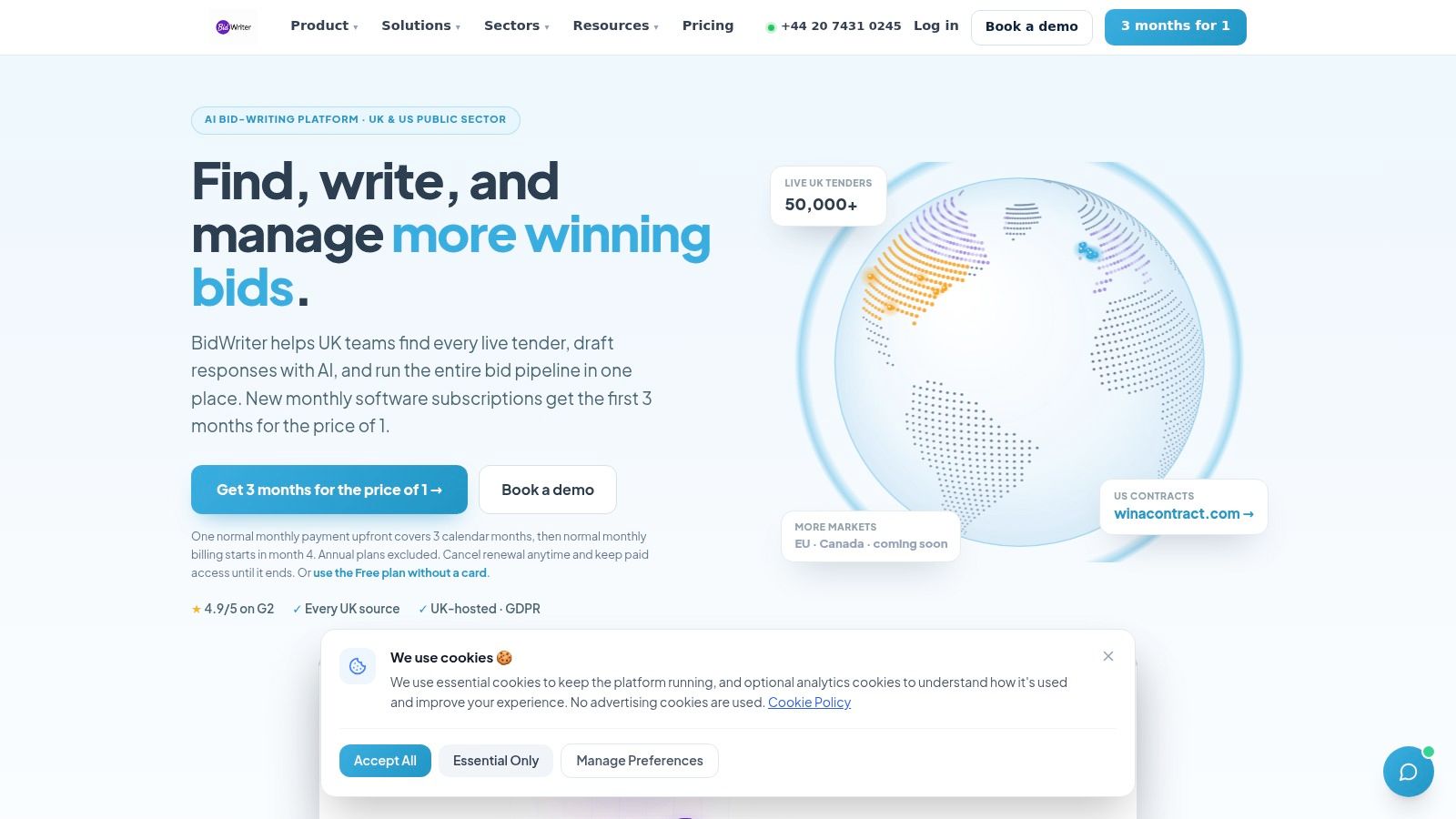
BidWriter is the practical UK middle. Search, a light pipeline, and AI writing, with a free door and paid ceilings.
BidWriter by WinAContract searches public and private opportunities, including frameworks and DPS notices. Drafts use your evidence and are checked against buyer criteria. You also get bid or no-bid views, deadlines and pipeline tracking, plus separate managed writing if you want a person, not only software. The free plan covers UK opportunity search and a company profile. It does not include the full AI writing set. Paid tiers cap seats and AI credits or tender volumes, and monthly rolling rates differ from annual terms. Read those caps before you assume "unlimited".
Value bands change the rules you are under. The 2026 threshold notice sets, for procurements from 1 January 2026, £135,018 excluding VAT for goods or services to a central government authority, £207,720 for sub-central authorities, and £5,193,000 for ordinary works. A monitor that shows value early stops you treating a small lot like a major project. I like the published prices for comparison. I would still test credit limits on a real month, not the demo tender.
8. ProposAI
ProposAI is a writing and critique tool with UK hosting. It is not your morning portal check.
ProposAI drafts from your evidence, then runs a buyer-style review that marks the weaker passages. That second step is the reason to try it. Generating text is easy. Seeing that an answer never mentions the scoring criterion is the bit teams skip. The company advertises a free plan, a 14-day trial of paid plans, and hosting in London. The free trial needs a card. Opportunity discovery is not a main feature, so you arrive with the ITT already downloaded. Check draft and project limits against your real volume before you assume the free tier covers a framework lot every fortnight.
- Use it when: You already know which tender you are chasing and you want a harsh read of the draft.
- Skip it when: Your problem is hearing about notices in Scotland or Wales before the deadline moves.
- Keep a reviewer: The critique is a prompt, not a signature on the submission.
For an occasional SME bidder who writes in bursts, the trial is a fair test. For a high-volume team, confirm you won't hit a project cap mid-quarter.
9. TenderCure
TenderCure starts with the documents a bid team already holds. Upload the ITT and supporting policies, then use the tool to work through the scored questions.
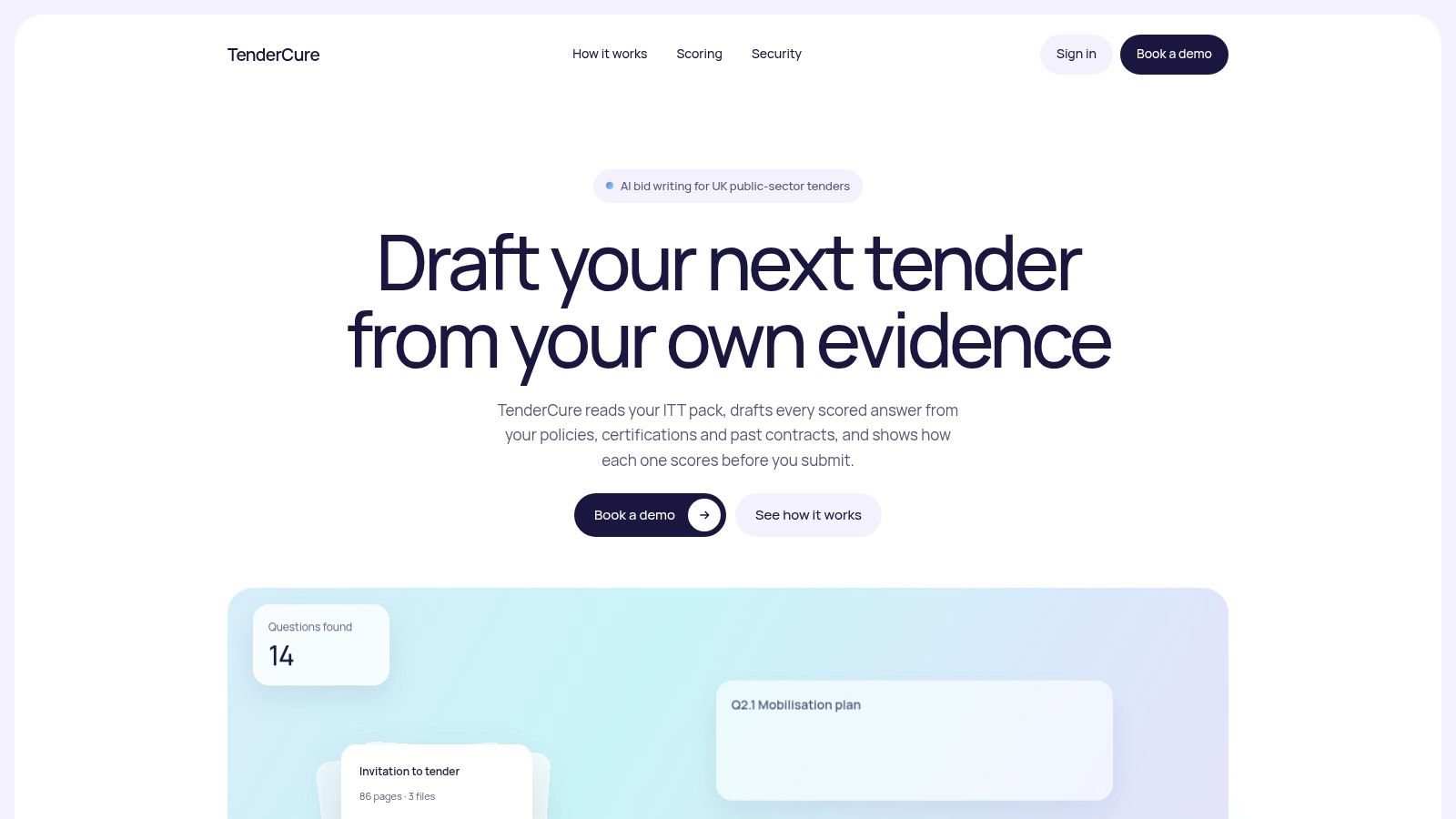
TenderCure ingests policies, certifications and past tenders, extracts questions, weightings and scoring criteria, then drafts from that evidence. It also flags gaps and checks answers against evaluation metrics and formatting limits. For an evidence-heavy public tender, a missing-document warning is more useful than a fluent answer that claims evidence you do not have.
I could not find a public price, so TenderCure is hard to compare with a plan that has a published monthly price. It focuses on response work rather than broad tender search or pipeline management. Teams still need to verify each claim before submission and arrange owners and deadlines themselves. It suits a thin bid team facing a dense ITT, provided someone keeps watch on tender portals so the drafting work starts in time.
10. Bidsights
Bidsights is the workspace for people who lose bids in the task list, not in the prose.
Bidsights tracks opportunities through stages with owners, values and deadlines. Qualification, bid tasks, contracts and a tender-review workflow sit in one place, aimed at UK bidding organisations. A pipeline view is what a business development director opens on a Monday. Drafting is not the centre of the description I reviewed, so compare it with a writing-led tool if blank pages are your pain. No public price was visible. Ask which opportunity sources and integrations are included, because a pretty board fed by manual entry is just a nicer spreadsheet.
If three people touch the bid, name an owner per question before anyone generates a paragraph.
It suits a small team that already finds notices and needs coordination. It is less convincing as your only AI response generator. Check the review workflow against a live tender. If it only stores files, you still need a knowledge base elsewhere for the answers you intend to repeat.
How the ten tools compare on published pricing, UK tender discovery and best use
Price and discovery coverage narrow the shortlist quickly. The right fit depends on whether you bid occasionally, manage a busy framework pipeline, or coordinate complex responses across a large team.
| Item | Published pricing | UK tender discovery | Best for |
|---|---|---|---|
| Bidwell | Flat monthly plans with no per-bid or per-seat fees | Watches UK tender portals, with a live IT services feed from Find a Tender and Contracts Finder | UK SMBs looking for tender monitoring, a reusable knowledge base and AI-drafted responses |
| AutogenAI | Quote required; no public pricing listed | UK portal discovery not stated | Established bid teams handling complex, narrative-led submissions |
| Loopio | Quote-based; no public monthly price | Not a core offer | Teams managing recurring RFPs and questionnaires with a shared answer library |
| Responsive | Emerging edition starts at $10,000; other tiers require a quote | Does not specialise in UK public-sector opportunities | Larger teams coordinating multi-team response programmes |
| XaitPorter | No public pricing; contact sales | Not stated | Teams producing large, complex proposals with many contributors |
| Taypra | £780/month for up to 36 bids/year, excluding VAT | Searches Find a Tender and Contracts Finder | UK bidders wanting discovery, tender assessment and response drafting |
| BidWriter by WinAContract | Free plan; paid tiers with seat and credit caps, priced monthly or annually | Searches UK public and private opportunities | UK bidders combining opportunity search, bid writing and pipeline management |
| ProposAI | Free plan and 14-day paid-plan trial; paid prices not stated | Opportunity discovery is not a main stated feature | Teams seeking evidence-based drafting and buyer-style response review |
| TenderCure | No public price identified | Focuses on responses to UK public-sector tenders, not broad opportunity search | UK public-sector bidders drafting and checking evidence-based responses |
| Bidsights | No public pricing visible | Pipeline tracking; check which portal feeds are included before buying | UK bidding teams needing pipeline oversight, qualification and tender review |
Treat “not stated” as a buying question, not proof that a feature is absent. For a team with a high-volume framework workload, confirm how each product handles live opportunities and repeat responses. For an occasional bidder, weigh the subscription against the time saved on a single tender. A larger proposal team should also check how contributors review and coordinate answers.
Choosing Your Shortlist Before the Next Deadline Hits
Don't pick on the demo alone. Take one live tender from Find a Tender, load the answers you already trust, and time both the first draft and your own review. If the draft takes twenty minutes and the corrections take two days, the tool has not helped.
Check three things on that same notice. Does the product find the tenders you would bid on, including the nation and the value band you care about? Does AI response generation draft from your evidence, with a citation you can open? Does the price stay predictable at your real volume, with no per-seat surprise once a colleague joins?
The commercial reason to get this right is not abstract. The British Chambers of Commerce and Tussell reported that UK public-sector bodies spent £45.2 billion directly with SMEs in 2025, 21% of all direct procurement, described as a six-year high. Local government accounted for £29.1 billion of that. Councils and health bodies are busy routes to market, and they still reject thin answers.
Win rate is not the usual bottleneck once you are in the race. The UK Innovation Survey 2025 found that, among broader innovators during 2022 to 2024, 16% applied for at least one public-sector contract, and 80% of businesses that applied won one. Software should be judged on qualified notices, cleaner bid or no-bid calls, and hours cut per response. The same survey found cloud computing in use by 84% of broader innovators using production-enhancing technologies, so browser access is a baseline, not a selling point.
A short test you can run this week
- Occasional SME bidder: Favour a free or low, published monthly price, a knowledge base you can fill from old bids, and human review you can finish in an afternoon.
- Framework team: You need matching on CPV, region and value, plus drafting that cites evidence, or you will chase lots you can't staff.
- Multi-contributor shop: Pay for permissions, version control and layout only if several authors share one document. Otherwise you have bought admin.
Whichever option you shortlist, run it on a real bid before you commit. A polished sample answer about a fictional buyer will not show a missing policy or a wrong contract value. If you want a wider pass at how proposals get built, these notes on business proposals for entrepreneurs are a useful companion to the public-sector test above. Then decide. Writing more bids is not the same as winning the right ones.
We watch UK tender portals, keep your credentials and past answers in a knowledge base, and draft responses for you to review before the deadline. If you want that tender monitoring, knowledge base and AI response generation in one place, with a flat monthly price rather than a quote, start with a live notice on Bidwell. Bring one real bid, not a sample, and see whether the first pass is worth your afternoon.
